No products in the cart.


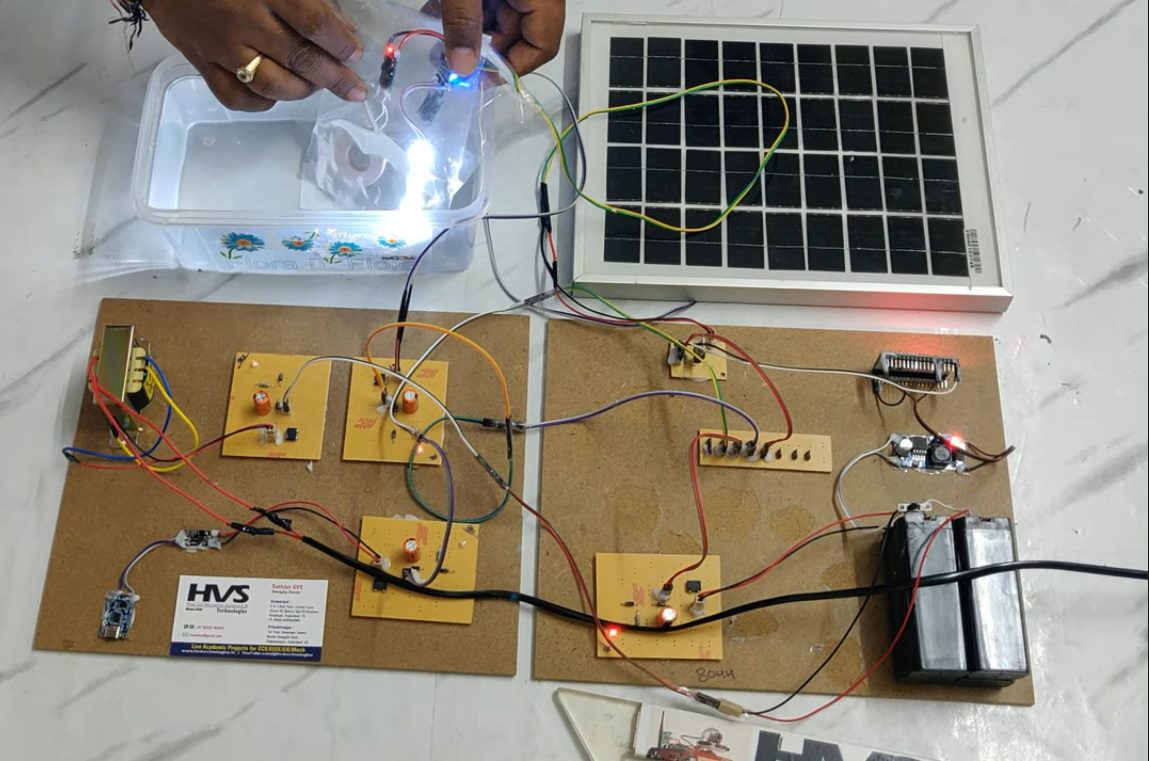
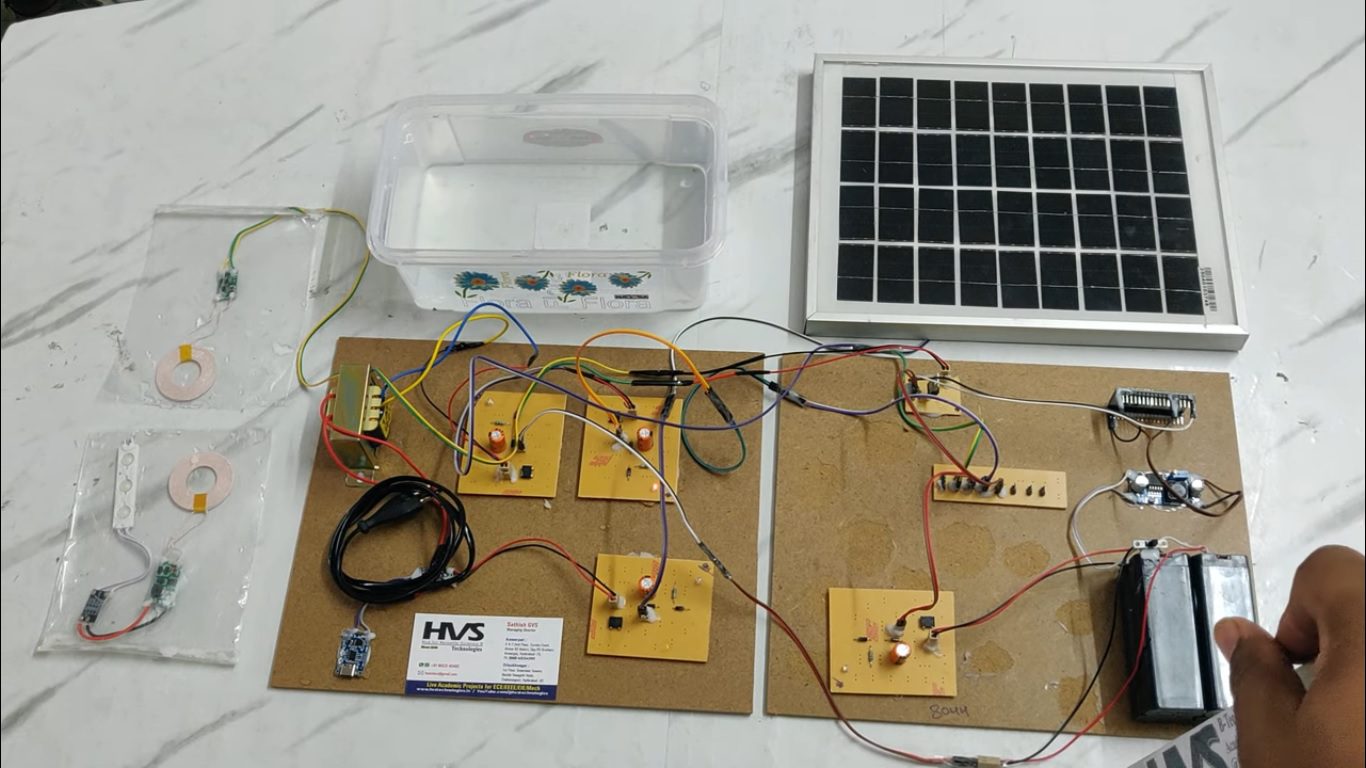
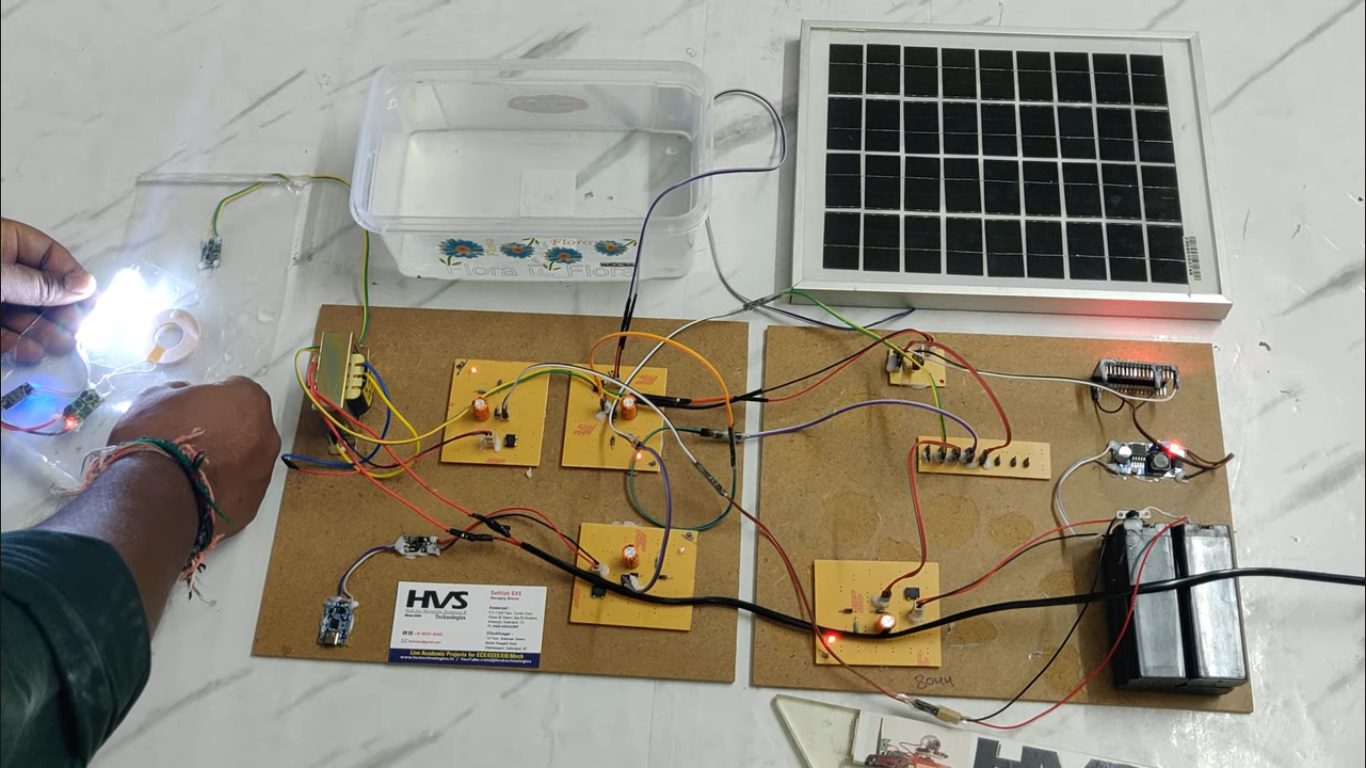
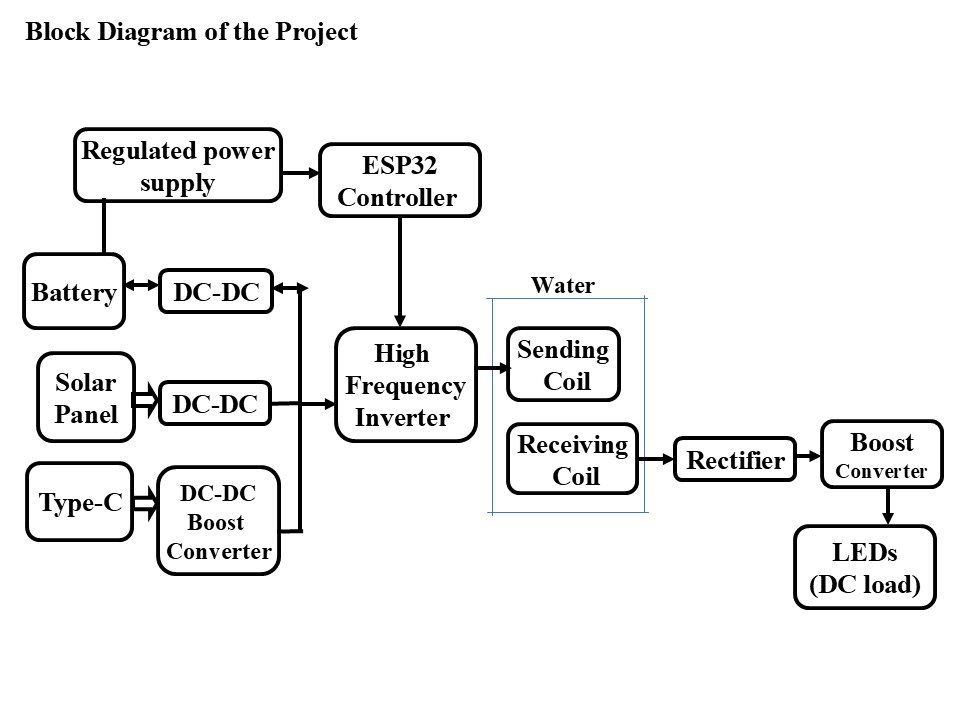
Wireless power transfer (WPT) has emerged as an effective solution for powering low-voltage electronic devices, especially in underwater environments where conventional wired connections are difficult and unsafe. This project presents the hardware design and implementation of a micro photovoltaic (PV)-battery integrated system for underwater wireless power supply. The system utilizes solar PV panels, a battery, and a Type-C interface as multiple energy sources to ensure continuous and reliable power delivery. A bidirectional DC-DC converter manages the energy flow between the PV source and battery, enabling efficient charging and discharging under varying conditions.
The regulated DC power is converted into high-frequency AC using a high-frequency inverter. An ESP32 microcontroller is used to generate PWM (Pulse Width Modulation) signals to drive the inverter, enabling precise control of switching and improving overall efficiency. The inverter feeds a transmitting coil that produces a high-frequency magnetic field, allowing wireless power transfer through water. The receiving coil captures the energy, which is then rectified, filtered, and boosted to obtain a stable DC output suitable for underwater loads such as LED lighting(DC load).
The complete system, including the power converter stage, control unit, and wireless transmission setup, is designed and experimentally tested. The results demonstrate the correctness, efficiency, and reliability of the proposed system, making it a compact and sustainable solution for underwater wireless power applications.
Objectives:
 video:
- To integrate solar PV, battery, and Type-C supply for hybrid energy input.
- To design a bidirectional DC-DC converter for efficient energy management.
- To generate PWM signals using ESP32 for inverter control.
- To develop a high-frequency inverter for wireless transmission.
- To implement inductive coupling (coil system) for underwater power transfer.
- To ensure stable DC output at the receiver side for loads.
- Solar panel.
- Rechargeable Battery.
- Type-C charger
- DC –DC booster modules.
- DC –DC Bidirectional converter.
- Wireless power transmitting and receiving coils
- Rectifier
- LED indicator.
- Esp32 microcontroller.
- Regulated Power Supply.
- Arduino IDE for compiling and dumping code into ESP32 Camera and ESP32 module.
- Embedded C programming.
- Express SCH for Circuit design.
 video: