No products in the cart.


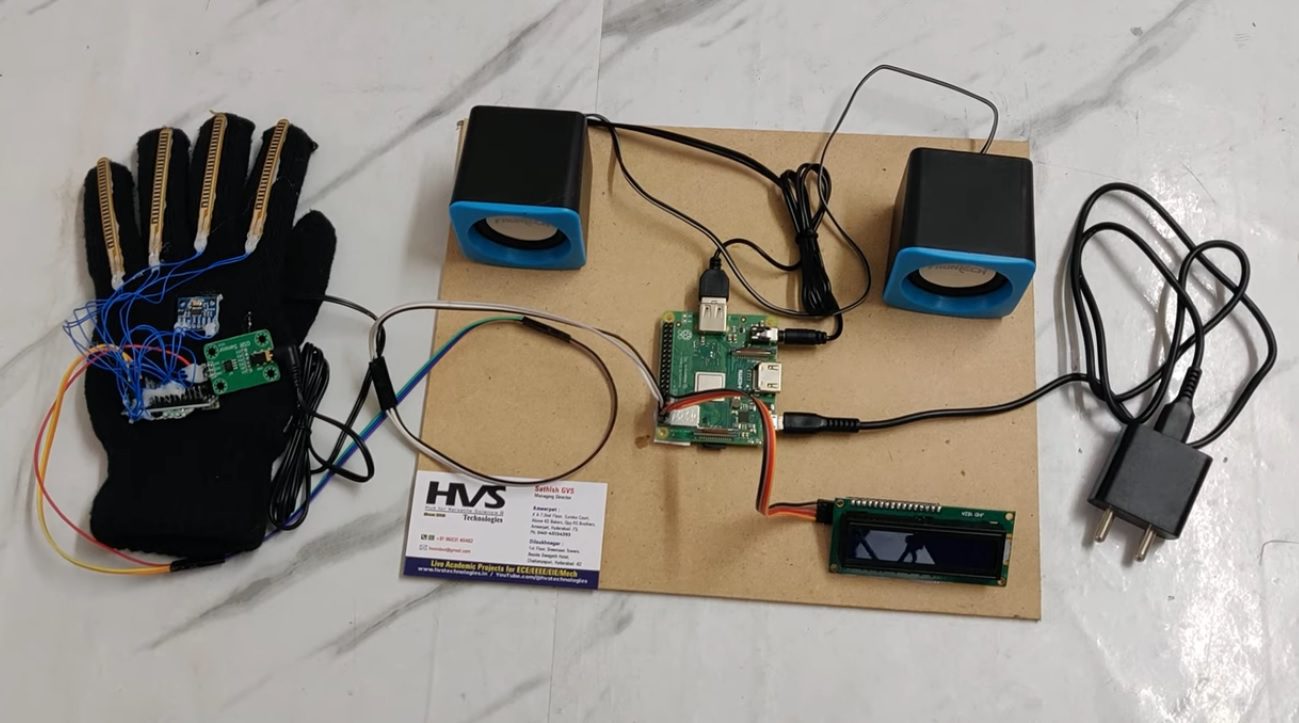
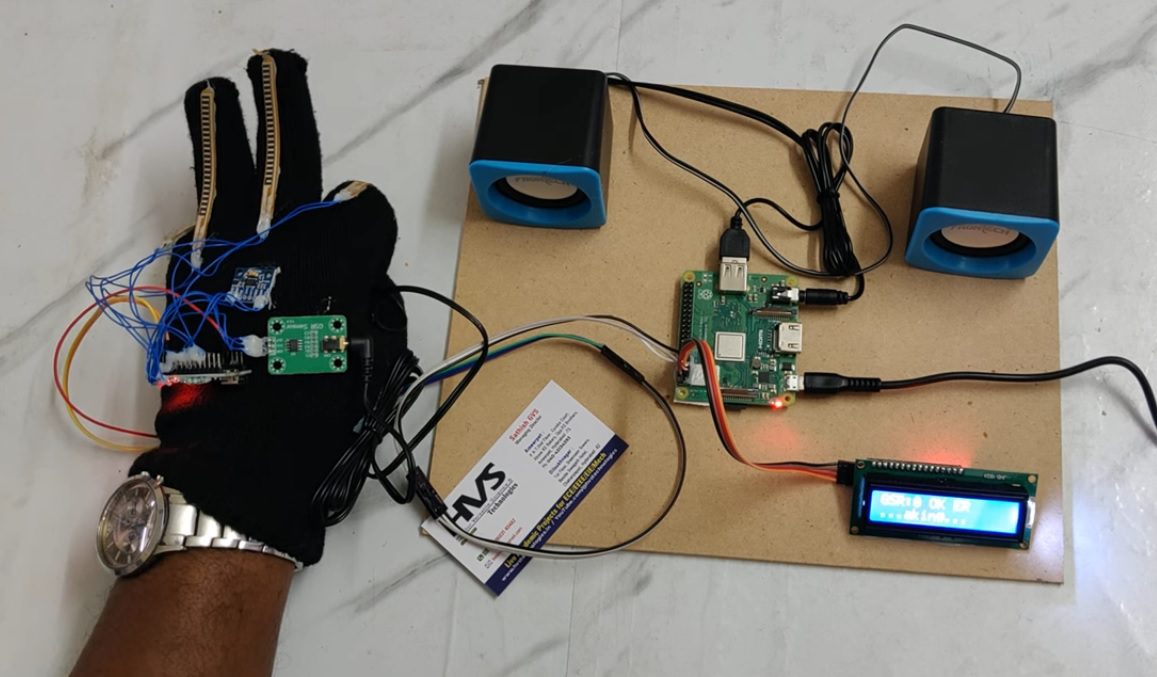
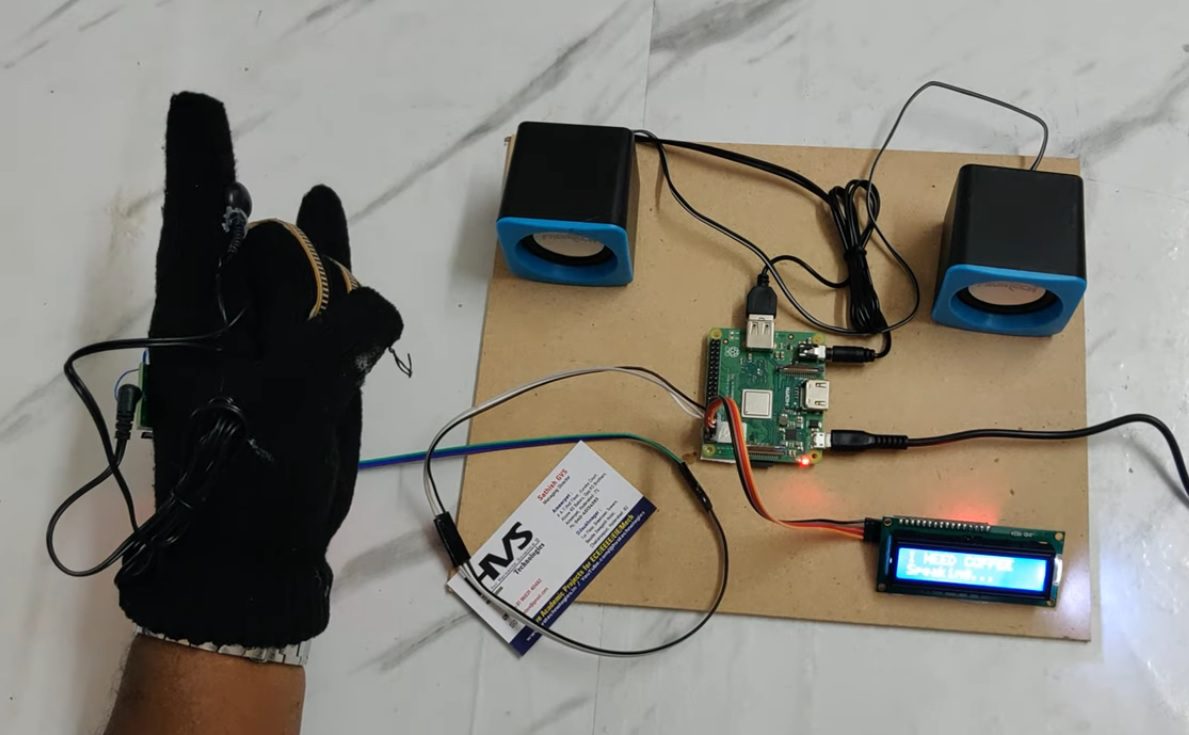
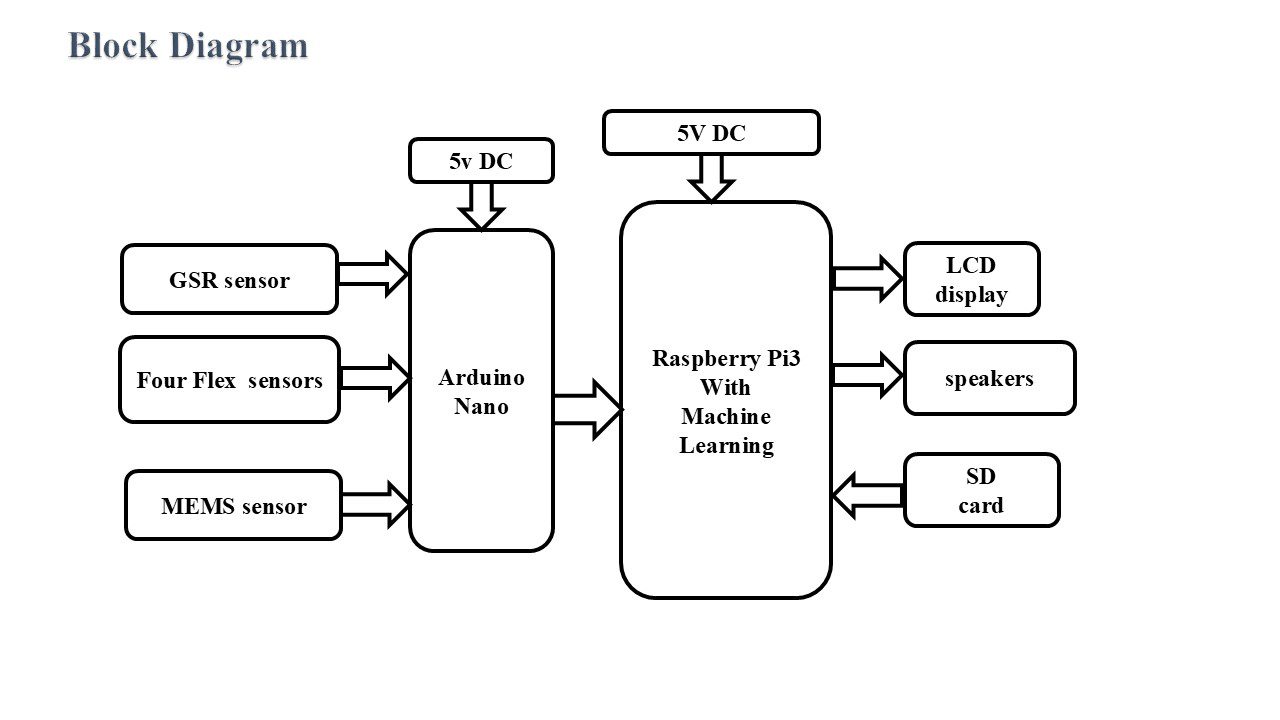
Assistive communication technologies play a crucial role in improving the independence and quality of life of differently abled individuals, particularly those with speech impairments. This project proposes an Assistive Smart Glove for Sign-to-Speech Conversion with integrated Stress Analysis using Machine Learning. The system consists of four flex sensors to detect finger movements, a MEMS sensor to track hand orientation, and a GSR (Galvanic Skin Response) sensor to monitor stress levels, all mounted on a wearable glove. These sensors capture hand gestures and physiological signals in real time. The Arduino Nano collects the analog data from the sensors and converts it into serial data, which is transmitted to the Raspberry Pi for further processing and gesture recognition using a trained Machine Learning model.
Based on the recognized gestures, the Raspberry Pi maps them to 20–25 predefined voice messages that are played through a speaker, enabling real-time sign-to-speech conversion. Simultaneously, the corresponding message is displayed on an LCD screen for visual feedback. In addition to communication assistance, the system continuously monitors the user's stress level through the GSR sensor. If the stress level exceeds a threshold, the system generates an automatic voice alert such as “Stress level high,” ensuring emotional state awareness for caregivers and nearby individuals. This smart glove enhances communication while also providing real-time stress monitoring, making it a valuable assistive solution for differently abled users.
The main objectives of the project are:
 video:
- To develop a smart assistive glove that converts hand gestures into speech for differently abled individuals.
- To recognize hand gestures using flex sensors and a MEMS sensor for accurate sign detection.
- To use the Arduino Nano as an analog-to-serial converter for transmitting sensor data to the Raspberry Pi.
- To implement a Machine Learning model in the Raspberry Pi for gesture classification.
- To generate 20–25 predefined voice outputs through a speaker based on recognized gestures.
- To display the corresponding message on an LCD screen for visual communication.
- To monitor the user's stress level using a GSR sensor.
- To provide automatic voice alerts when high stress levels are detected.
- To enhance independent communication and emotional awareness for differently abled users.
- Power Supply
- Raspberry pi3.
- Four flex sensors.
- MEMS
- GSR sensor.
- LCD display.
- Speaker.
- SD card.
- Raspbian OS.
- Machine learning.
- Express SCH for Circuit design.
 video: