Subtotal ₹10,500.00


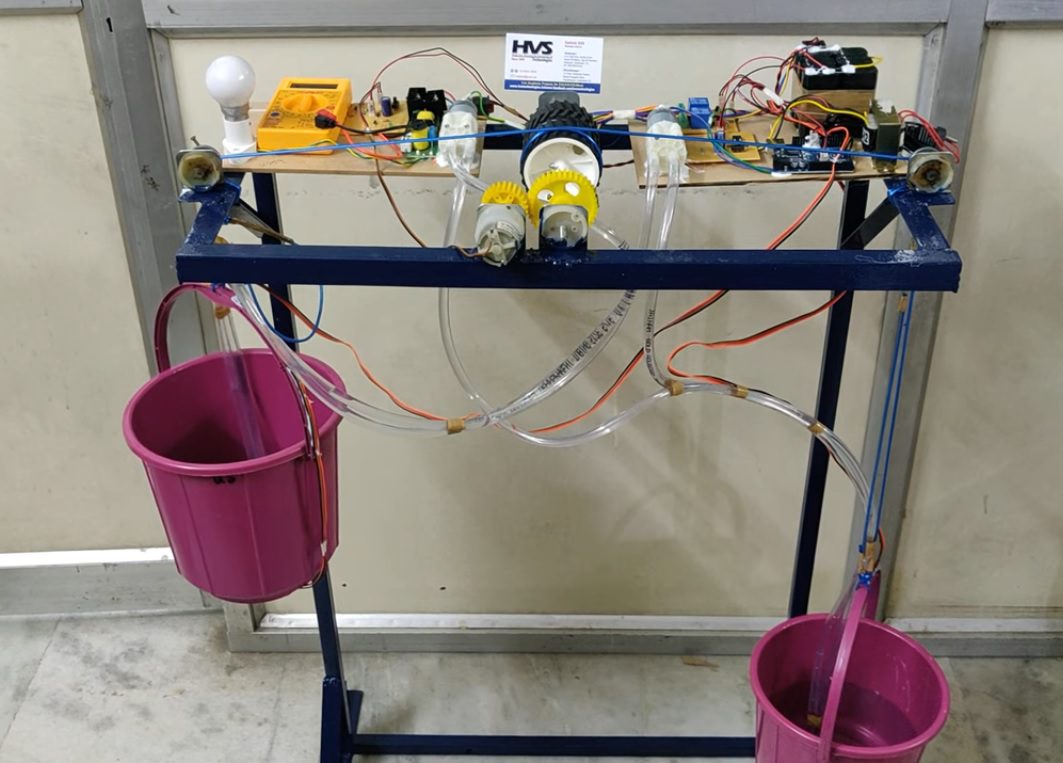
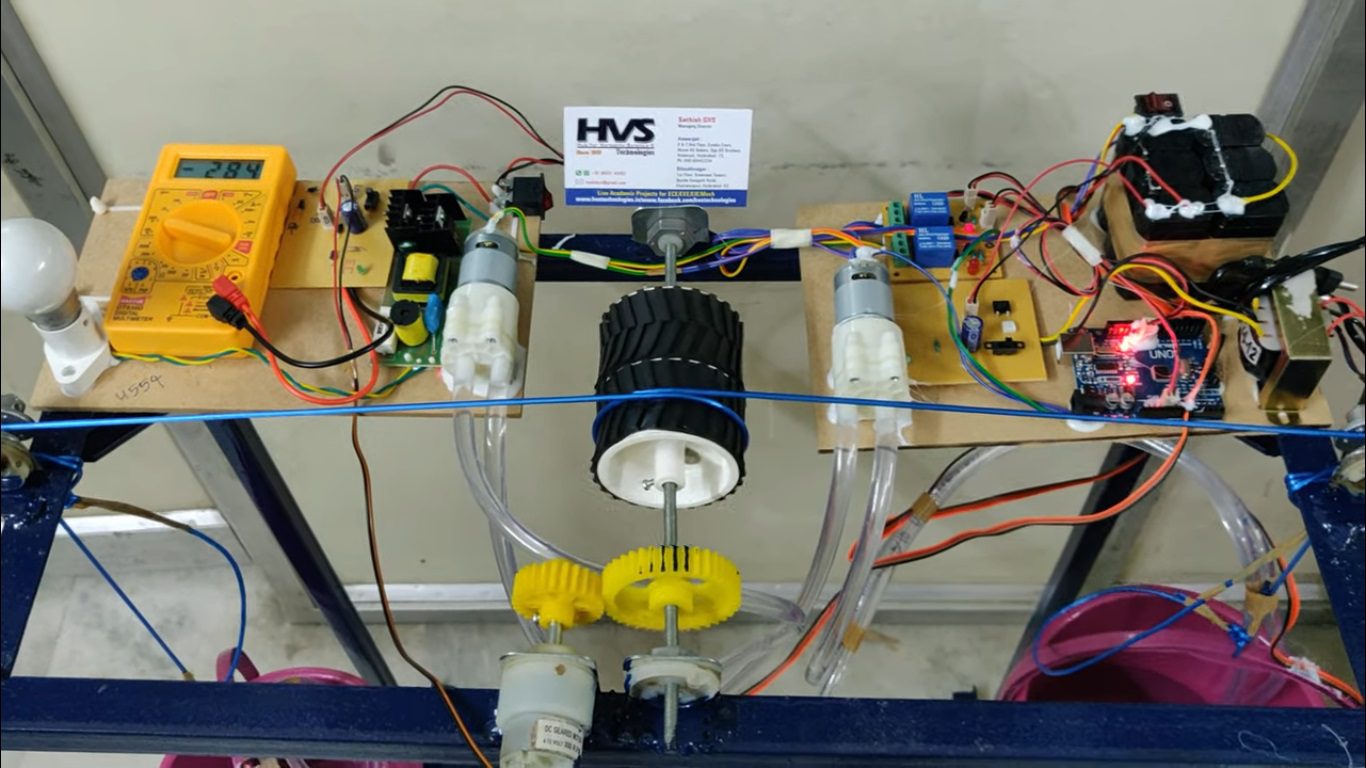
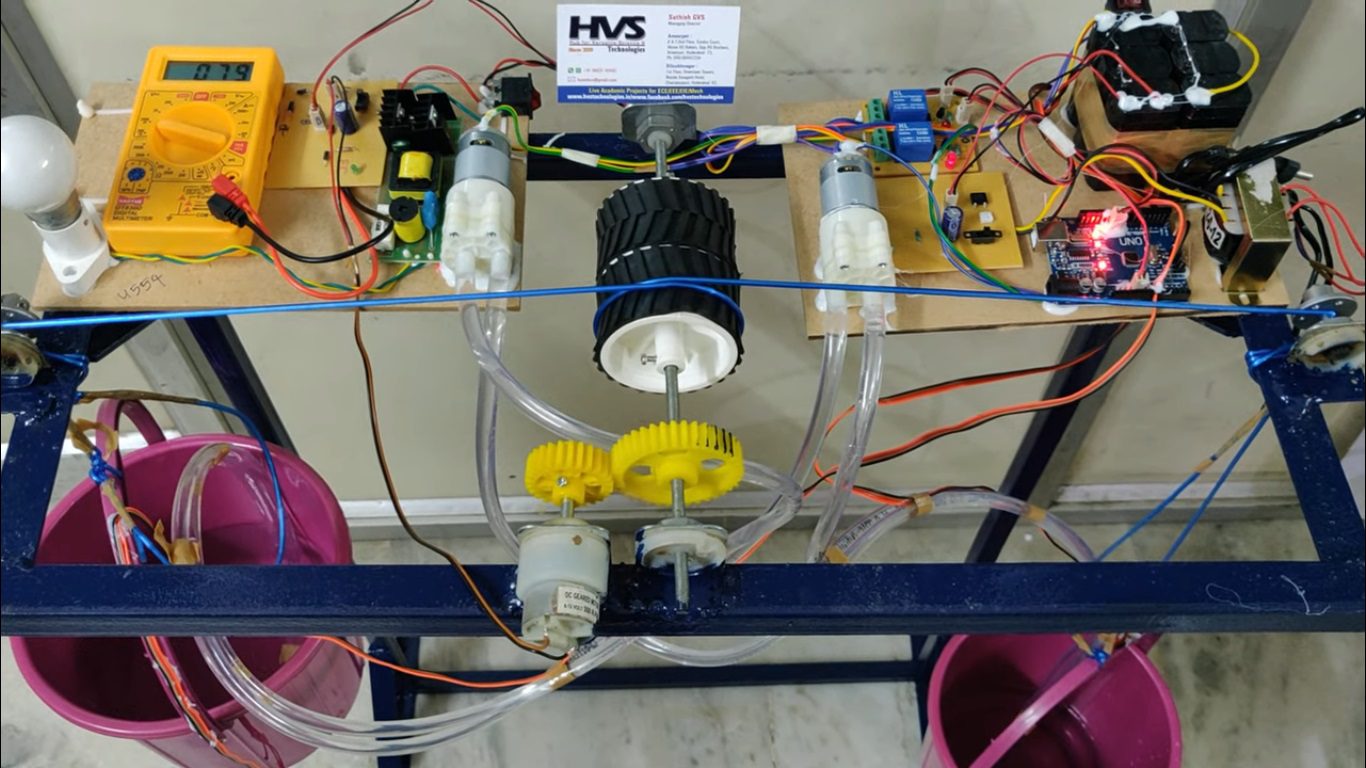
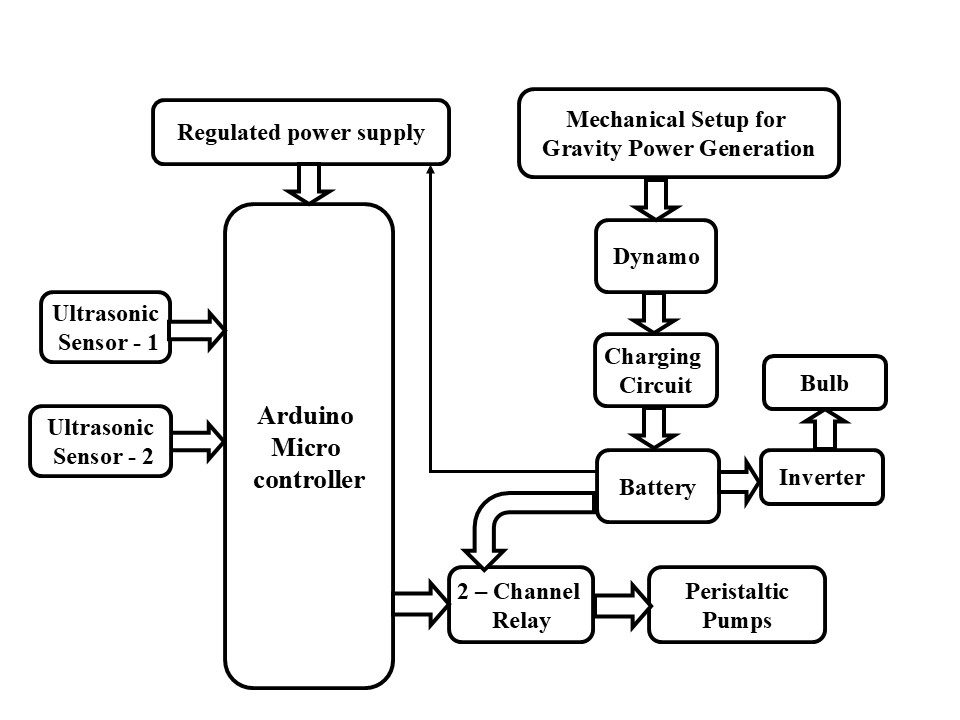
This system is designed around an Arduino microcontroller, two ultrasonic sensors, a 2-channel relay module, a peristaltic pump, a Sour Gear mechanism, a DC dynamo, a rechargeable battery, and an inverter. The Arduino acts as the central controller, while the ultrasonic sensors continuously monitor the positions of two water-filled buckets suspended on opposite sides of a pulley.
Initially, one bucket contains more water than the other, making it heavier. Due to gravity, the heavier bucket moves downward while the lighter bucket moves upward. The ultrasonic sensor attached to the descending bucket measures its distance from the ground and sends this information to the Arduino. When the bucket reaches a predefined position, the Arduino activates the 2-channel relay, which switches on the peristaltic pump.
The peristaltic pump transfers water from the heavier bucket to the lighter bucket. As water is transferred, the weight distribution between the buckets changes. Eventually, the previously lighter bucket becomes heavier and starts moving downward under the influence of gravity, while the other bucket moves upward. This continuous transfer of water creates a cyclic up-and-down motion of the buckets.
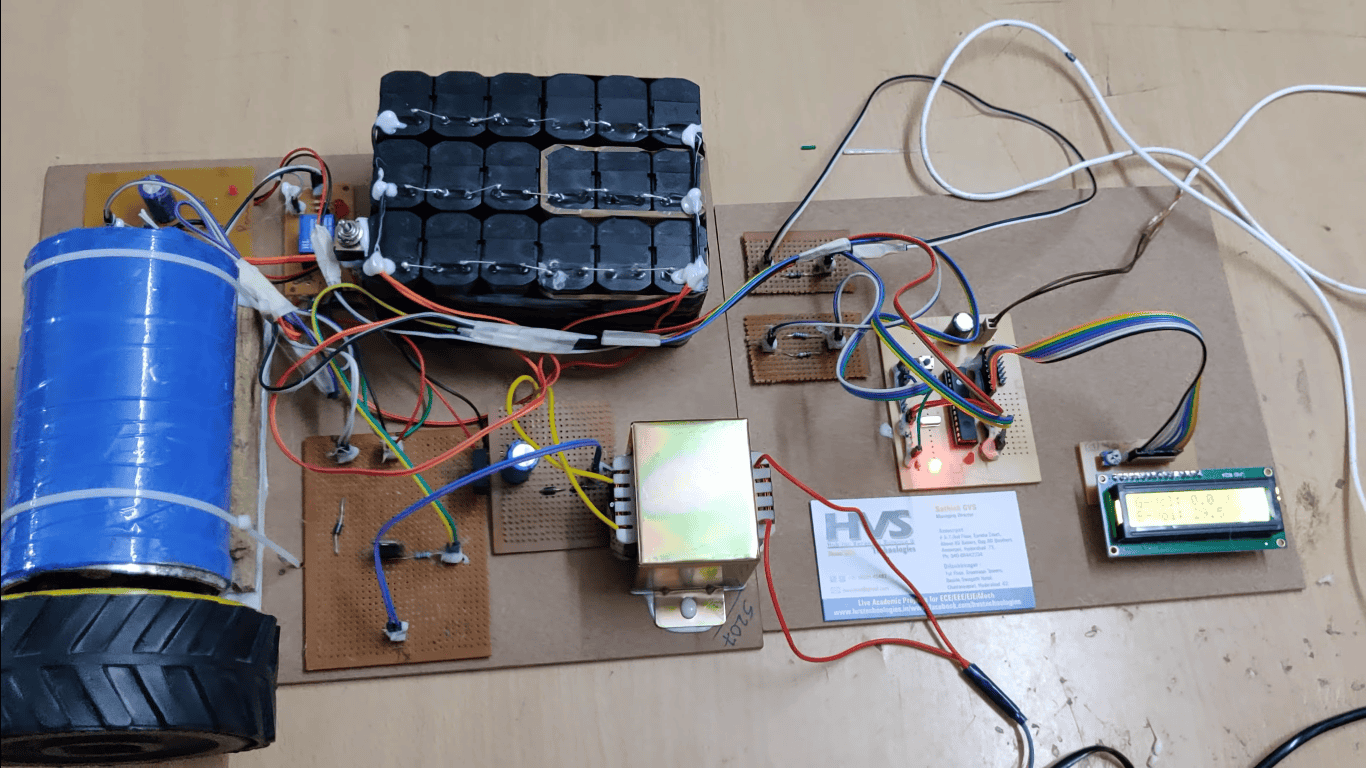
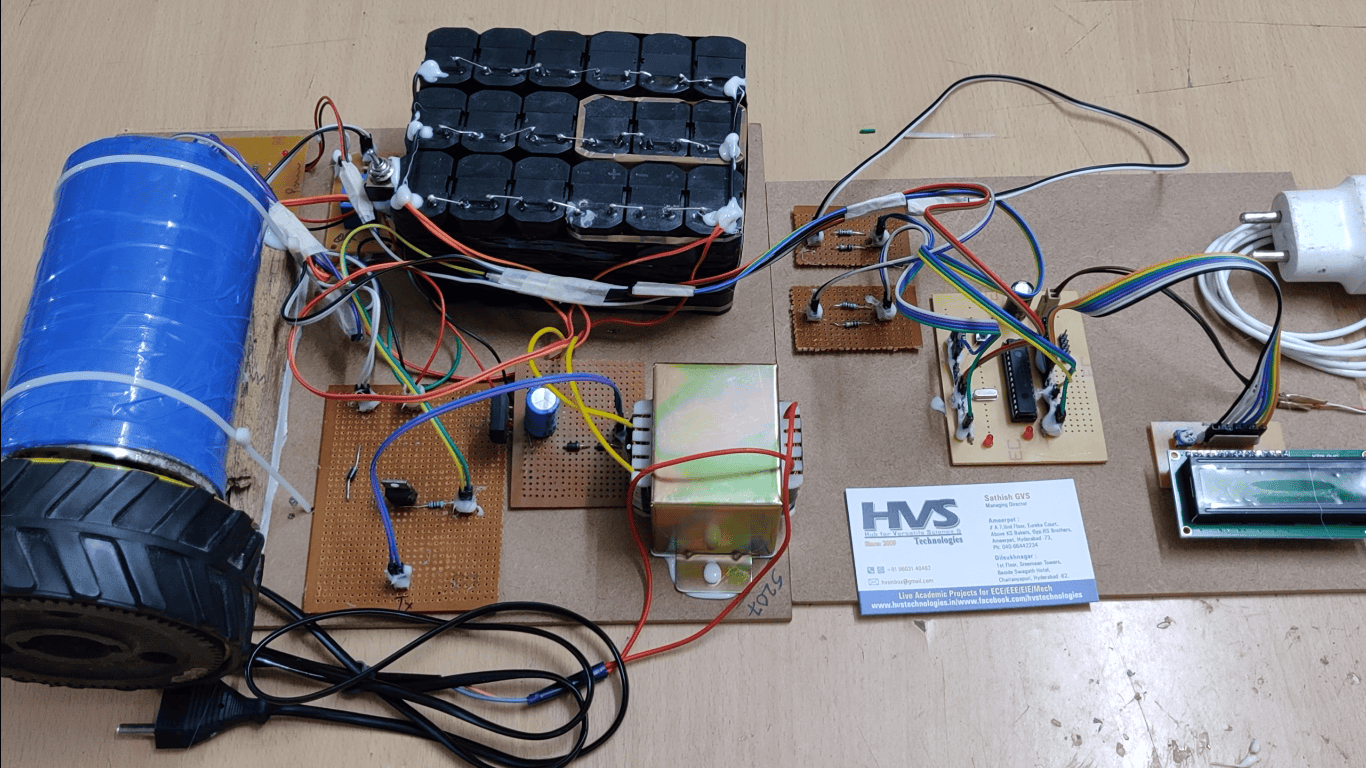
The movement of the buckets is transmitted through a spur gear mechanism, which is mechanically coupled to a DC dynamo. As the Spur Gear rotates due to the alternating motion of the buckets, the dynamo converts the mechanical energy into electrical energy. The generated DC power is regulated through a charging circuit and stored in a rechargeable battery.
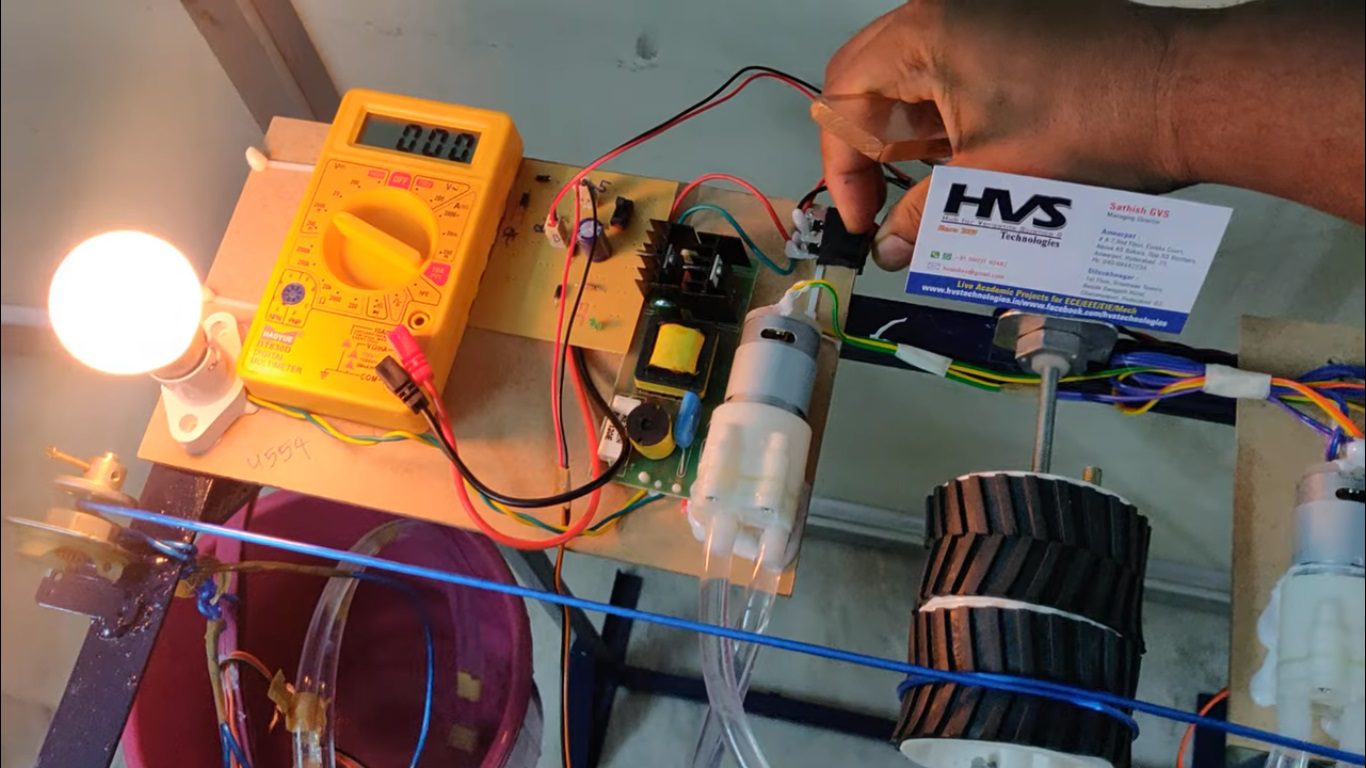
The stored DC power is then supplied to an inverter, which converts it into AC power. The AC output can be used to operate low-power electrical loads such as an AC LED bulb or other small household appliances.
This project demonstrates the conversion of gravitational potential energy into electrical energy using an automated water-transfer mechanism. The Arduino-based control system ensures continuous operation by monitoring bucket positions and controlling the peristaltic pump, making the system efficient and fully automatic for educational and experimental applications.
Features:
 video:
Arduino-based automatic control system.
Utilizes gravitational force for mechanical motion.
Dual-bucket water balancing mechanism.
Automatic water transfer using a peristaltic pump.
Real-time bucket position monitoring using ultrasonic sensors.
2-channel relay for automatic pump control.
Gear-driven DC dynamo for electricity generation.
DC dynamo for electricity generation.
Rechargeable battery for energy storage.
Inverter converts DC power into AC output.
The Major building blocks of this project are:- Arduino board with power supply
- Ultrasonic Sensors
- Peristaltic
- 2-channel Relay.
- Dynamo
- Charging Circuit.
- Rechargeable Battery.
- Inverter.
- AC Bulb.
- Spur Gear Setup.
 video: