No products in the cart.


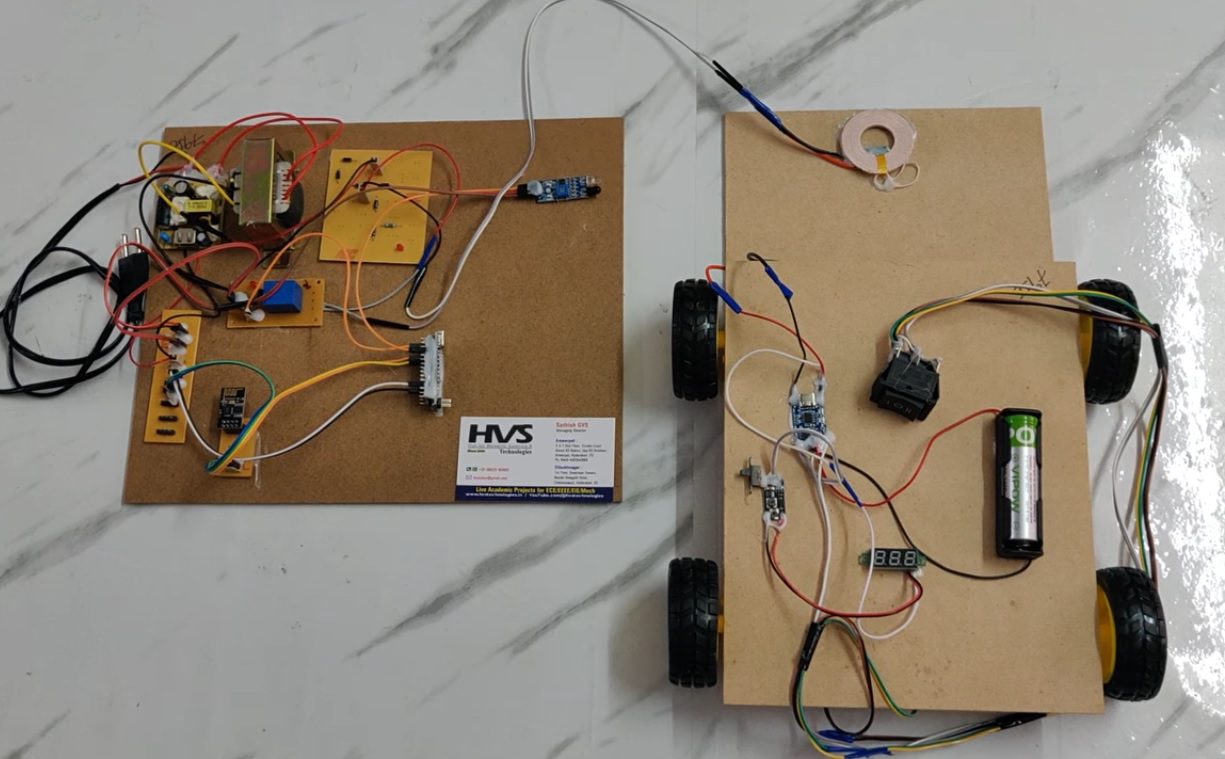
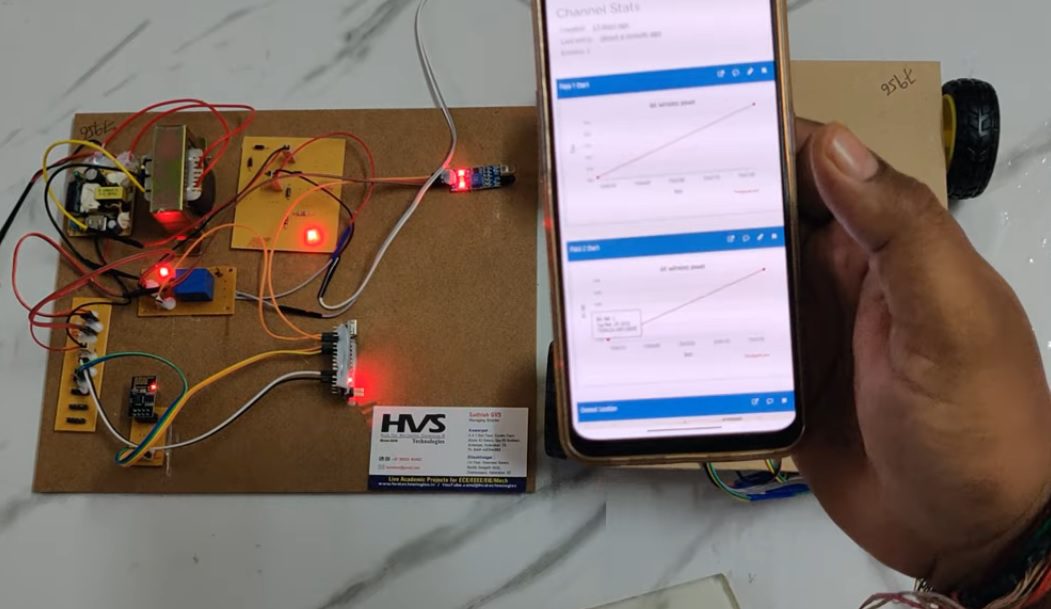
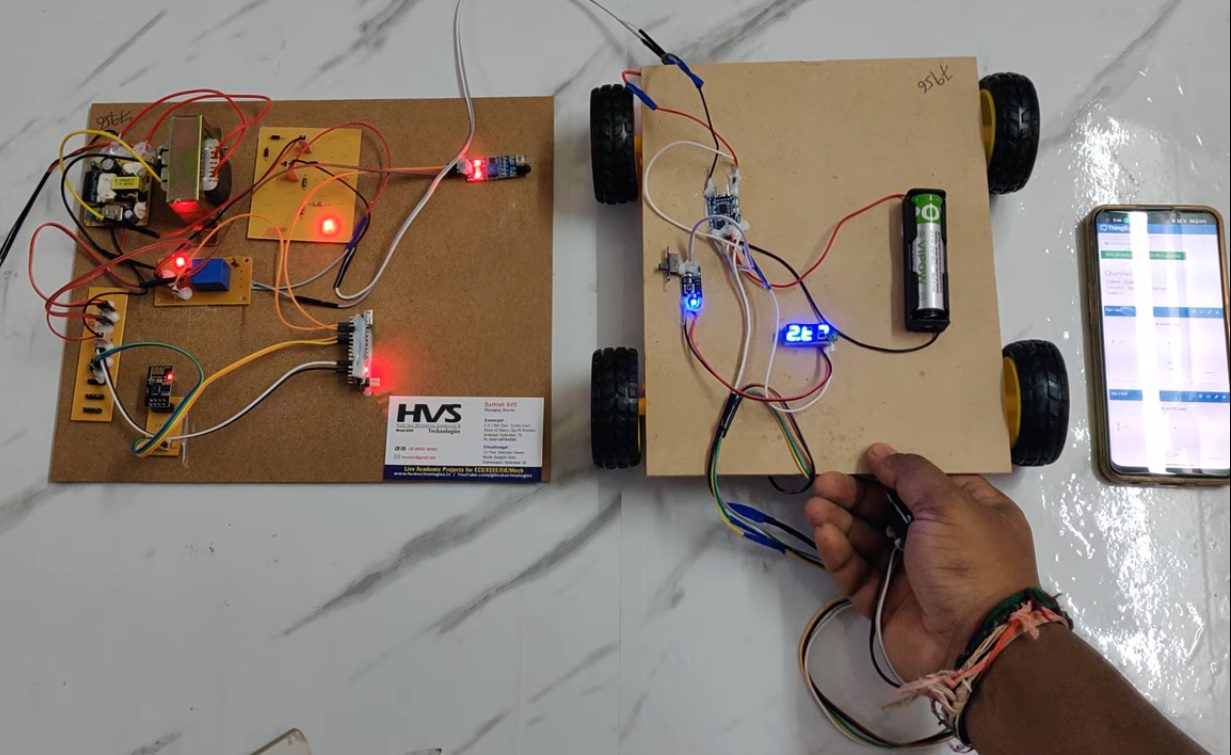
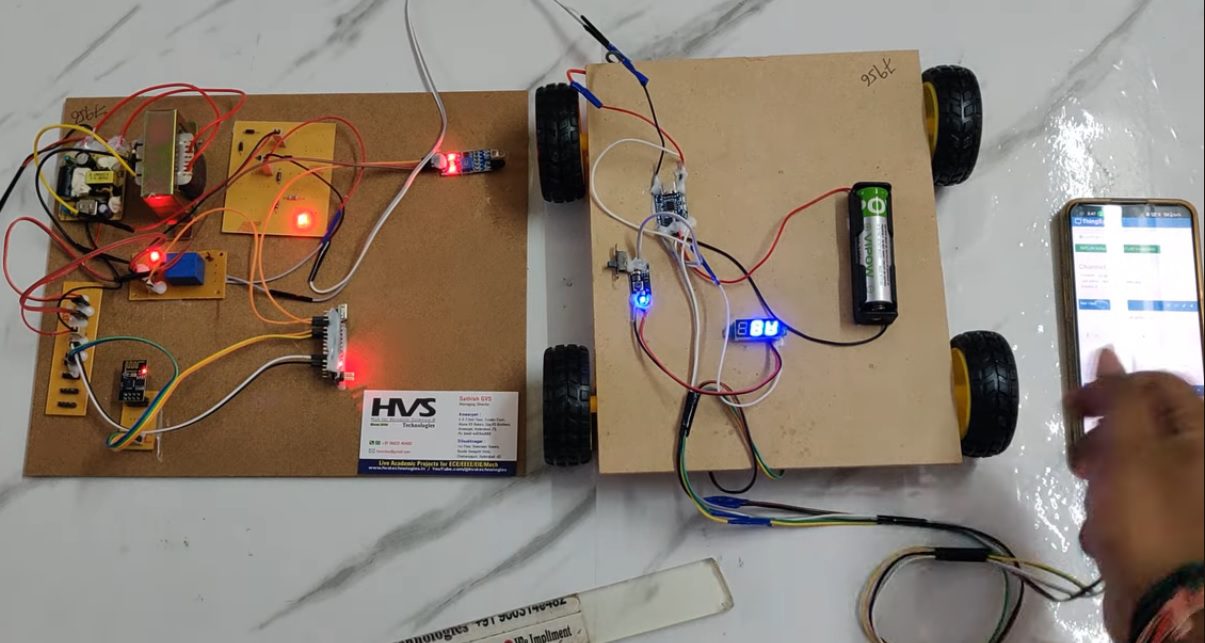
The Smart Wireless EV Charging System Using Resonant Inductive Coupling for Rural Areas is designed to provide an efficient, contactless, and user-friendly charging solution for electric vehicles, especially in remote locations where conventional charging infrastructure is limited. The system utilizes resonant inductive coupling to transfer power wirelessly from a transmitting coil to a receiving coil without physical connectors.
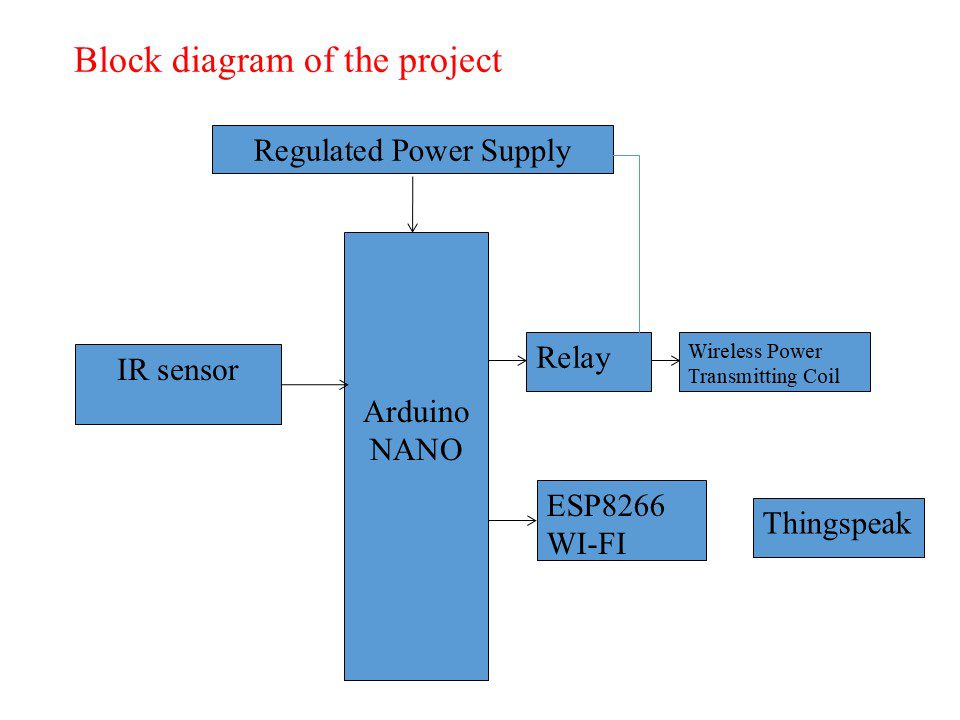
On the transmitter side, an IR sensor is employed for vehicle detection. When a vehicle is detected, the sensor sends a signal to the Arduino Nano, which activates a relay to turn ON the wireless power transmitting coil. This ensures that power is supplied only when a vehicle is present, improving energy efficiency and safety. Additionally, the system integrates an ESP8266 Wi-Fi module to upload charging parameters such as charging time and billing details to the ThingSpeak cloud platform for real-time monitoring and data analysis.
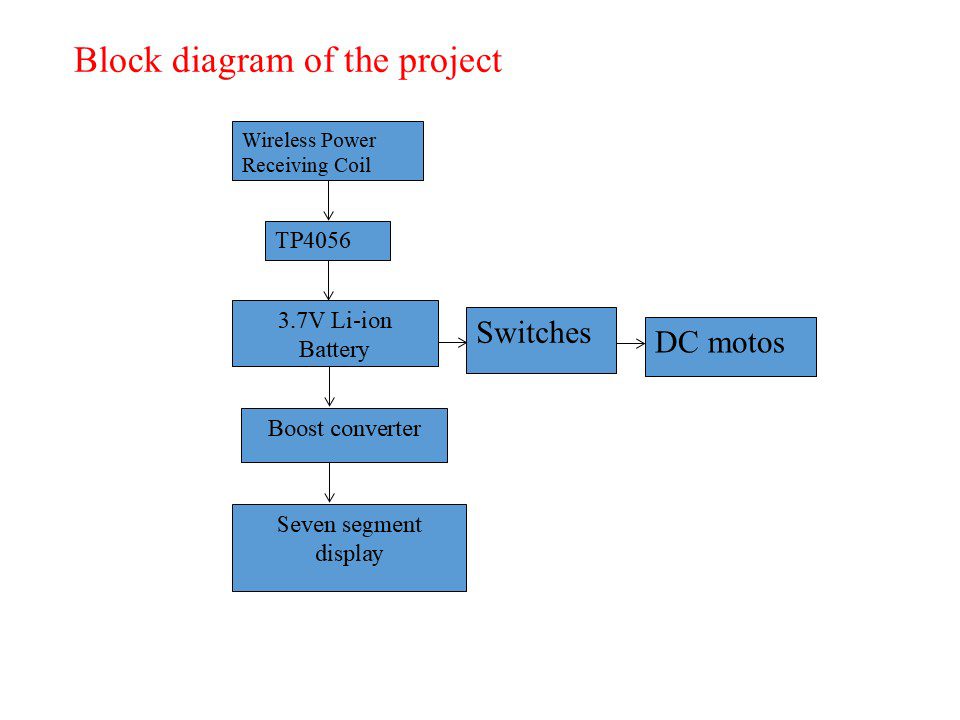
On the vehicle (receiver) side, the wireless power receiving coil captures the transmitted energy, which is then regulated using a TP4056 charging module to safely charge a 3.7V Li-ion battery. Switches are provided to control the vehicle’s DC motors, enabling basic operational control. A boost converter is used to step up the voltage, and the output is displayed on a seven-segment display to indicate the received voltage level, ensuring proper monitoring of the charging process.
Overall, the proposed system offers a smart, automated, and cost-effective wireless EV charging solution with IoT-based monitoring, making it highly suitable for rural and semi-urban environments.
The main objectives of the project are:
 video:
- Develop a wireless EV charging system using inductive coupling
- Enable automatic vehicle detection using IR sensor
- Control charging using Arduino and relay
- Upload charging time & billing data to ThingSpeak
- Ensure safe battery charging using TP4056
- Display voltage using seven-segment display
- Provide a low-cost solution for rural areas
- Regulate Power Supply.
- Arduino NANO Microcontroller.
- DC motors.
- Wireless Power Transmitting and Receiving Coil.
- 7V li-ion Battery.
- IR sensor.
- ESP8266 wi-fi module.
- Relay.
- TP4056.
- Boost converter.
- Switches.
- seven-segment display.
- Arduino IDE for compiling and dumping code into controller
- Express SCH for Circuit design.
- IOT thingspeak cloud.
 video: