No products in the cart.


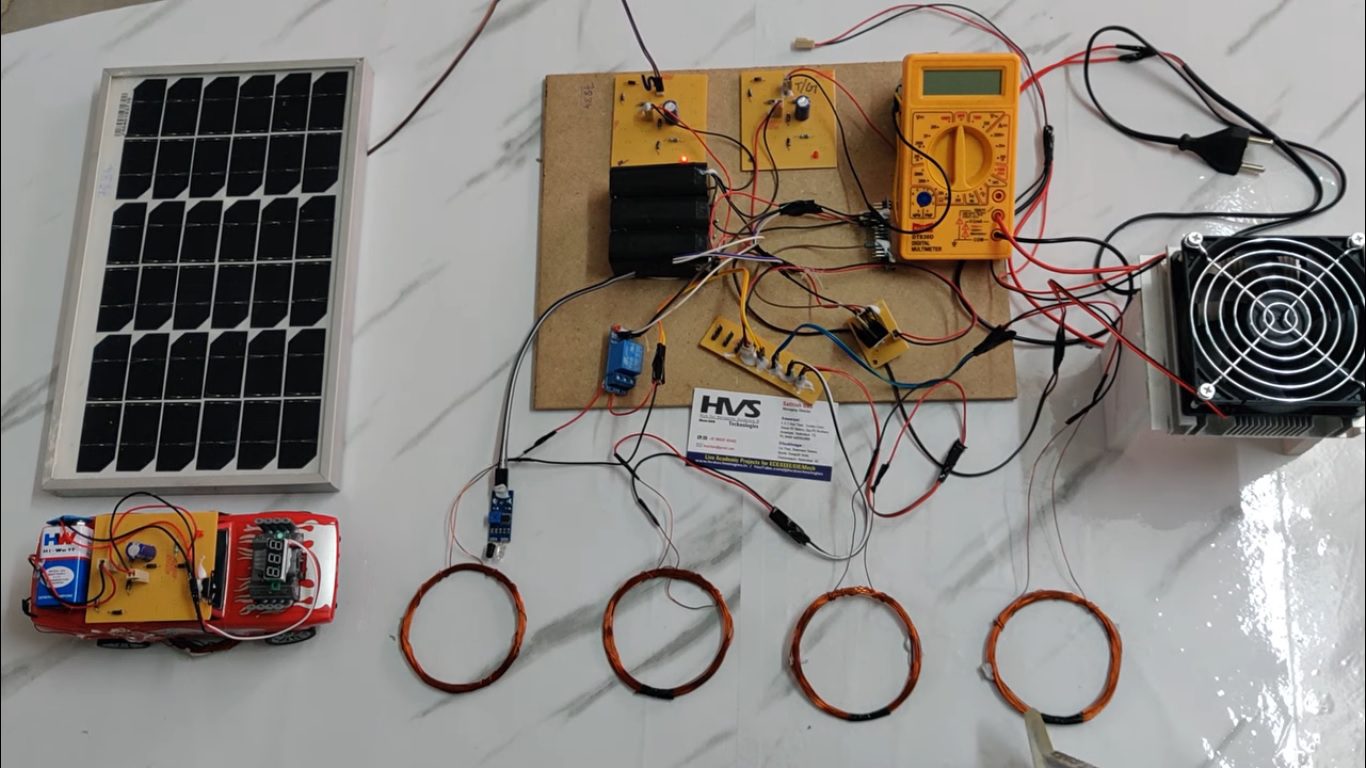
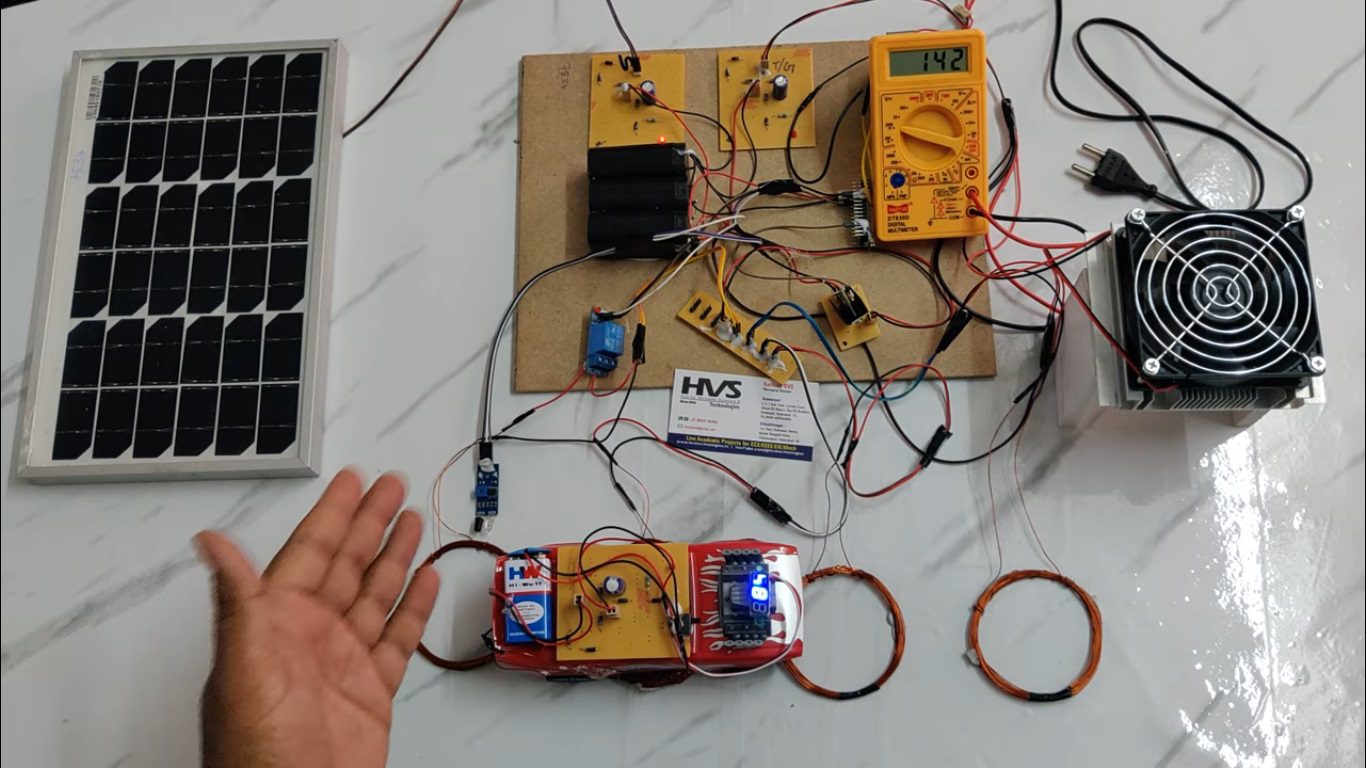
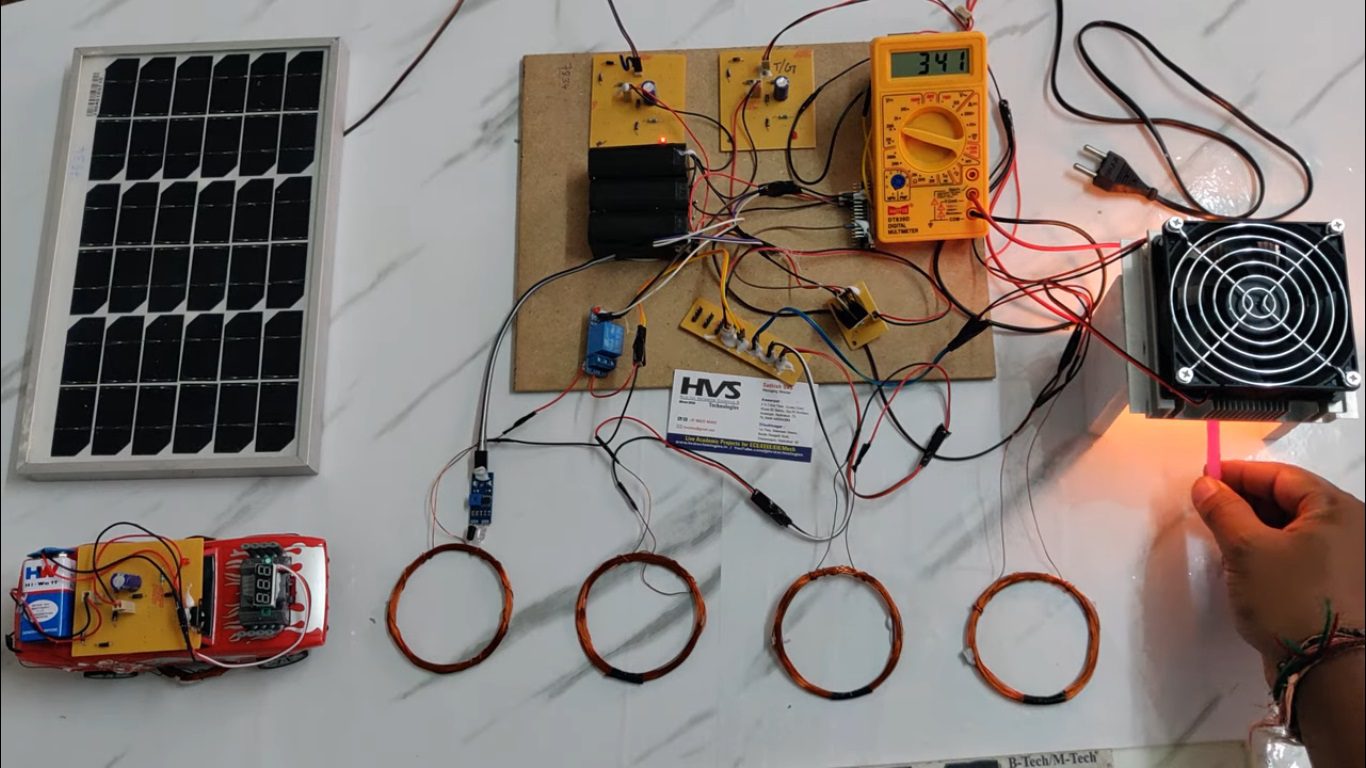
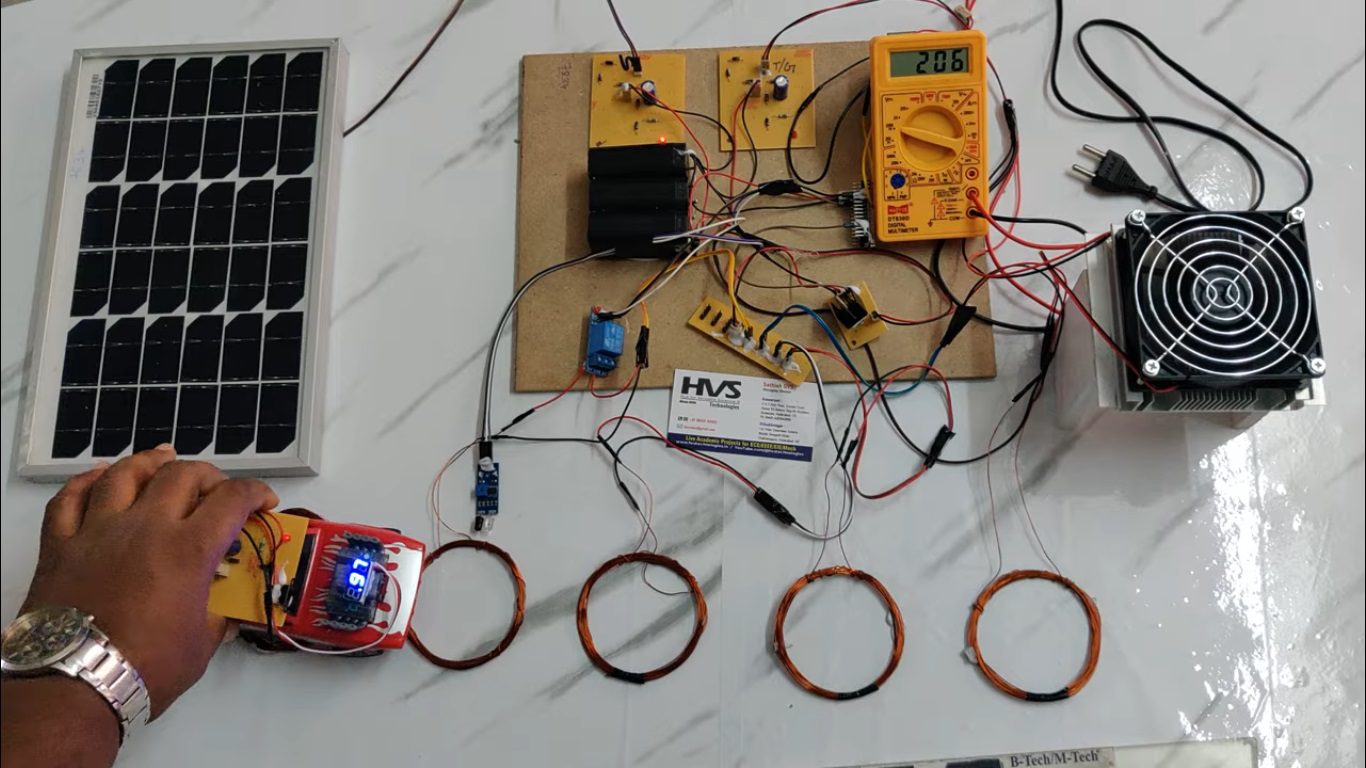
The increasing demand for electric vehicles (EVs) has created the need for efficient, eco-friendly, and intelligent charging systems. This project presents a Solar and Thermo Electric Power Generation Wireless Dynamic and Static EV Charging Station that utilizes renewable energy sources for contactless charging. The system combines a solar photovoltaic panel and a thermoelectric (Peltier) module to generate electrical power, which is stored in a rechargeable battery through suitable charging circuits. This stored energy is used to wirelessly transfer power to electric vehicles using inductive power transmission.
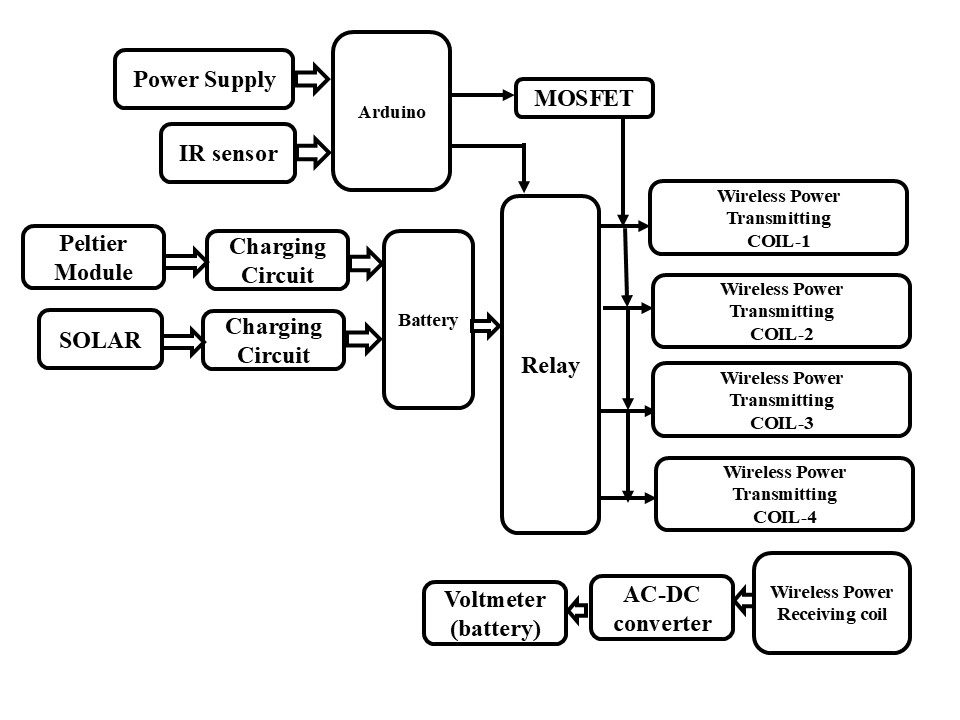
An Arduino microcontroller acts as the central controller of the system. An IR sensor is employed for vehicle detection, ensuring that wireless power transmission is activated only when an EV is present above the charging coil. This improves system efficiency by eliminating unnecessary power consumption and enhancing operational safety. Based on the vehicle position, the Arduino controls a MOSFET and relay circuit to energize the appropriate wireless transmitting coil. Multiple transmitting coils are provided to support both static charging (when the vehicle is parked) and dynamic charging (while the vehicle is moving over the charging track).
On the vehicle side, the wireless receiving coil captures the transmitted energy, which is converted into DC power using an AC-DC converter to charge the vehicle battery. A voltmeter continuously monitors the battery voltage to evaluate charging performance. The integration of renewable energy sources with intelligent vehicle detection and wireless charging technology makes the system energy-efficient, environmentally friendly, and suitable for future smart transportation infrastructure.
This project demonstrates a sustainable and automated EV charging solution that minimizes manual intervention, reduces dependence on conventional power sources, and promotes the adoption of clean energy technologies for next-generation electric mobility.
Objectives:
 video:
- To generate electrical power using solar and thermoelectric (Peltier) energy sources.
- To develop a wireless EV charging system for both static and dynamic charging.
- To detect the presence of a vehicle using an IR sensor for automatic charging.
- To control the wireless power transmission using an Arduino, MOSFET, and relay circuit.
- To improve charging efficiency while reducing energy wastage through automatic operation.
- To promote the use of renewable energy for sustainable electric vehicle charging.
- Power supply.
- Arduino Nano.
- Peltier plate.
- Solar Panel
- Charging Circuit
- Rechargeable battery.
- Four Wireless Power Transformer Modules
- One Wireless Power Receiver Module
- MOSFET Board.
- AC to DC converter.
- Voltmeter(battery).
- IR sensor.
- Relay.
- Embedded C programming.
- ARDUINO IDE programmer for dumping code into Micro controller.
- Express SCH for Circuit design.
 video: