No products in the cart.


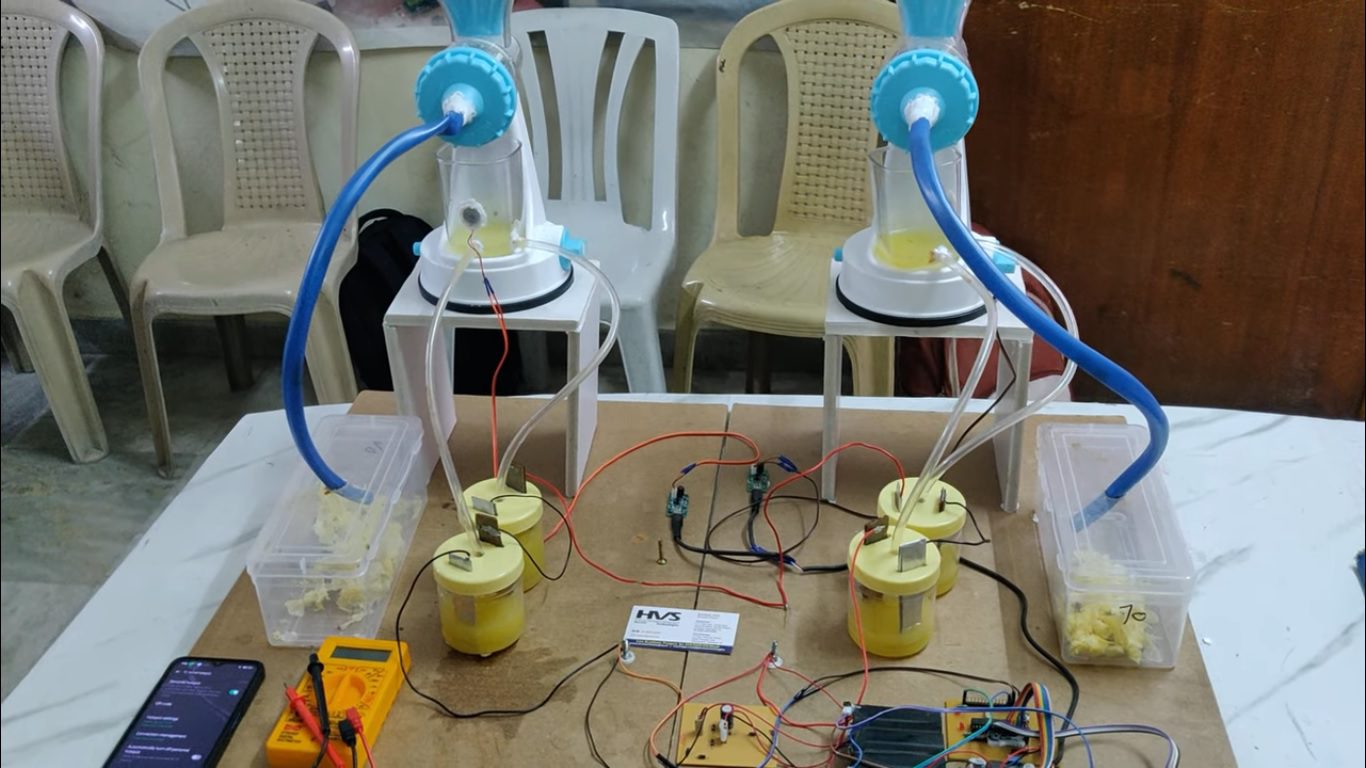
This project presents an eco-friendly method of generating electricity from biodegradable kitchen waste, such as vegetable and fruit waste, while incorporating IoT-based monitoring for real-time performance analysis. The system helps address waste management and renewable energy generation by converting organic waste into useful electrical energy.
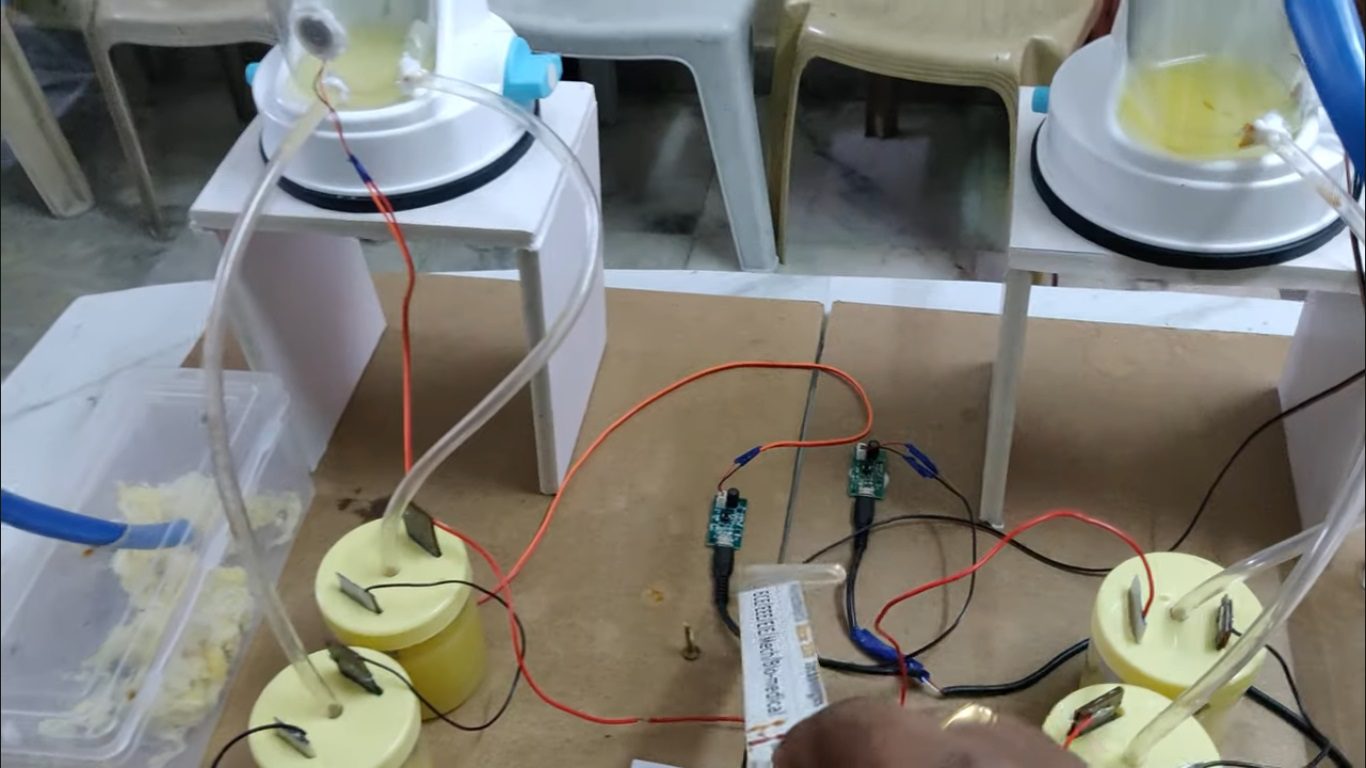
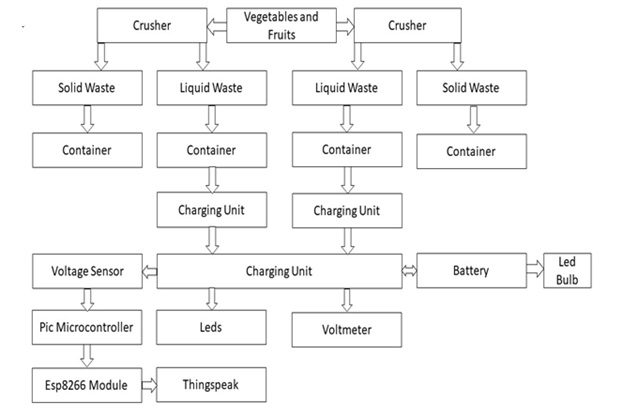
The waste materials are crushed into a slurry and separated into solid and liquid components. The liquid waste, rich in organic acids, acts as an electrolyte in a bio-electrochemical setup. Using zinc and copper electrodes, a chemical reaction generates DC voltage, which is stored in a rechargeable battery and used to power LEDs and other low-voltage loads.
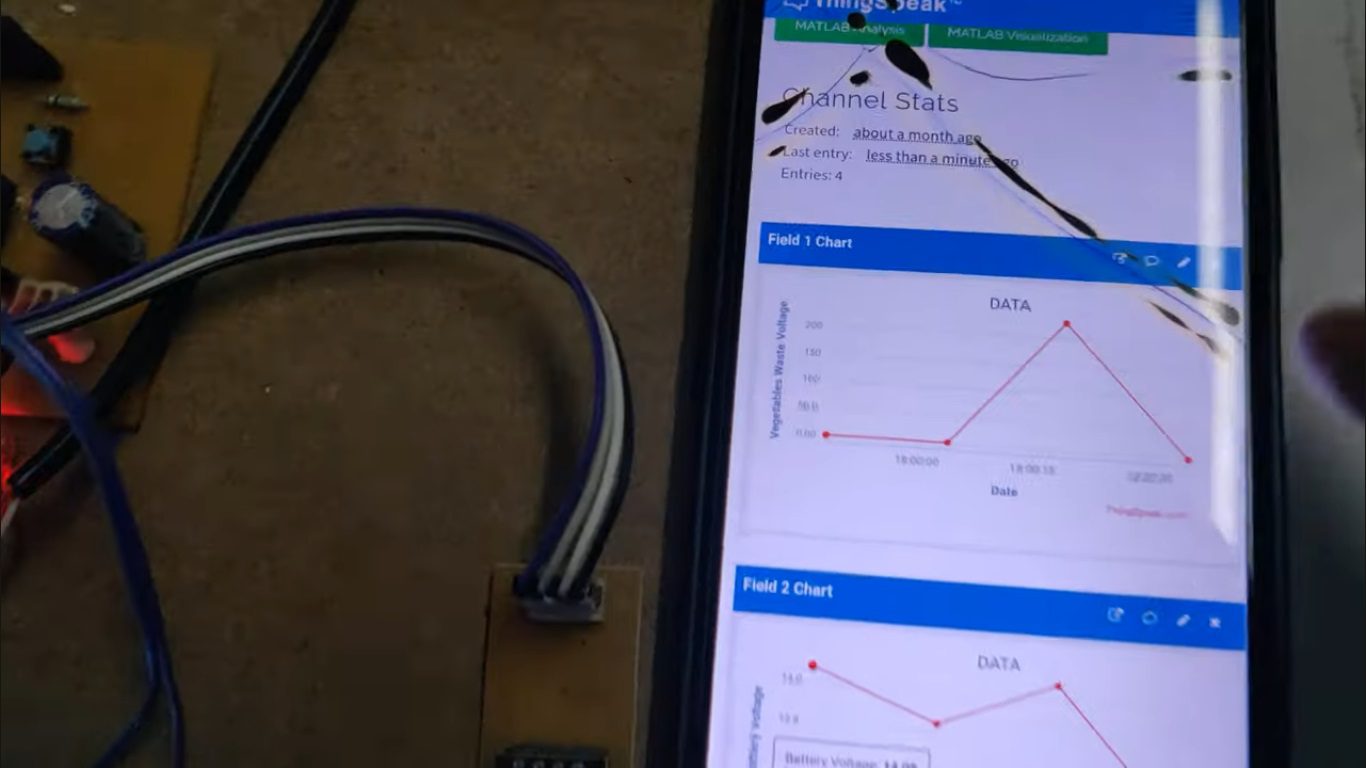
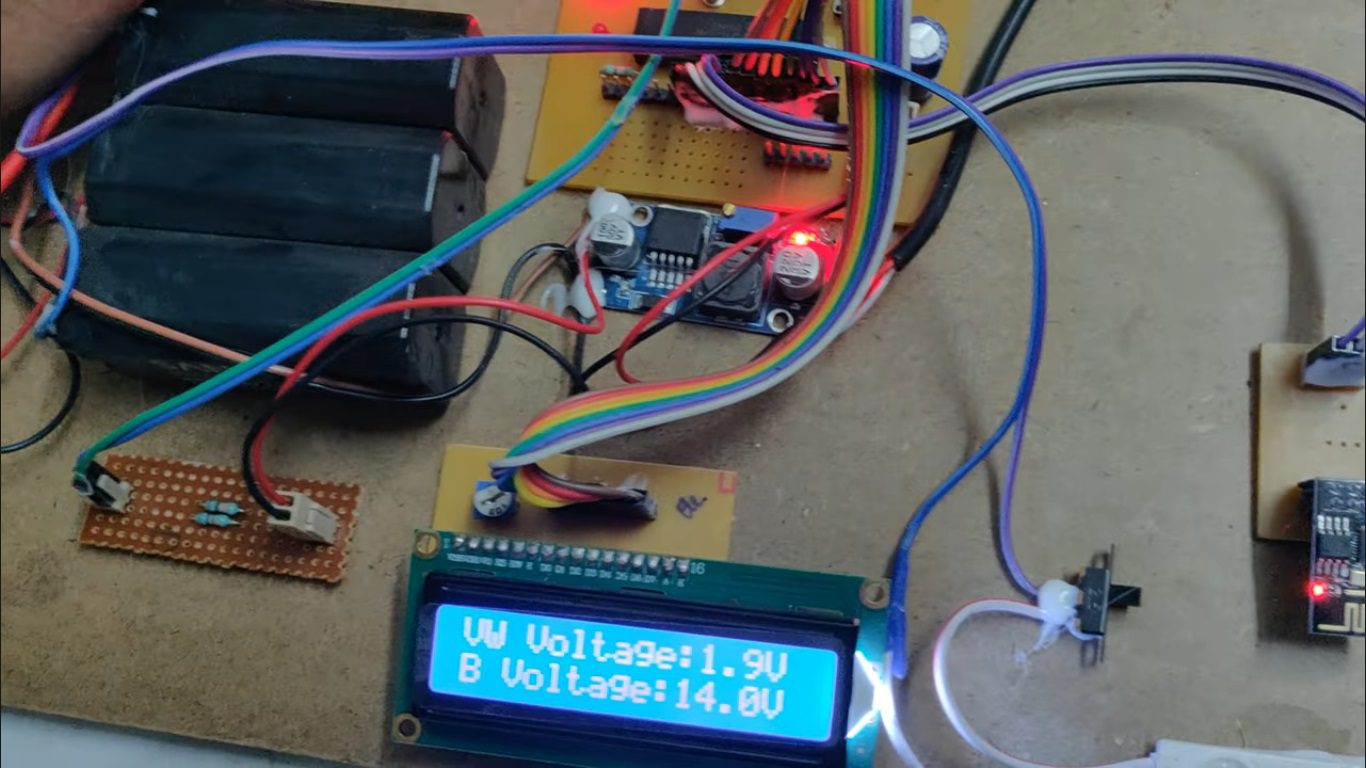
To enhance the system, a voltage sensor continuously monitors the generated output. A PIC microcontroller processes the sensor data and transmits it to the ThingSpeak cloud platform through an ESP8266 Wi-Fi module. This enables real-time monitoring, remote access, data logging, and performance analysis of the energy generation process.
The proposed system demonstrates how biodegradable waste can be converted into a sustainable energy source while integrating modern IoT technology for smart monitoring. It is suitable for science exhibitions, educational projects, renewable energy research, and low-cost green energy applications.
Objectives:
 video:
- To generate electricity from biodegradable kitchen waste.
- To utilize vegetable and fruit waste as a renewable energy source.
- To convert organic waste into electrical energy using electrochemical reactions.
- To monitor the generated voltage using a voltage sensor.
- To transmit energy data to the ThingSpeak cloud using Wi-Fi.
- To enable real-time remote monitoring and data logging.
- To store generated energy in a rechargeable battery.
- To power low-voltage loads such as LEDs.
- To promote waste management and sustainable energy practices.
- To develop an IoT-enabled green energy generation system.
- Vegetables and Fruits – Source of organic energy.
- Crusher Units – For breaking waste into processable form.
- Containers – To store liquid and solid waste separately.
- Charging Units – Electrochemical cells that generate electricity from organic electrolyte.
- Voltage Sensor – Measures the electrical output of the system.
- PIC Microcontroller – Processes sensor data and manages control logic.
- ESP8266 Wi-Fi Module – Sends sensor data to the internet.
- ThingSpeak Cloud – Stores and visualizes system data online.
- Battery – Stores generated energy for later use.
- LEDs and Voltmeter – Demonstrate real-time output and system status.
- LED Bulb – Final application load powered by battery.
- Embedded C programming.
- PIC Complier for dumping code into Micro controller.
- Express SCH for Circuit design.
 video: