No products in the cart.


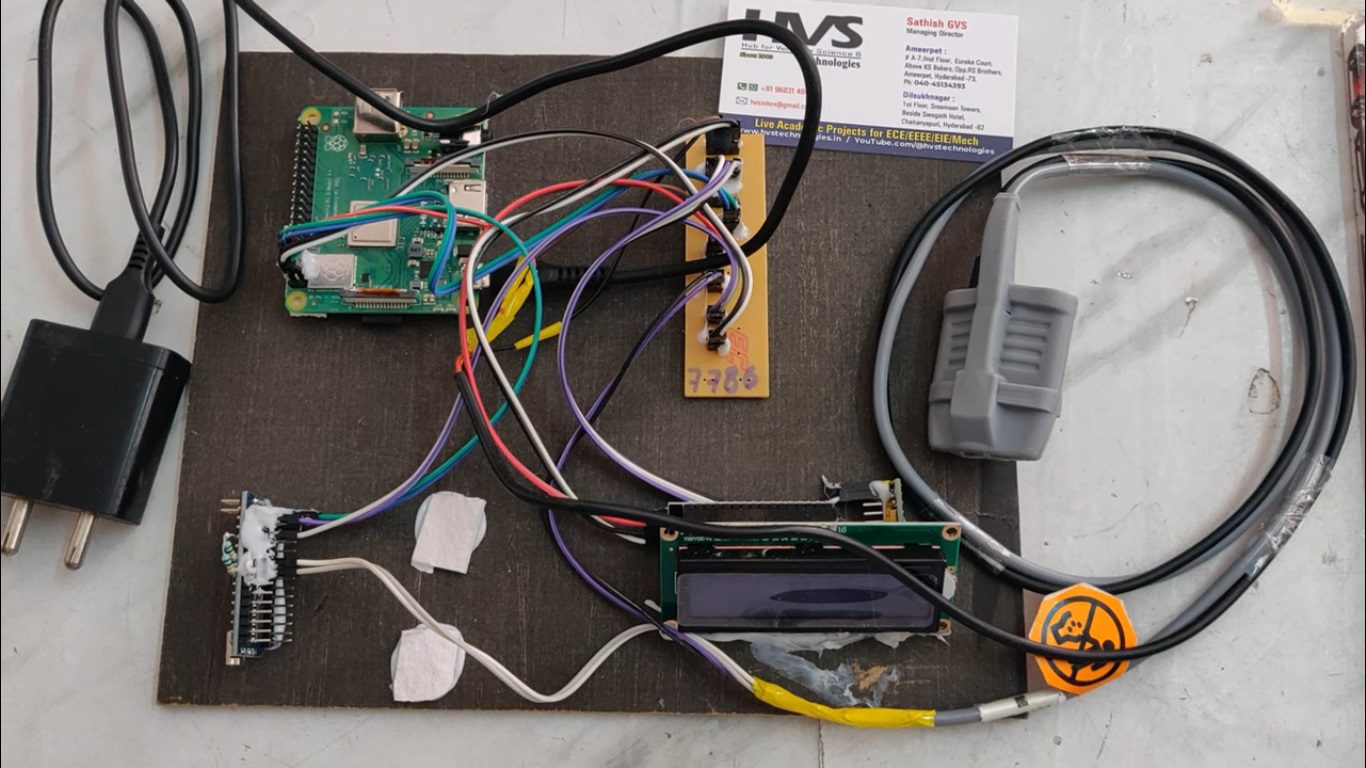
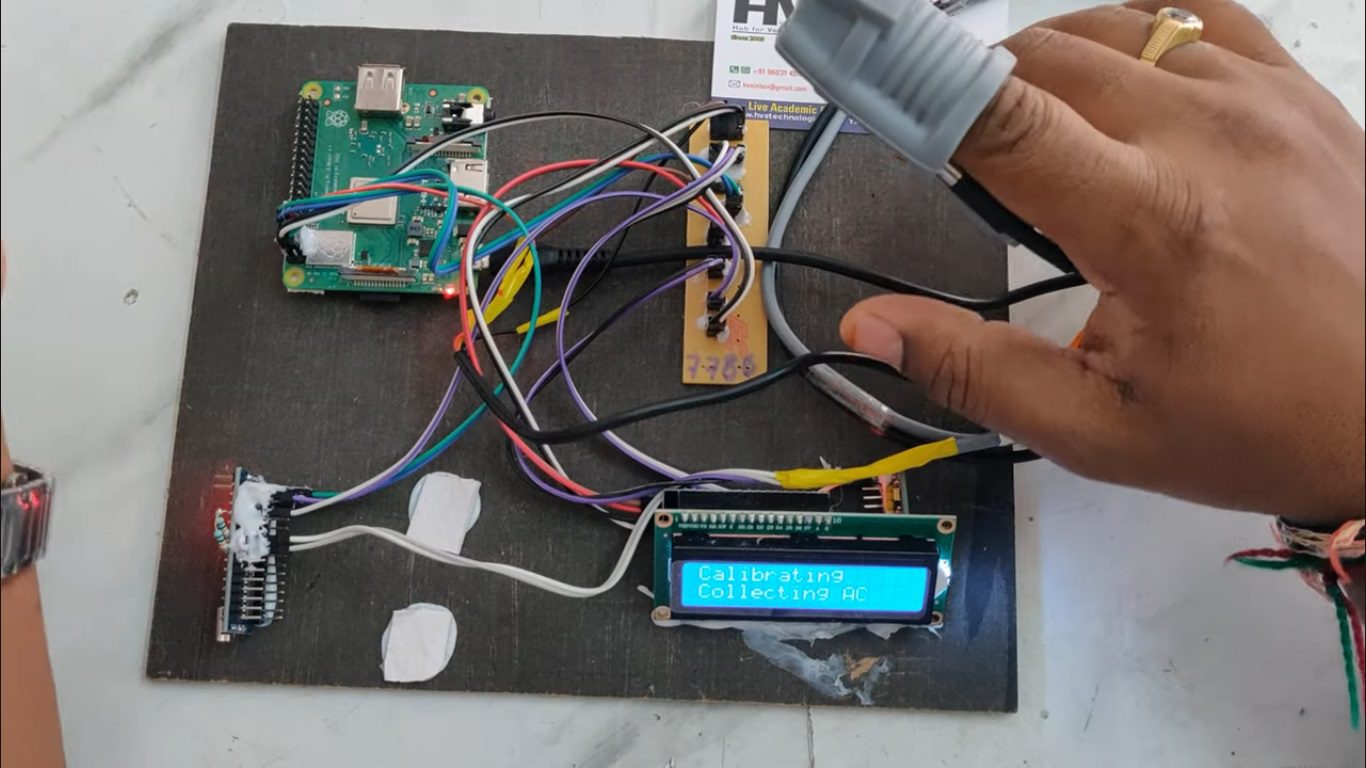
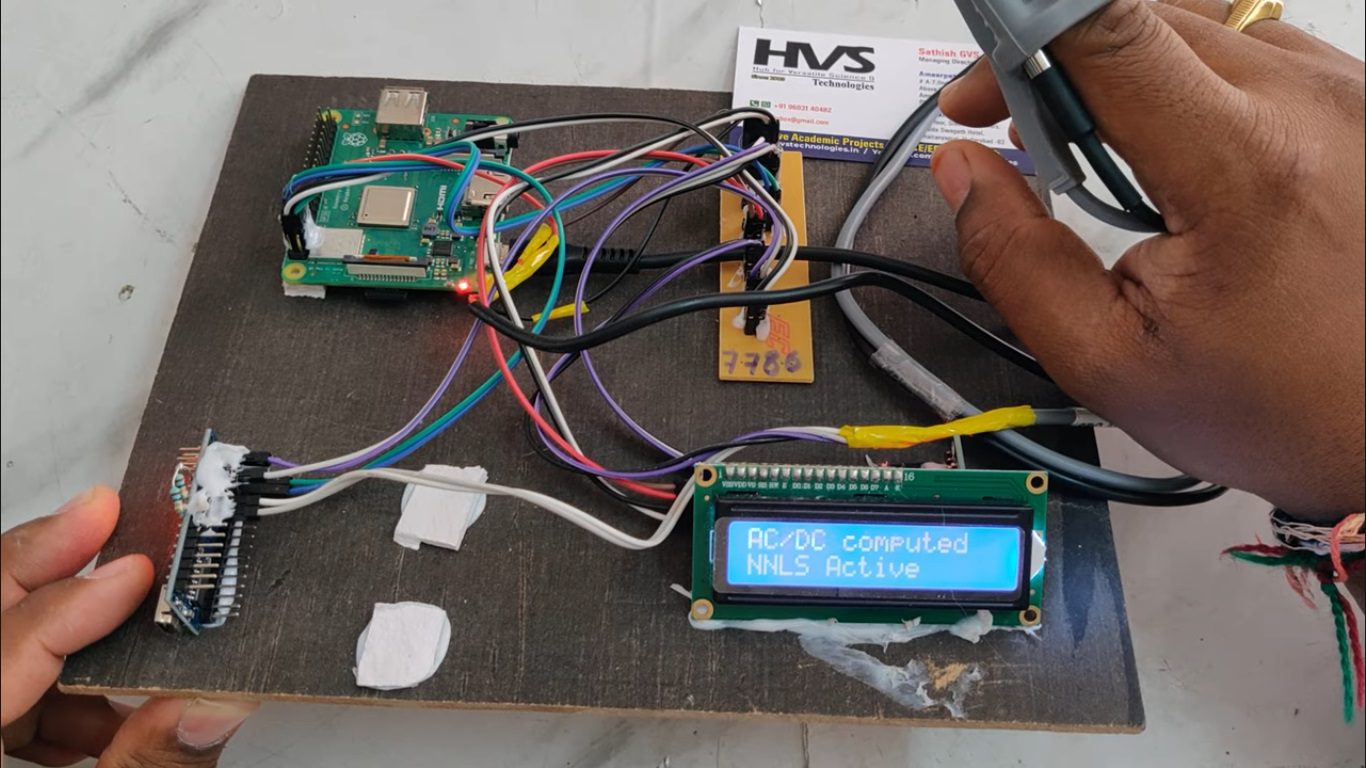
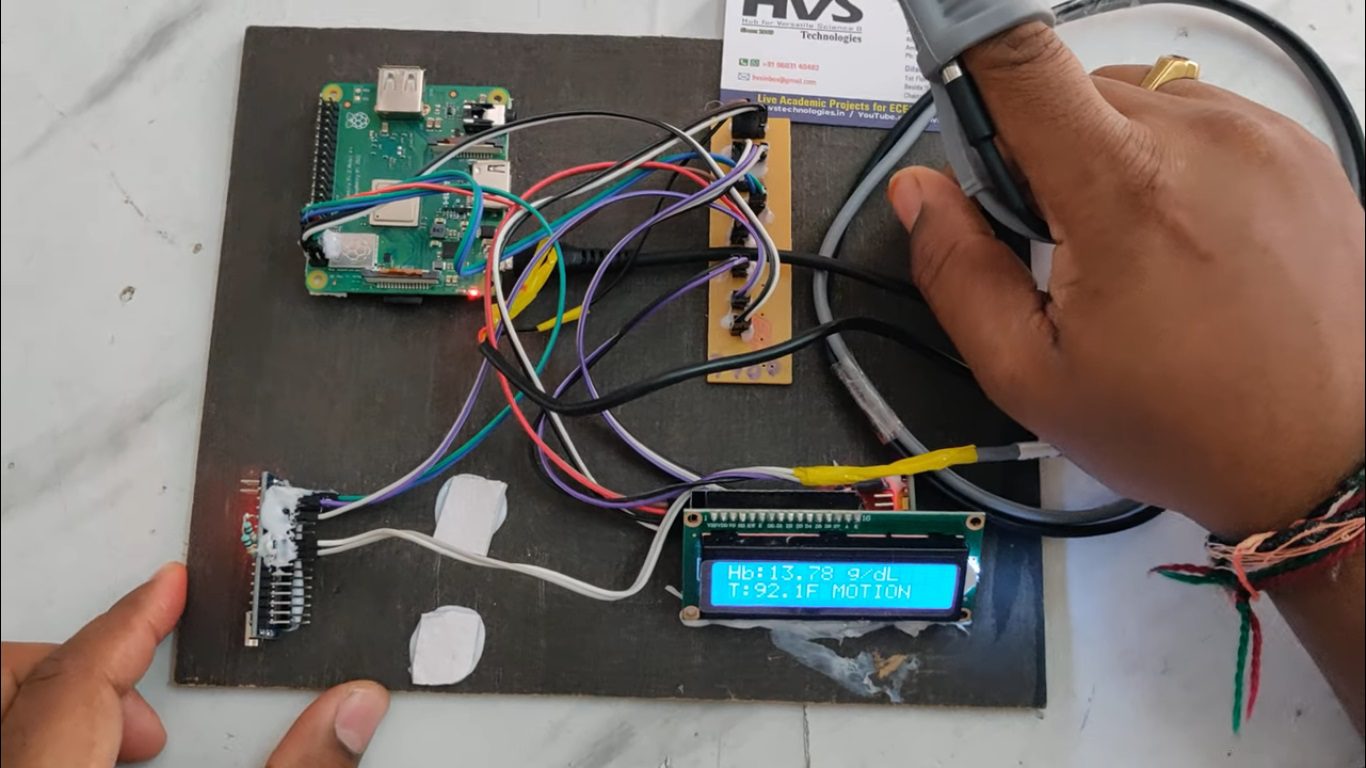
This project presents a non-invasive Haemoglobin measurement system that estimates blood Haemoglobin concentration using seven optical wavelengths (450 nm, 530 nm, 560 nm, 590 nm, 650 nm, 730 nm, and 895 nm). These wavelengths are selected based on Haemoglobin absorption characteristics to improve measurement accuracy and reduce the effects of skin color, tissue thickness, and blood volume variations.
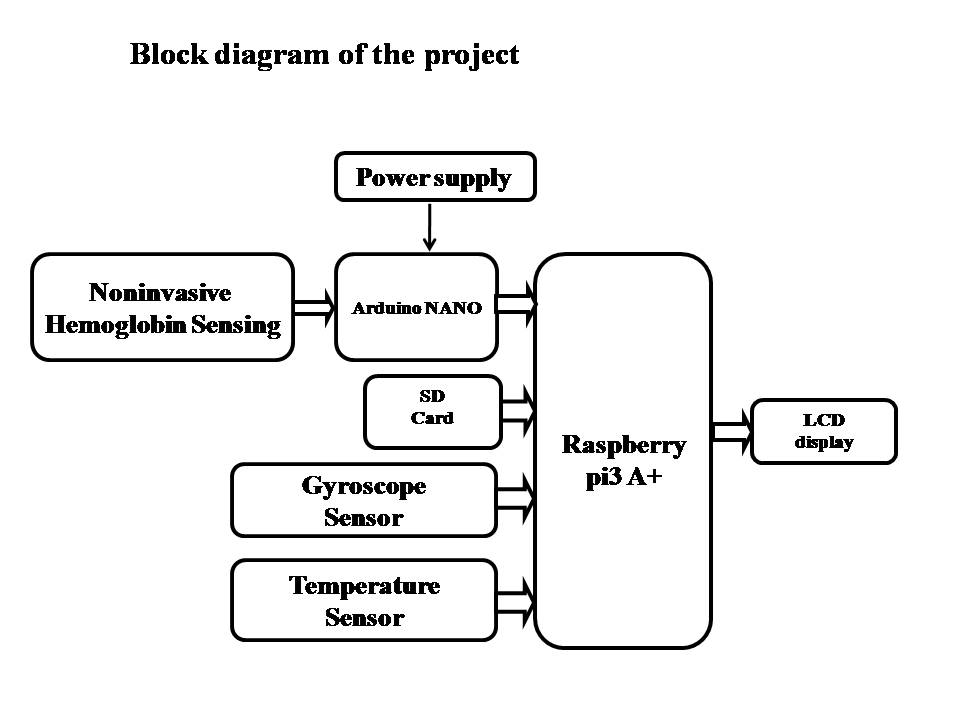
An Arduino Nano controls the LED sequencing and acquires optical signals, which are transmitted to a Raspberry Pi 3 A+ for processing. The system uses the Non-Negative Least Squares (NNLS) algorithm and machine learning techniques to estimate Haemoglobin levels accurately without gender-based calibration.
To enhance reliability, an accelerometer detects motion artifacts, while a DS18B20 temperature sensor monitors temperature variations. The system continuously evaluates signal quality using the Signal-to-Noise Ratio (SNR) and displays Haemoglobin concentration, SNR, temperature, and motion status on a 16×2 LCD. The proposed system provides a safe, reusable, and real-time solution for non-invasive Haemoglobin monitoring and health assessment.
Objectives:
 video:
- To develop a non-invasive system for measuring Haemoglobin concentration.
- To use seven optical wavelengths for accurate Haemoglobin estimation.
- To acquire and process optical signals using Arduino Nano and Raspberry Pi.
- To implement the NNLS algorithm for Haemoglobin calculation.
- To improve measurement accuracy using machine learning techniques.
- To monitor signal quality using Signal-to-Noise Ratio (SNR) analysis.
- To detect motion artifacts using an accelerometer sensor.
- To measure temperature variations using a DS18B20 temperature sensor.
- To display Haemoglobin level, SNR, temperature, and motion status on an LCD.
- To provide a safe, reusable, and real-time Haemoglobin monitoring solution.
- Power supply.
- RASPBERRY pi3 A+.
- Arduino NANO.
- Noninvasive Haemoglobin Sensor.
- LCD display.
- Gyroscope.
- Temperature sensor.
- SD card.
- Arduino IDE.
- Embedded C language.
- Raspbian OS.
- Python Language.
- Machine Learning.
 video: