No products in the cart.


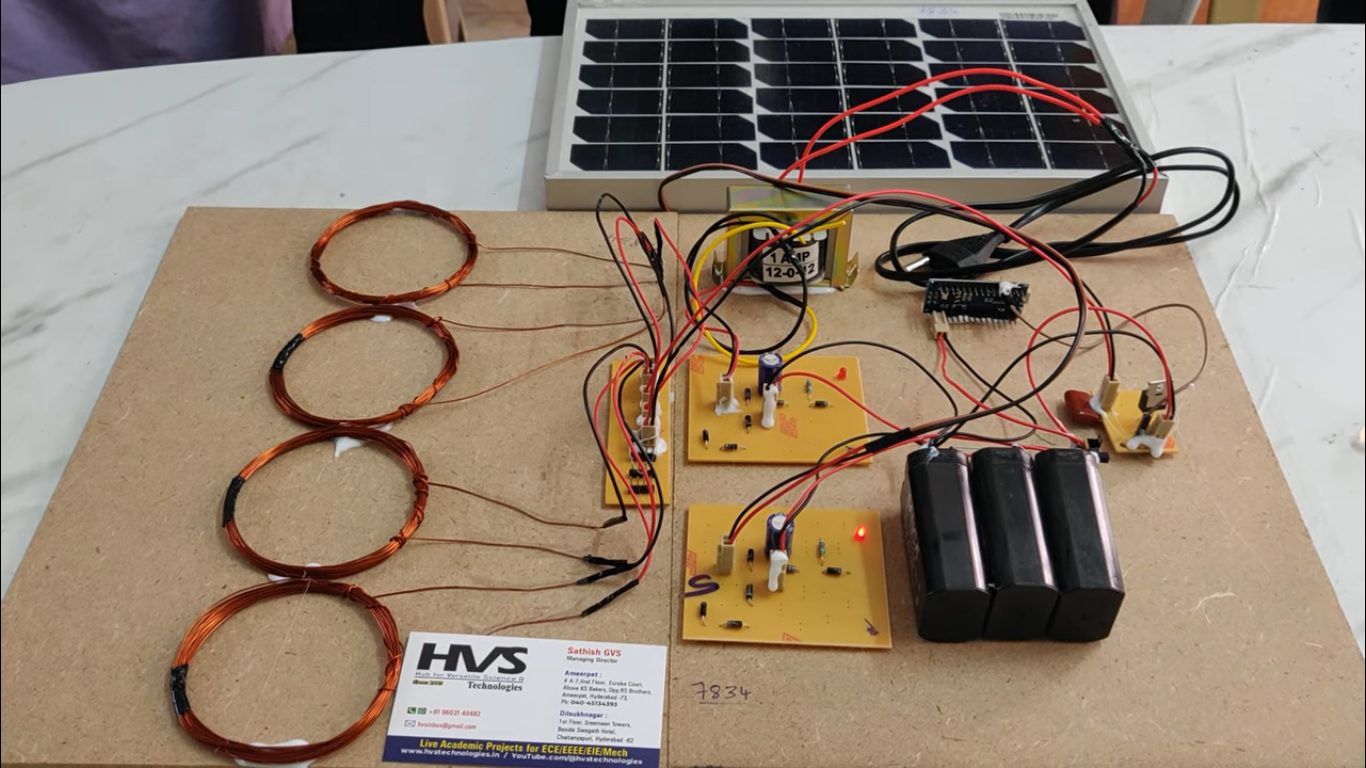
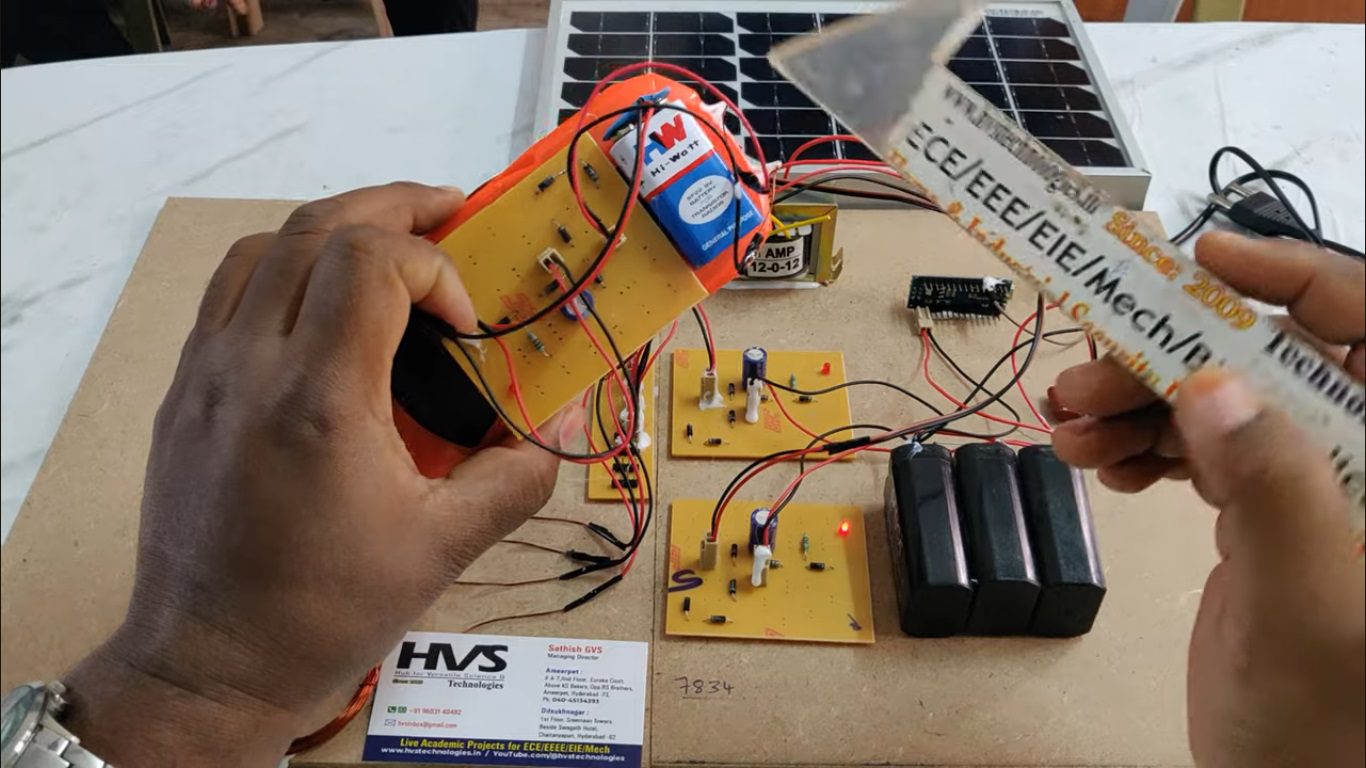
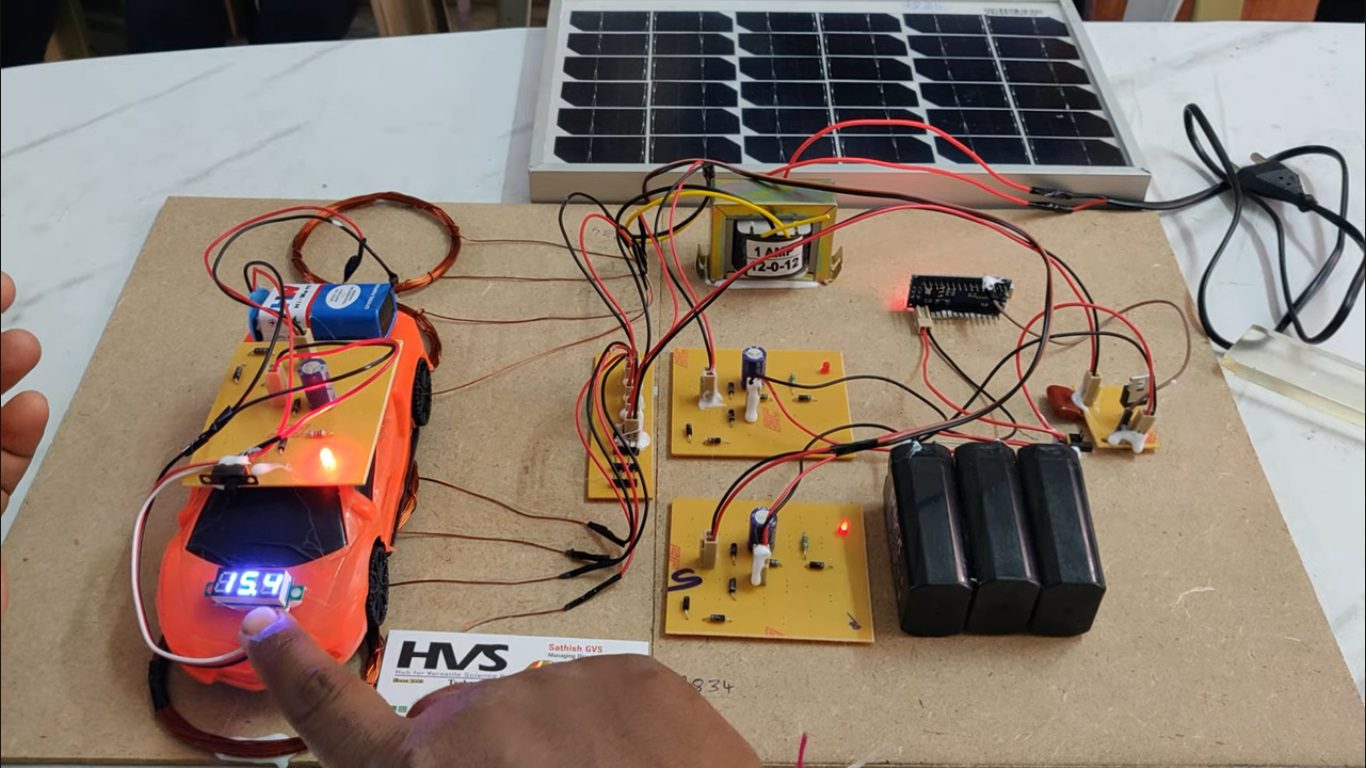
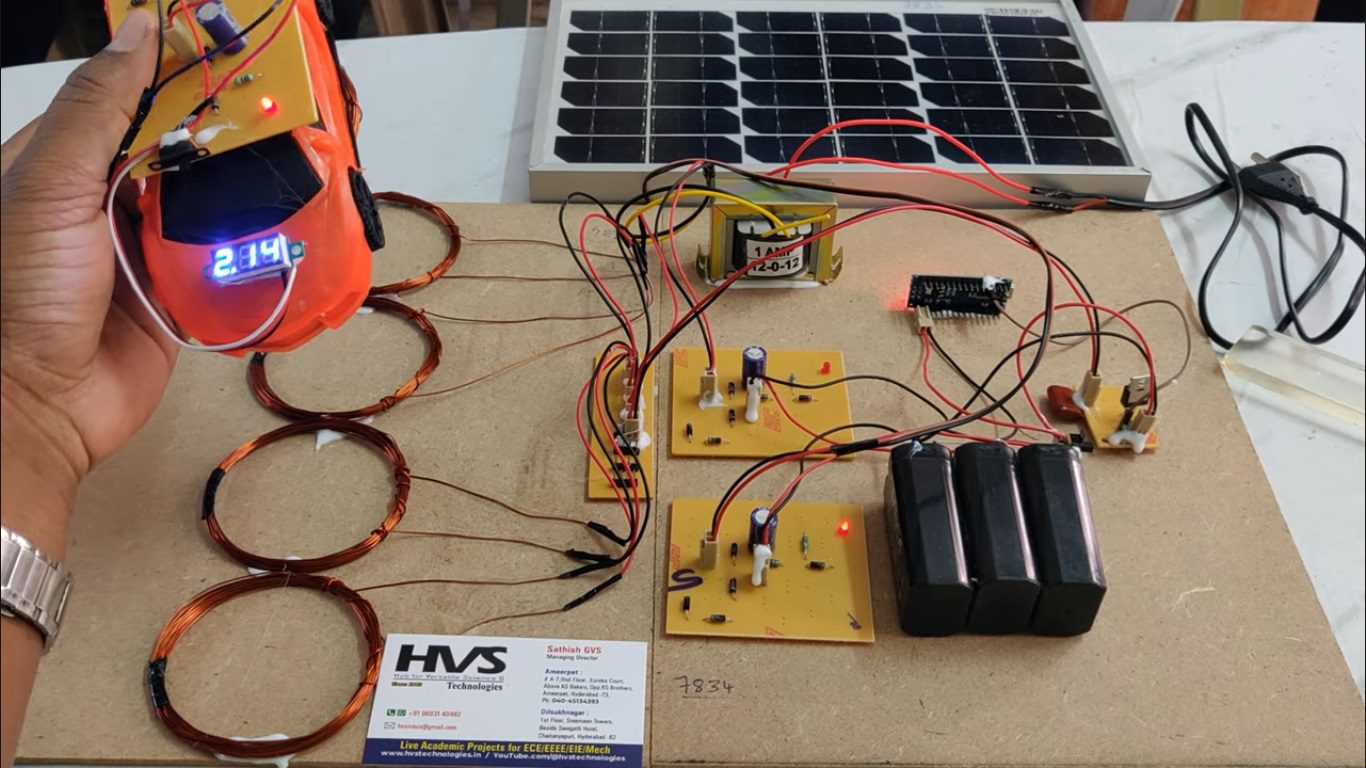
The increasing adoption of electric vehicles (EVs) demands efficient, flexible, and sustainable charging solutions to overcome limitations such as long charging times and range anxiety. This project presents the design and implementation of a Solar Wireless Dynamic Electric Vehicle Charging System, which enables contactless power transfer to an electric vehicle using renewable energy sources. The system integrates solar power and conventional grid supply to charge a battery through appropriate charging circuits, ensuring uninterrupted operation under varying environmental conditions.
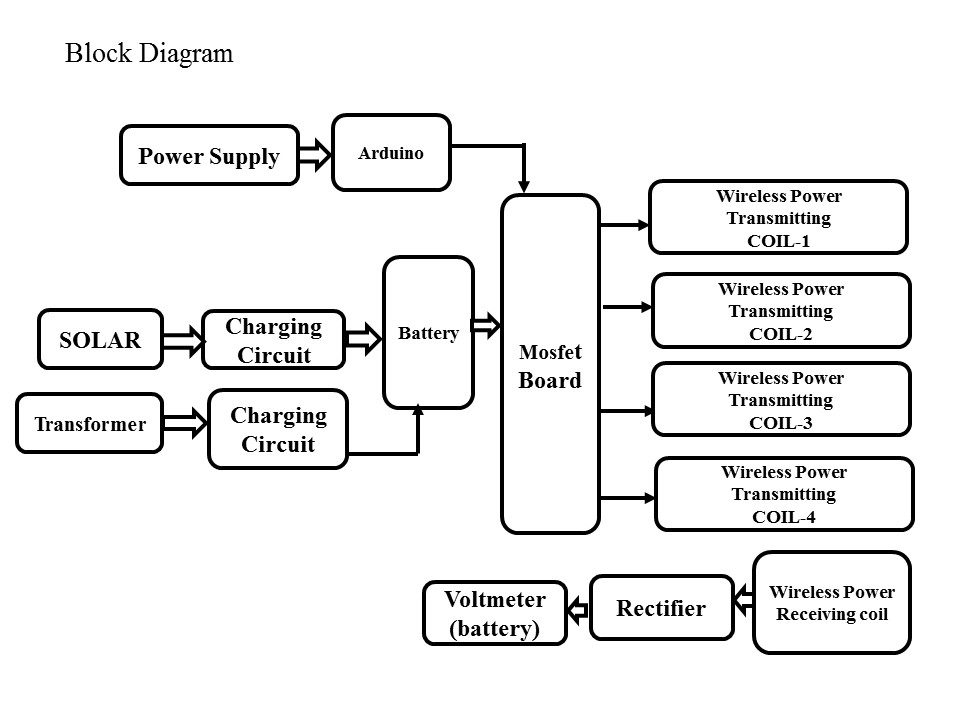
An Arduino-based control unit regulates the charging process and controls a MOSFET switching board that drives multiple wireless power transmitting coils. These coils are arranged to support dynamic charging, allowing power transfer while the vehicle is in motion. On the receiver side, a wireless receiving coil captures the transmitted energy, which is then converted into usable DC power using a rectifier circuit. A voltmeter is incorporated to monitor the received battery voltage in real time.
The proposed system demonstrates a cost-effective, efficient, and environmentally friendly approach to EV charging. By eliminating physical connectors and enabling dynamic charging, the system reduces charging downtime, enhances user convenience, and promotes the use of renewable energy for sustainable transportation. This project highlights the potential of wireless power transfer technology as a promising solution for future smart transportation infrastructure.
Objectives:
 video:
- To design and develop a wireless power transfer system for electric vehicle charging using inductive coupling techniques.
- To utilize solar energy as a primary power source and integrate it with a conventional power supply to ensure continuous and reliable charging.
- To implement dynamic charging capability, enabling electric vehicles to receive power while in motion without physical connectors.
- To control multiple transmitting coils using a MOSFET switching board, ensuring efficient and selective power delivery based on vehicle position.
- To employ an Arduino-based control unit for system monitoring, switching control, and overall coordination of the charging process.
- To convert received AC power into usable DC power using a rectifier circuit suitable for battery charging.
- To monitor battery voltage at the receiver side using a voltmeter for performance evaluation and safety assurance.
- To reduce charging time, maintenance issues, and connector wear by eliminating physical contact between the charger and the vehicle.
- To promote eco-friendly and sustainable transportation by combining renewable energy sources with advanced charging technology.
- To demonstrate a cost-effective and scalable prototype suitable for future smart road and EV infrastructure applications.
- Power supply.
- Arduino nano.
- Solar Panel
- Charging Circuit
- Li-ion Battery
- Four Wireless Power Transformer Modules
- One Wireless Power Receiver Module
- MOSFET Board.
- Rectifier circuit.
- Voltmeter(battery)
1. Embedded C programming.
2. ARDUINO IDE programmer for dumping code into Micro controller.
3. Express SCH for Circuit design.
 video: