No products in the cart.


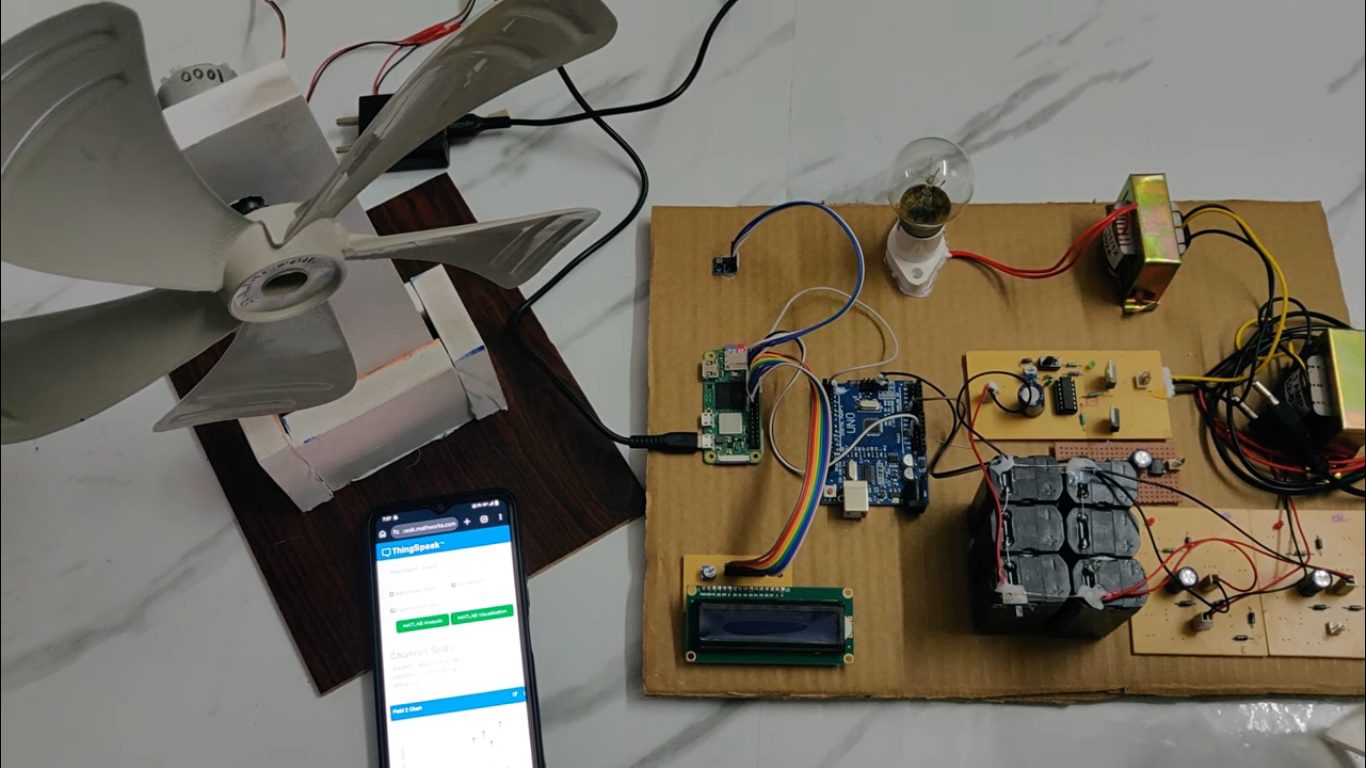
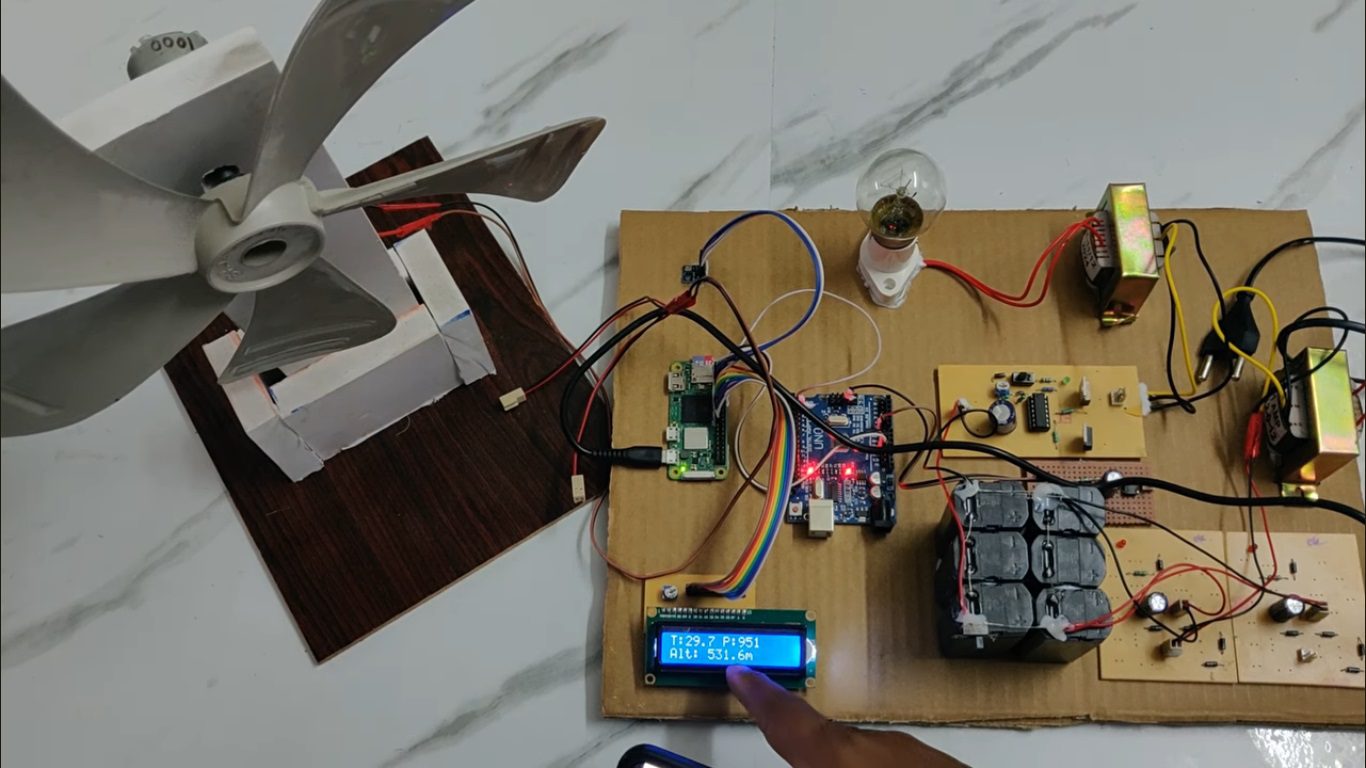
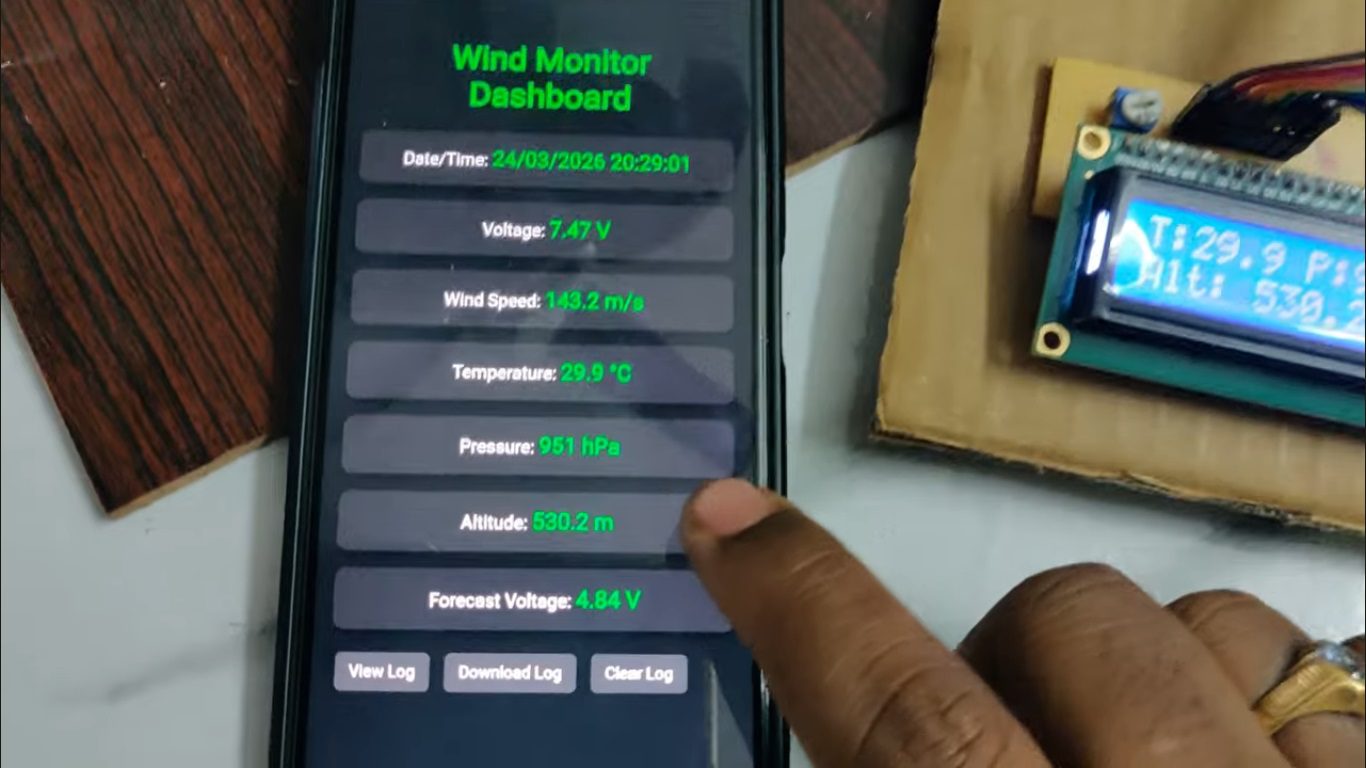
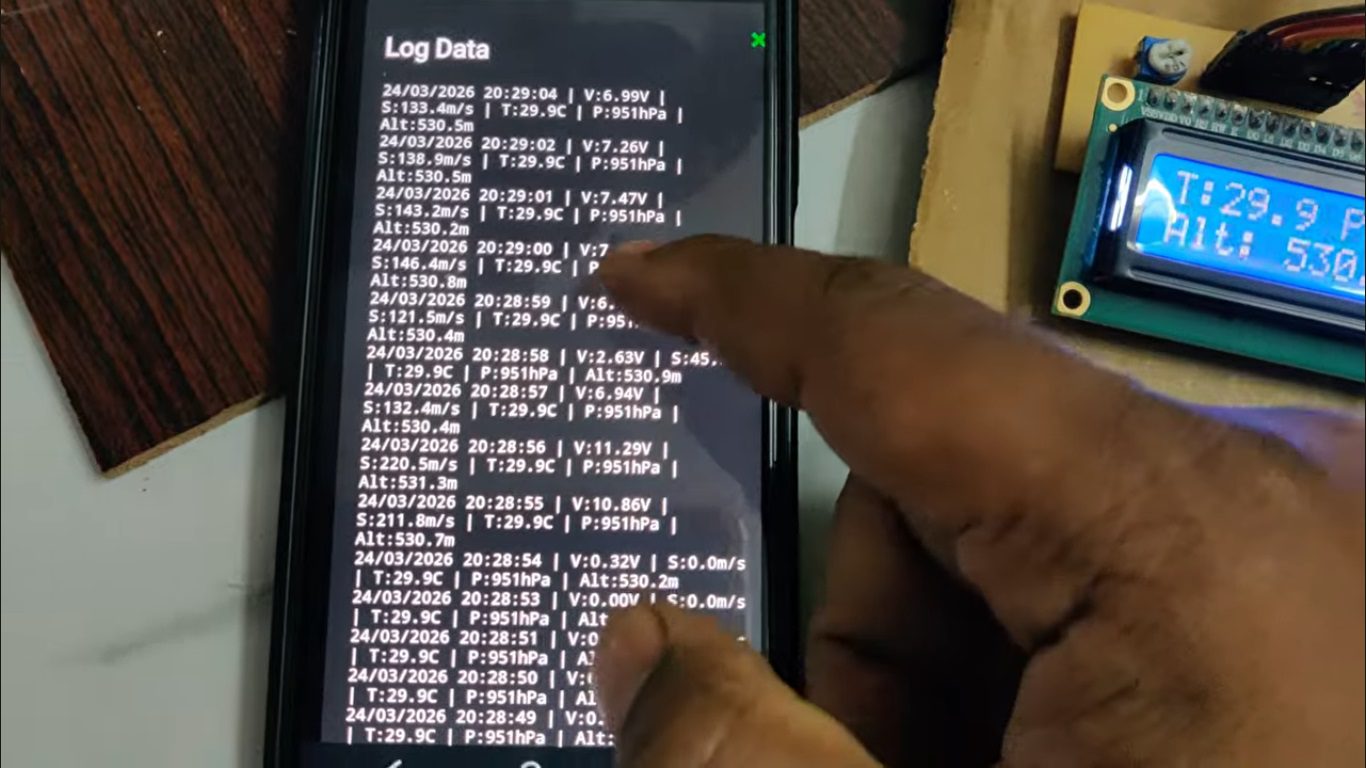
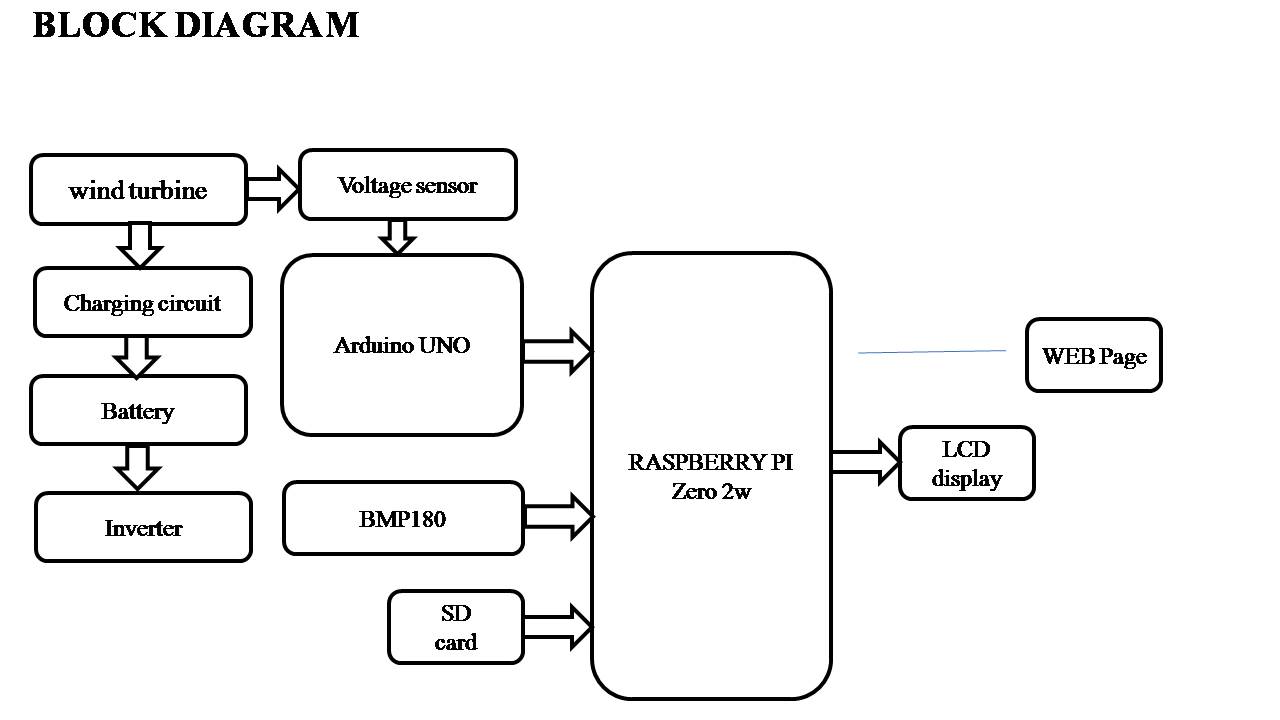
The increasing demand for renewable energy integration into microgrid systems highlights the need for accurate forecasting and efficient energy management strategies. This project presents a Machine Learning-based wind energy forecasting and monitoring system for microgrid applications. Wind energy is captured and stored in a battery through a charging circuit and converted to usable AC power via an inverter. An Arduino UNO collects real-time voltage data from a voltage sensor, while a BMP180 sensor measures altitude, temperature, and pressure. These data streams are transmitted to a Raspberry Pi Zero 2W, which functions as the central processing and communication unit. The Raspberry Pi stores and visualizes the sensor data on a web-based platform, while also providing a real-time display on an LCD module. A machine learning model processes the historical and real-time data to forecast wind energy generation, thereby enabling improved reliability, optimized energy management, and effective load balancing in microgrid systems. This integrated approach ensures sustainable and resilient operation of hybrid renewable energy infrastructures.
The main objectives of the project are:
 video:
- To monitor wind energy generation in real time using sensors.
- To measure altitude, temperature, and pressure with the BMP180 sensor.
- To display sensor data locally on an LCD and web page.
- To apply machine learning techniques for wind energy forecasting.
- Power Supply.
- Raspberry pi Zero 2w.
- BMP180 sensor.
- Arduino UNO.
- LCD Display.
- Inverter.
- Battery.
- Charging Circuit.
- Wind.
- Voltage sensor.
- Web Page.
- SD card.
- Python Language.
- Express SCH for Circuit design.
 video: