Subtotal ₹8,500.00


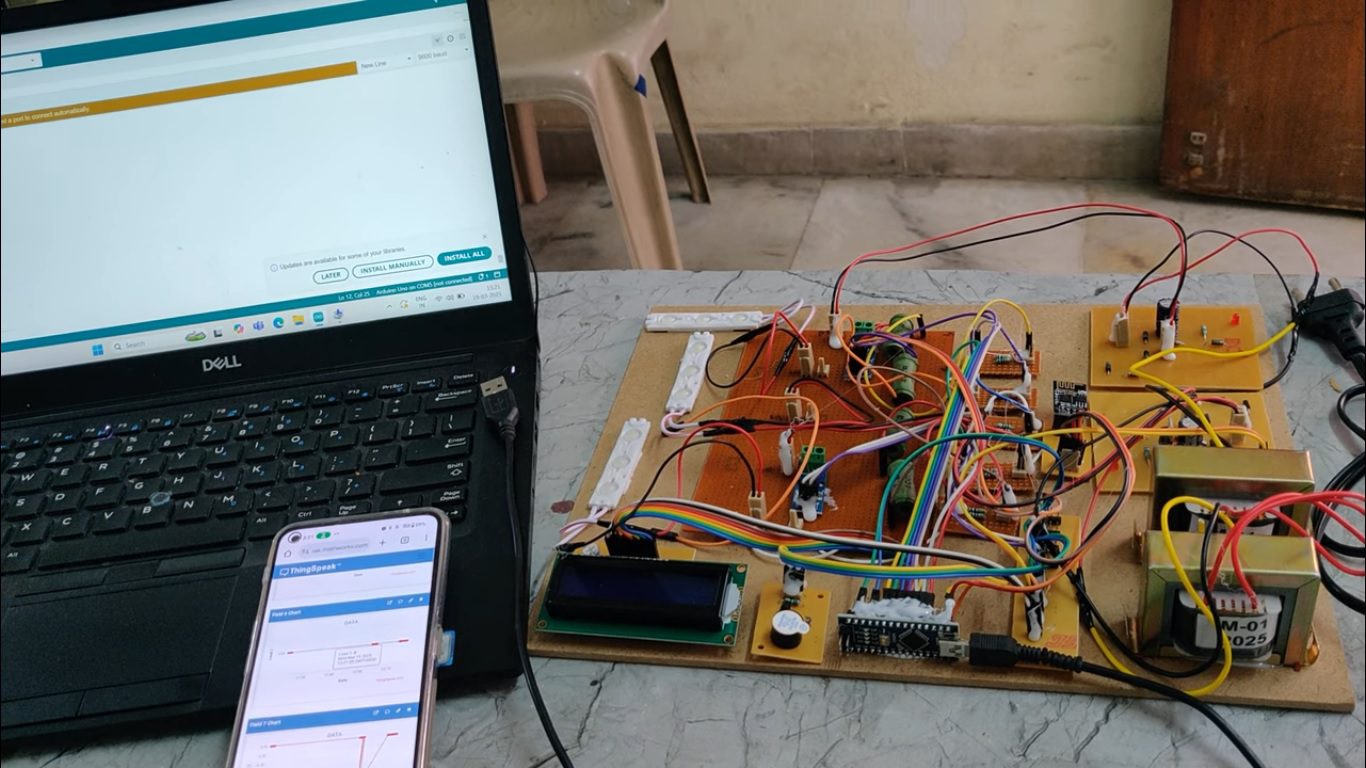
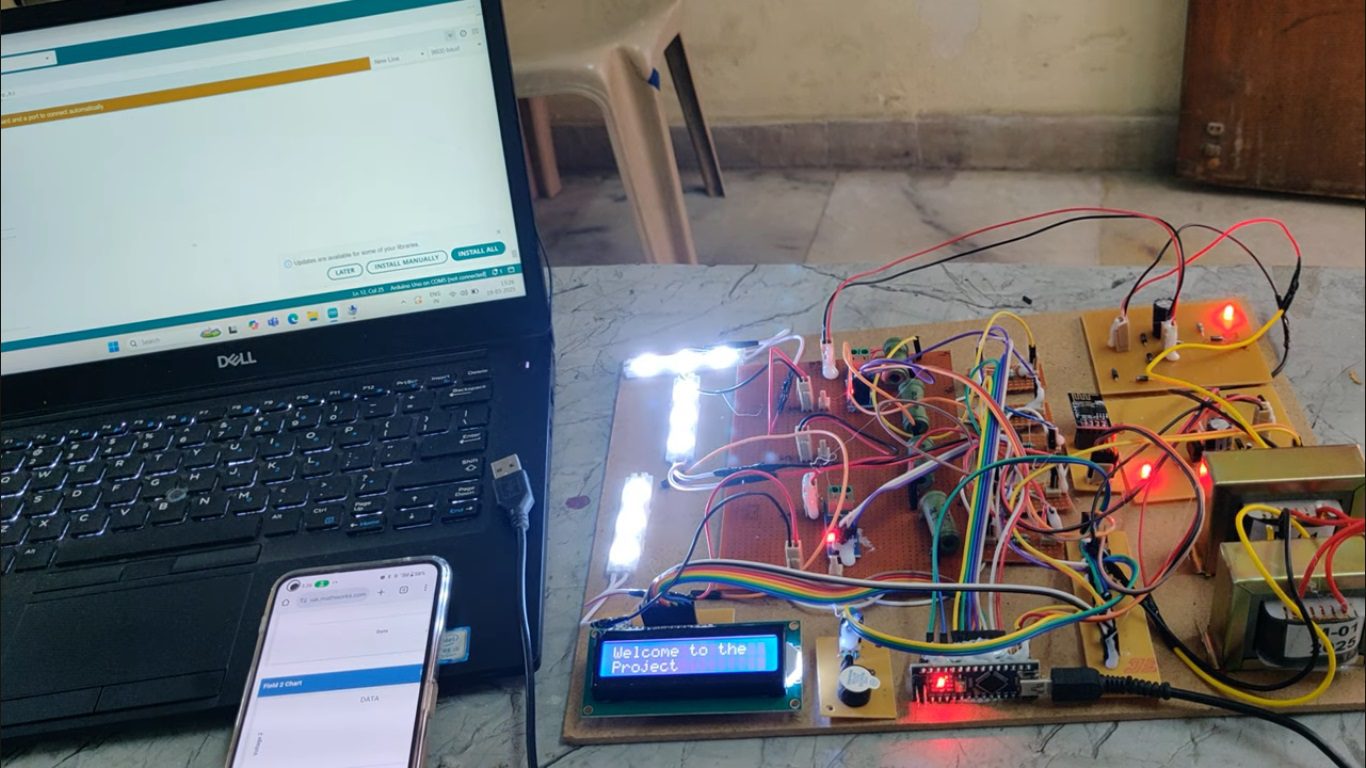
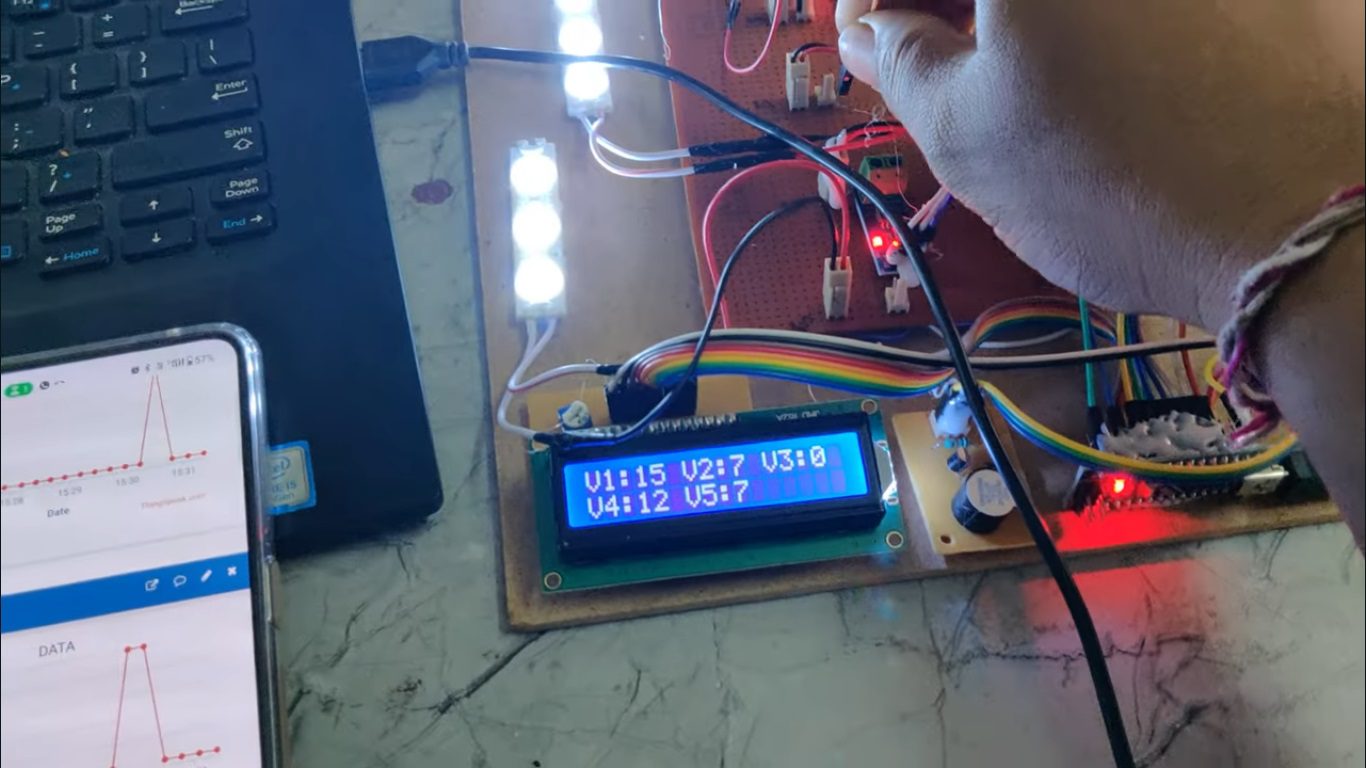
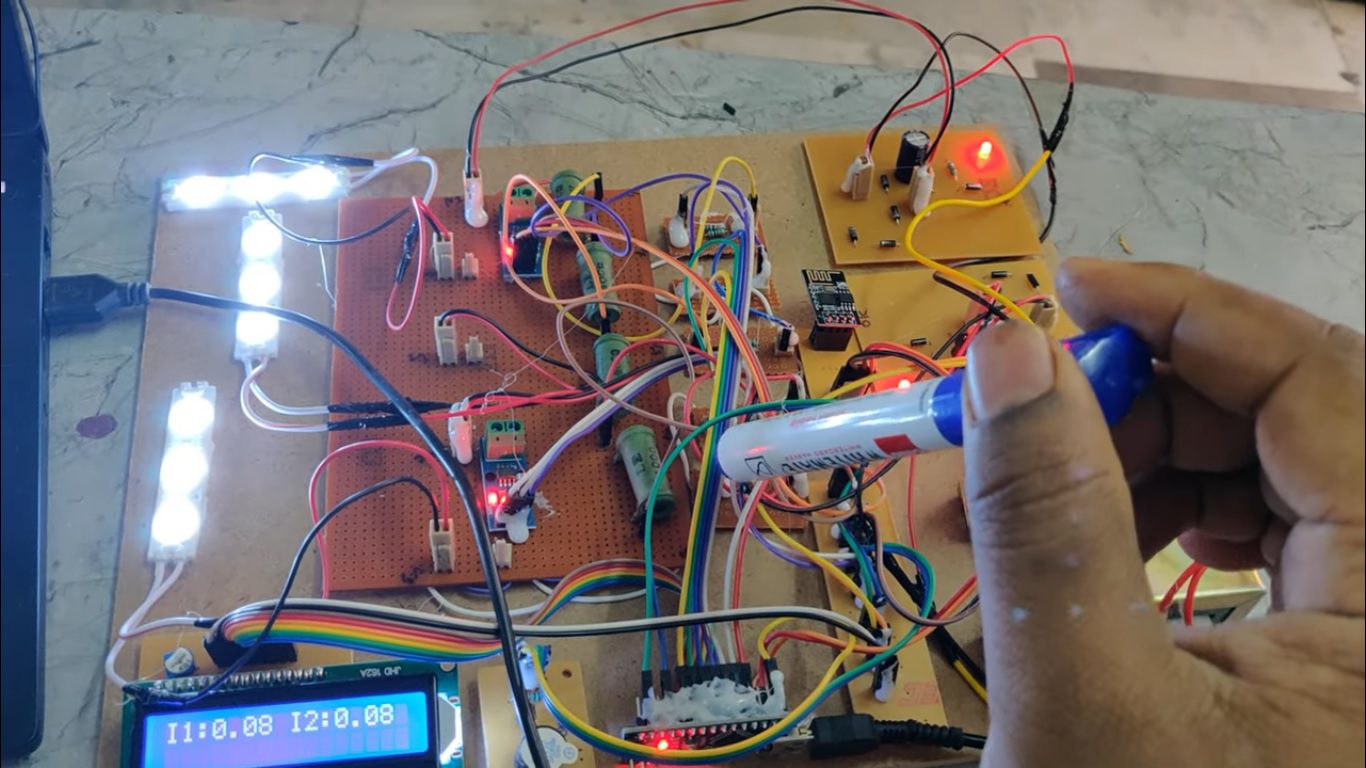
Faults such as open-circuit and short-circuit conditions in electrical systems can lead to equipment damage, power interruptions, and safety hazards. This project presents an IoT-based Fault Identification System capable of detecting open-circuit and short-circuit faults while continuously monitoring voltage and current parameters. The system is built around an Arduino Nano microcontroller interfaced with ACS712 current sensors, multiple voltage sensing circuits, an LCD display, a buzzer, and an ESP8266 Wi‑Fi module.
During operation, the sensors measure the electrical parameters of the monitored load. The Arduino Nano analyzes the sensor data and identifies abnormal conditions. When an open circuit or short circuit is detected, the system immediately activates a buzzer and displays the fault status along with the measured voltage and current values on the LCD. Simultaneously, the ESP8266 module uploads the real-time monitoring data and fault information to the ThingSpeak cloud platform for remote observation and data logging.
The proposed system provides both local and remote fault indication, enabling faster maintenance response and improved reliability of electrical installations. The integration of cloud-based monitoring allows historical data analysis, fault tracking, and centralized supervision, making the system suitable for smart energy management, industrial monitoring, laboratory protection systems, and educational applications.
The objectives of the project are:
 video:
- To design and develop an Arduino Nano-based fault identification system for electrical circuits.
- To continuously monitor voltage and current parameters using voltage sensors and ACS712 current sensors.
- To detect open-circuit faults and provide immediate fault indication.
- To detect short-circuit faults and generate instant alerts for system protection.
- To display real-time voltage, current, and fault status on an LCD display.
- To provide audible fault notification using a buzzer whenever a fault condition occurs.
- To transmit monitoring data to the ThingSpeak cloud platform through the ESP8266 Wi-Fi module.
- To enable remote monitoring of electrical parameters and fault conditions via the Internet of Things (IoT).
- To maintain historical records of voltage, current, and fault events for analysis and maintenance purposes.
- To improve the reliability, safety, and efficiency of electrical systems through real-time fault detection and monitoring.
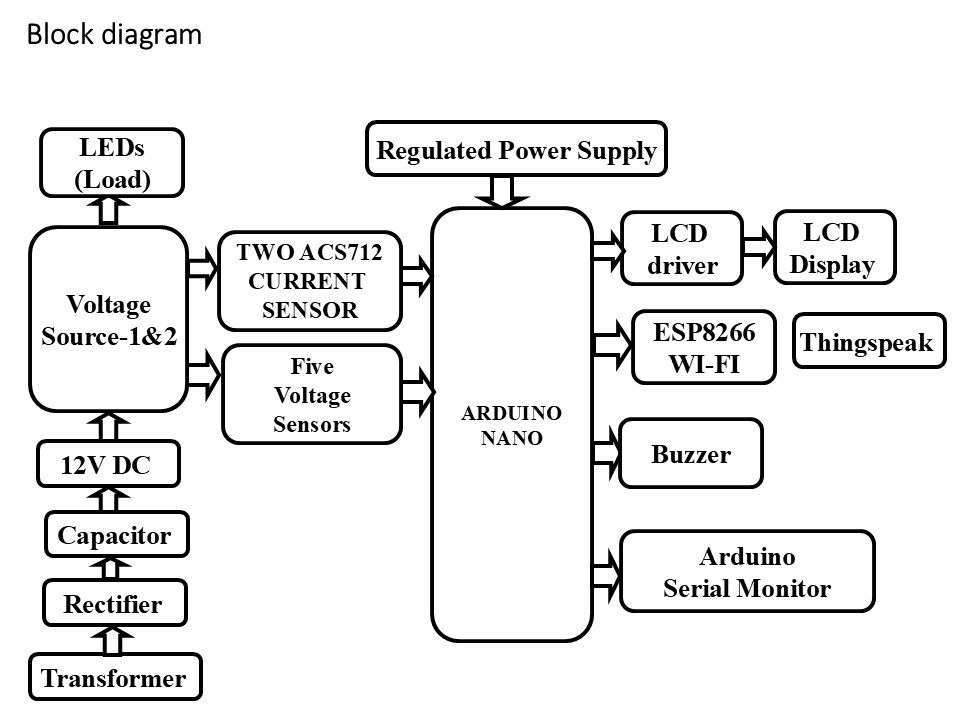
- Regulated Power supply.
- Arduino NANO Micro controller.
- LEDs.
- LCD display with driver
- ESP8266 Wi-Fi module.
- Buzzer.
- Voltage sensors.
- Current sensors.
- Two Voltage sources.
- Arduino IDE Compiler for compiling and dumping the program.
- Express SCH for Circuit design.
 video: