No products in the cart.


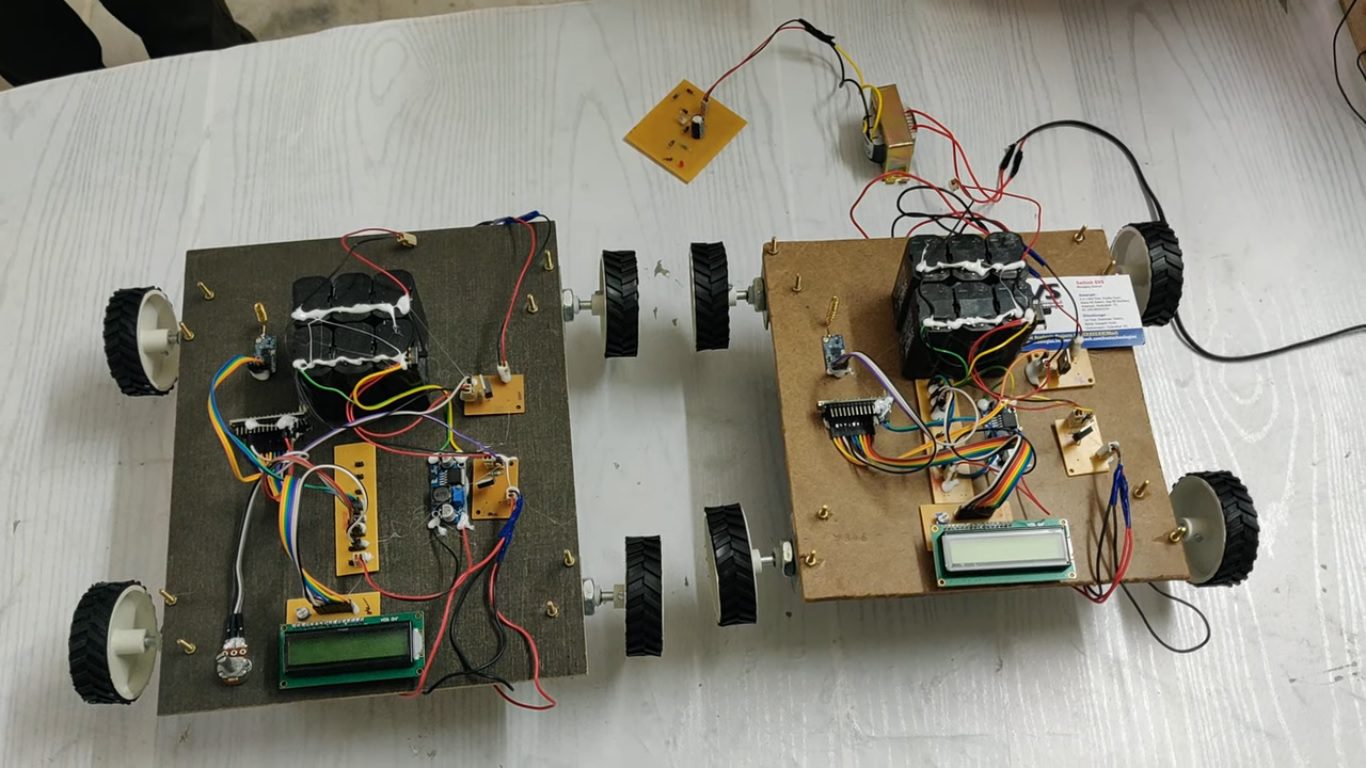
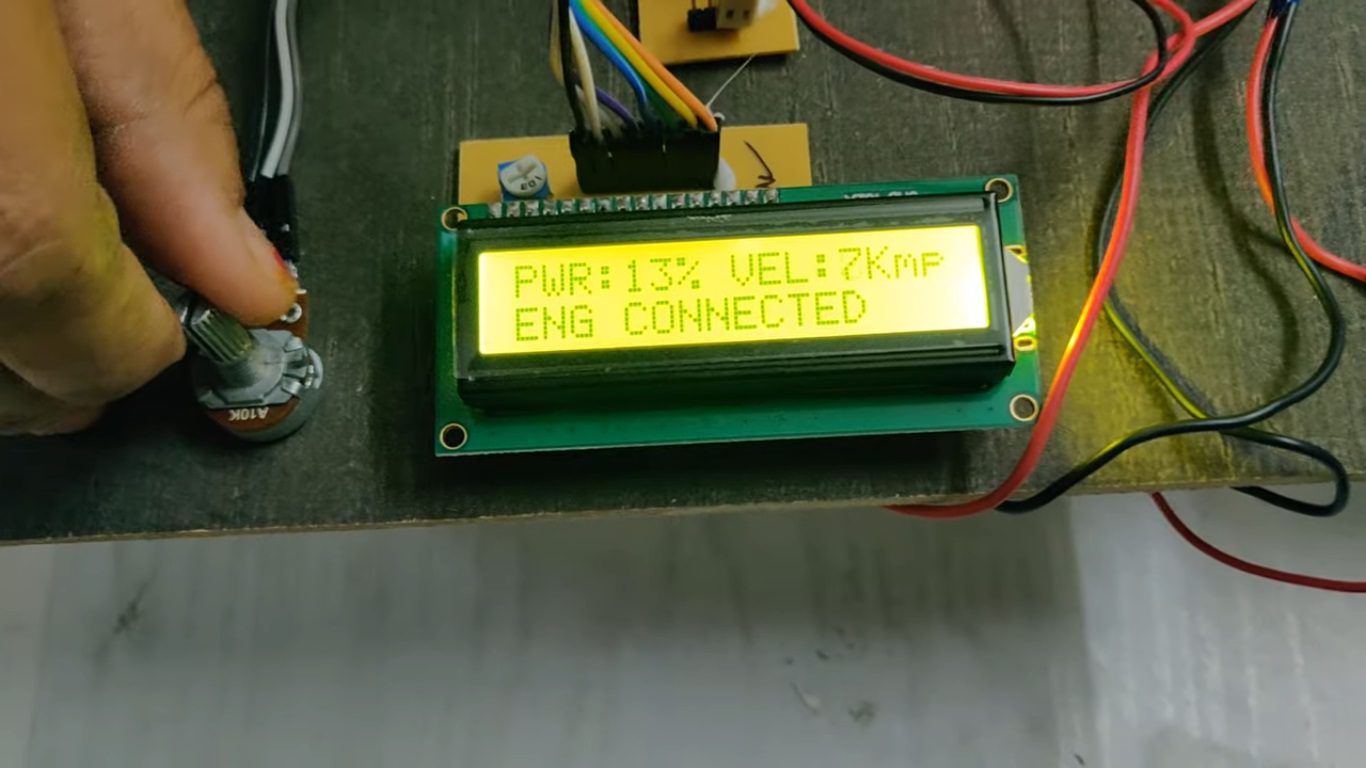
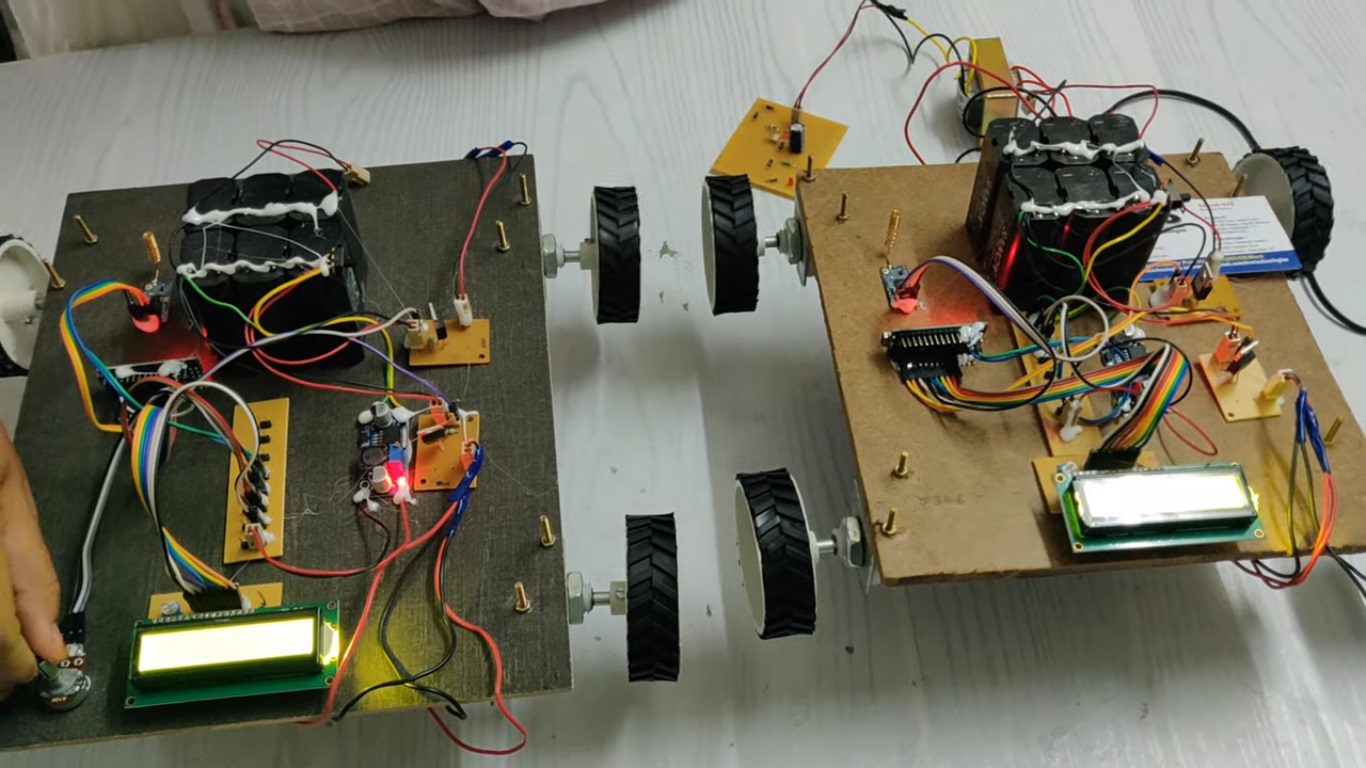
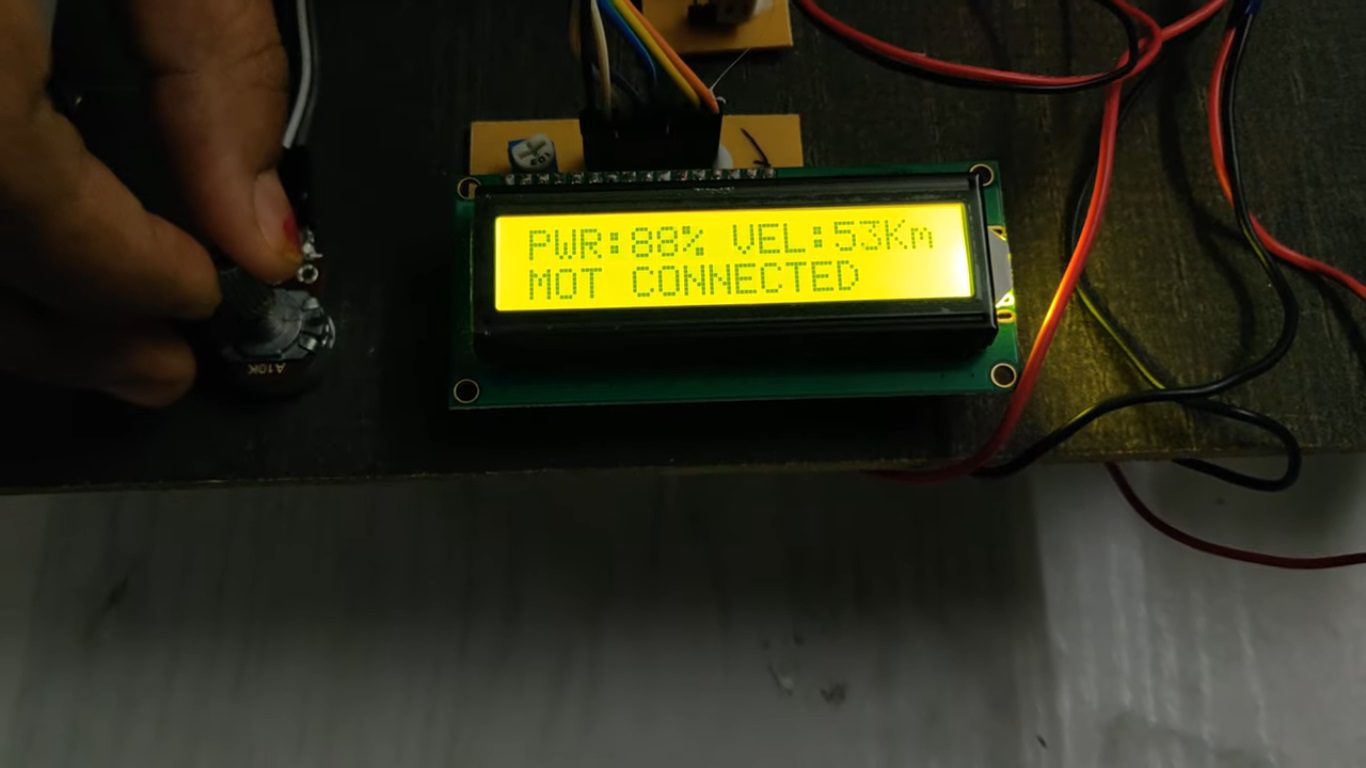
The project aims in designing a computationally efficient energy management approach based on a model predictive control (MPC) framework is proposed to obtain the optimal torque split and gearshift for a parallel Hybrid electric vehicles. This study aims to develop and implement a computationally efficient energy management strategy (EMS) for Hybrid Electric Vehicles (HEVs). The EMS plays a crucial role in determining how power is split between the internal combustion engine (ICE) and the electric motor to optimize fuel consumption, battery life, and emissions. This work explores rule-based and optimization-based control strategies, emphasizing low-complexity algorithms that are suitable for real-time implementation in embedded automotive systems.
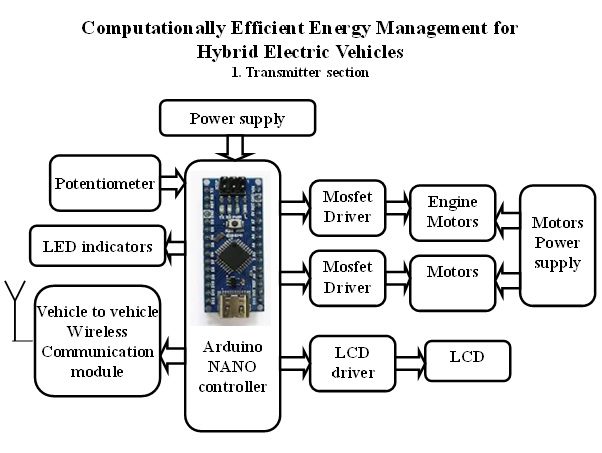
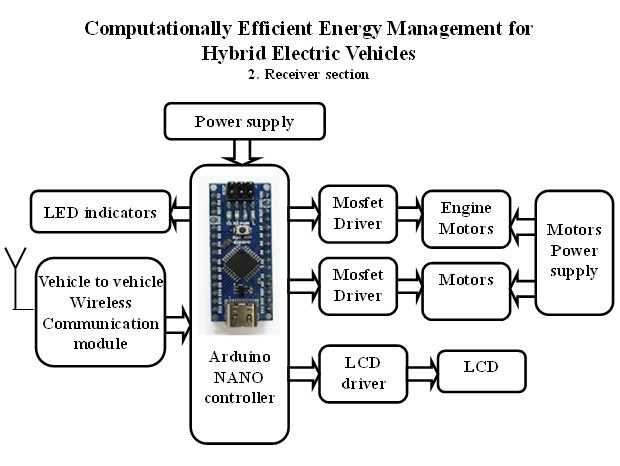
The system was designed such that the energy management of multiple engine motors for Hybrid Electric vehicle using wireless communication modules. This project demonstrates a dual-MOSFET control system using a potentiometer input received via serial communication. The system is built on the Arduino Nano platform and features a 16x2 LCD display for real-time feedback. A single potentiometer value, transmitted from another microcontroller over serial (via SoftwareSerial), is used to proportionally control two MOSFETs representing an engine (EM) and a motor (MO) based on predefined percentage ranges:
 video:
- 0–30%: EM is controlled from 0–255 PWM, MO remains off.
- 30–60%: EM decreases from 255–0, MO increases from 0–180 PWM.
- 60–100%: EM turns off, MO increases from 180–255 PWM.
- Adapter Power Supply.
- Arduino Nano.
- Potentiometer.
- LCD with driver.
- Wireless communication modules
- MOSFET with drivers
- DC motors with driver.
- LED indicators.
- Embedded C programming.
- Arduino ide programmer for dumping code into Micro controller.
- Express SCH for Circuit design.
 video: