No products in the cart.


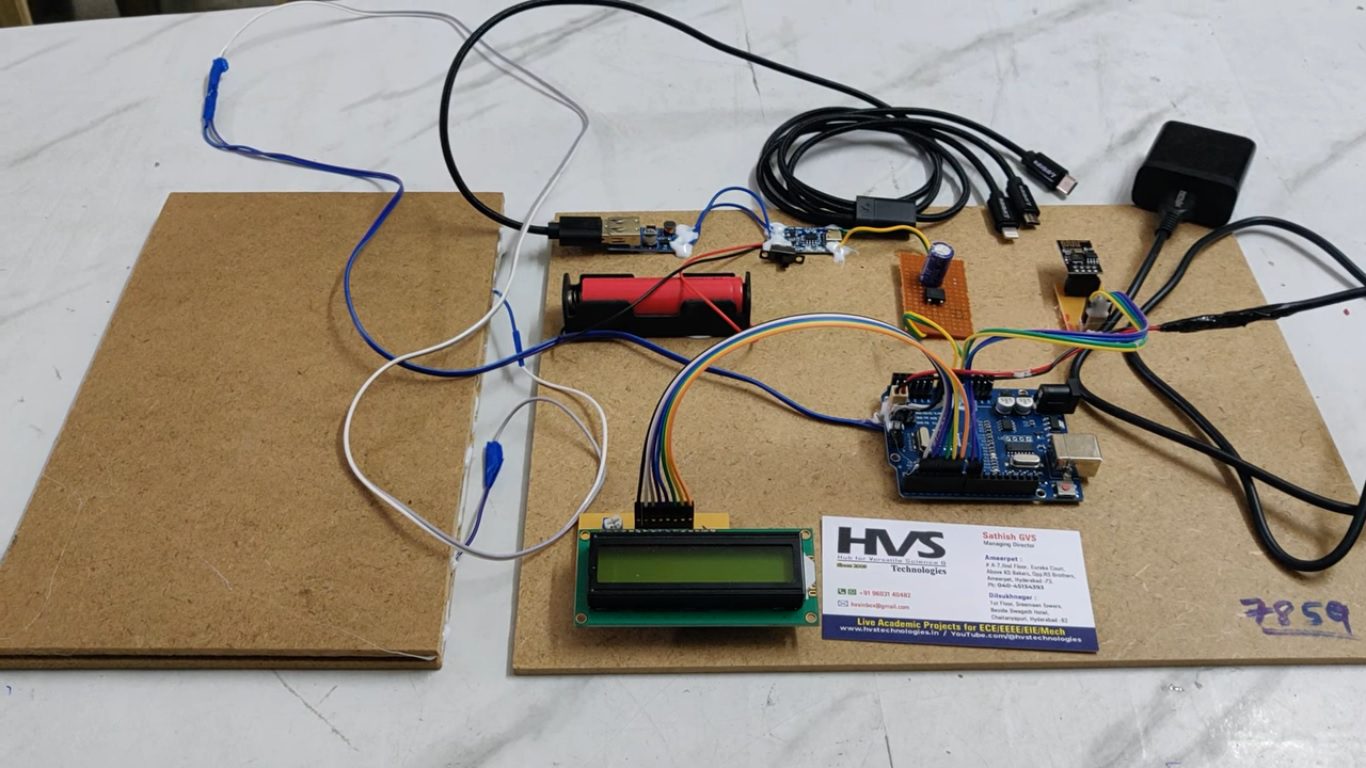
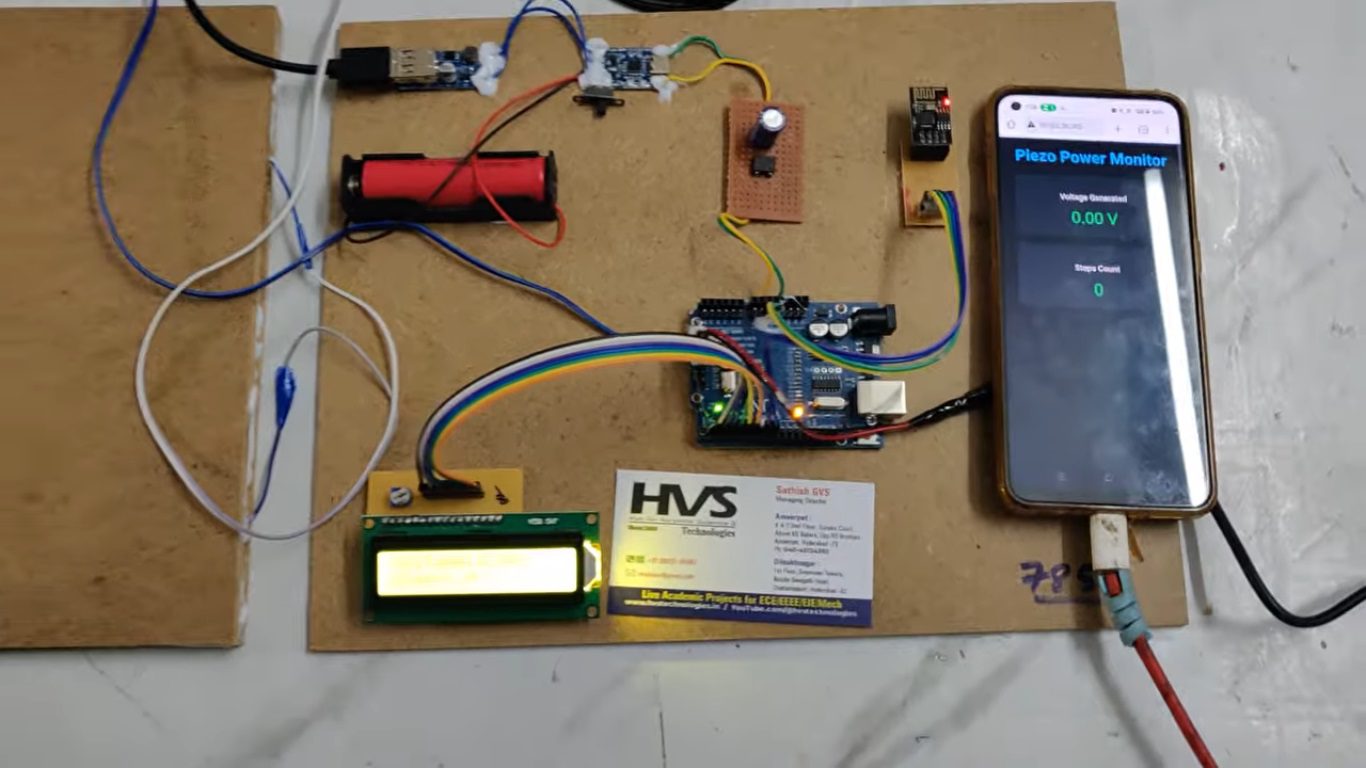
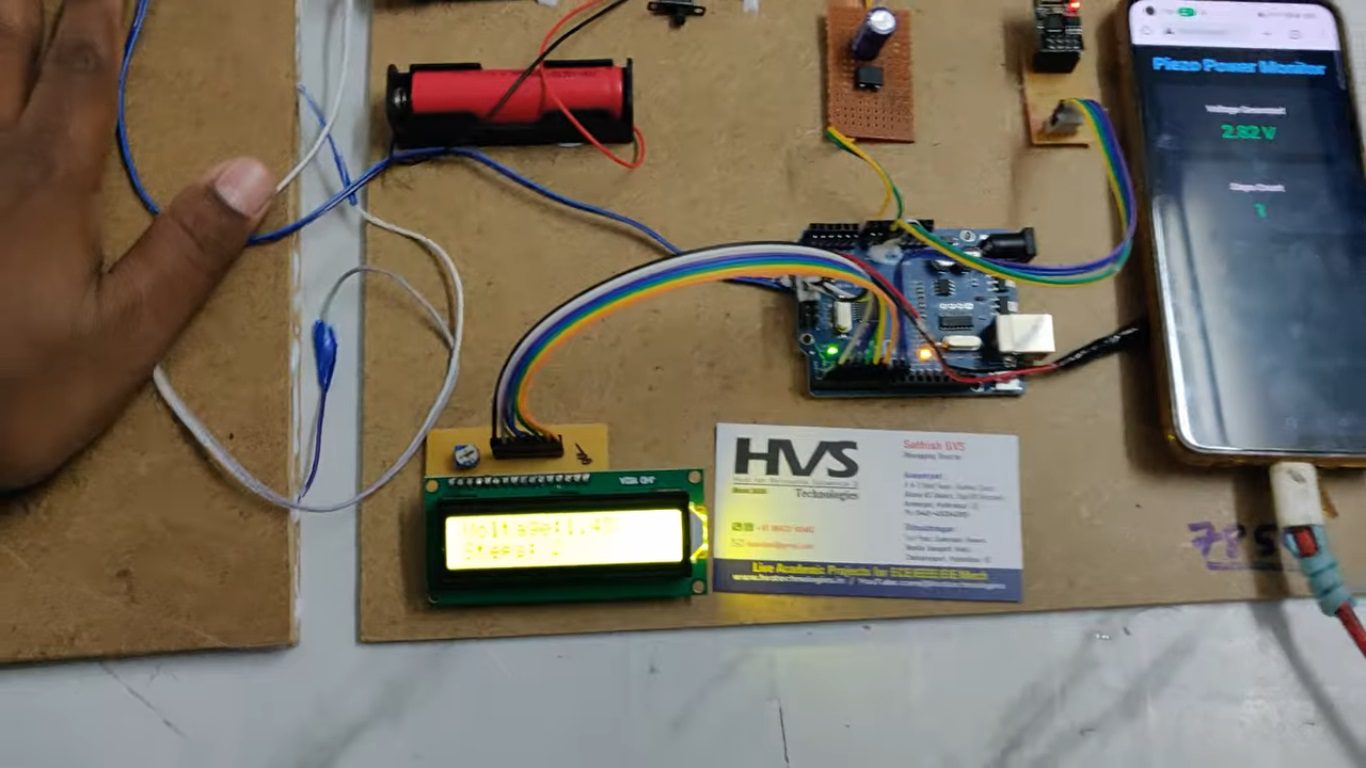
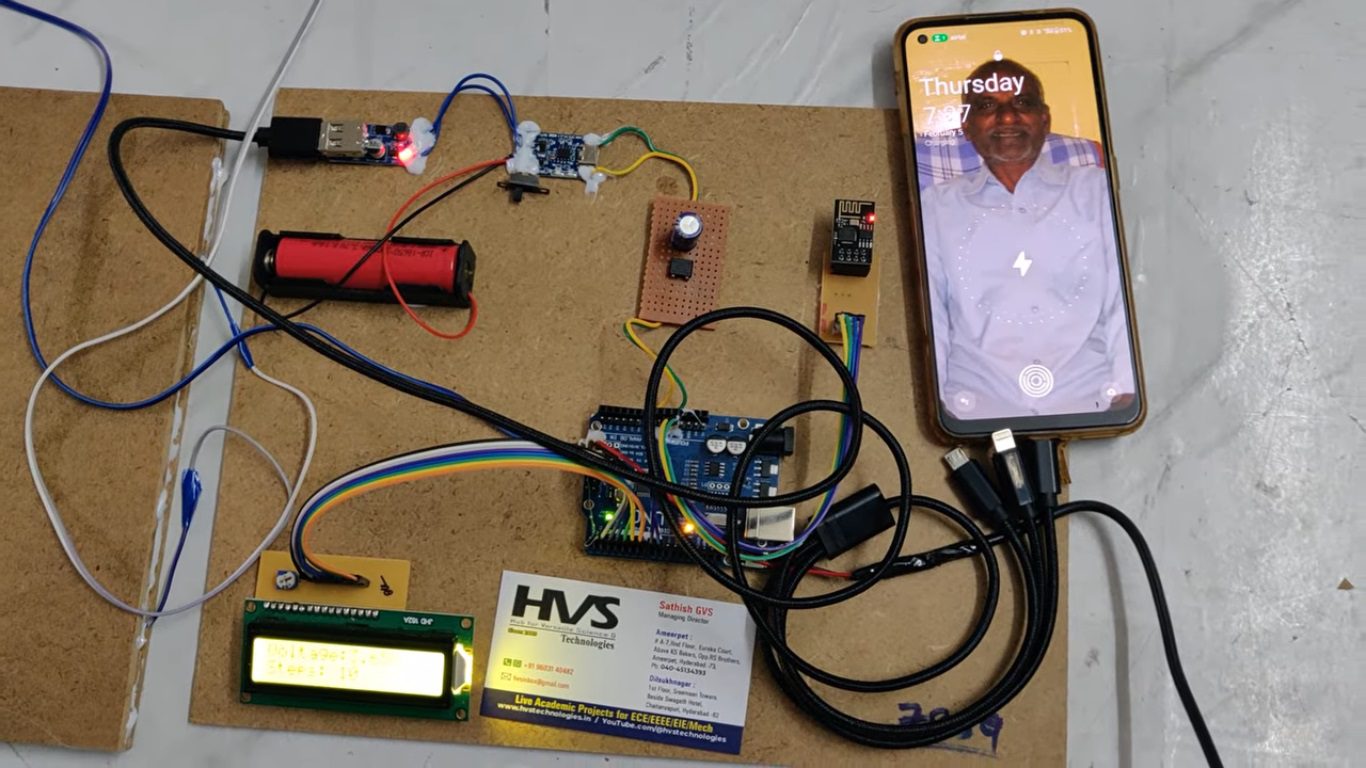
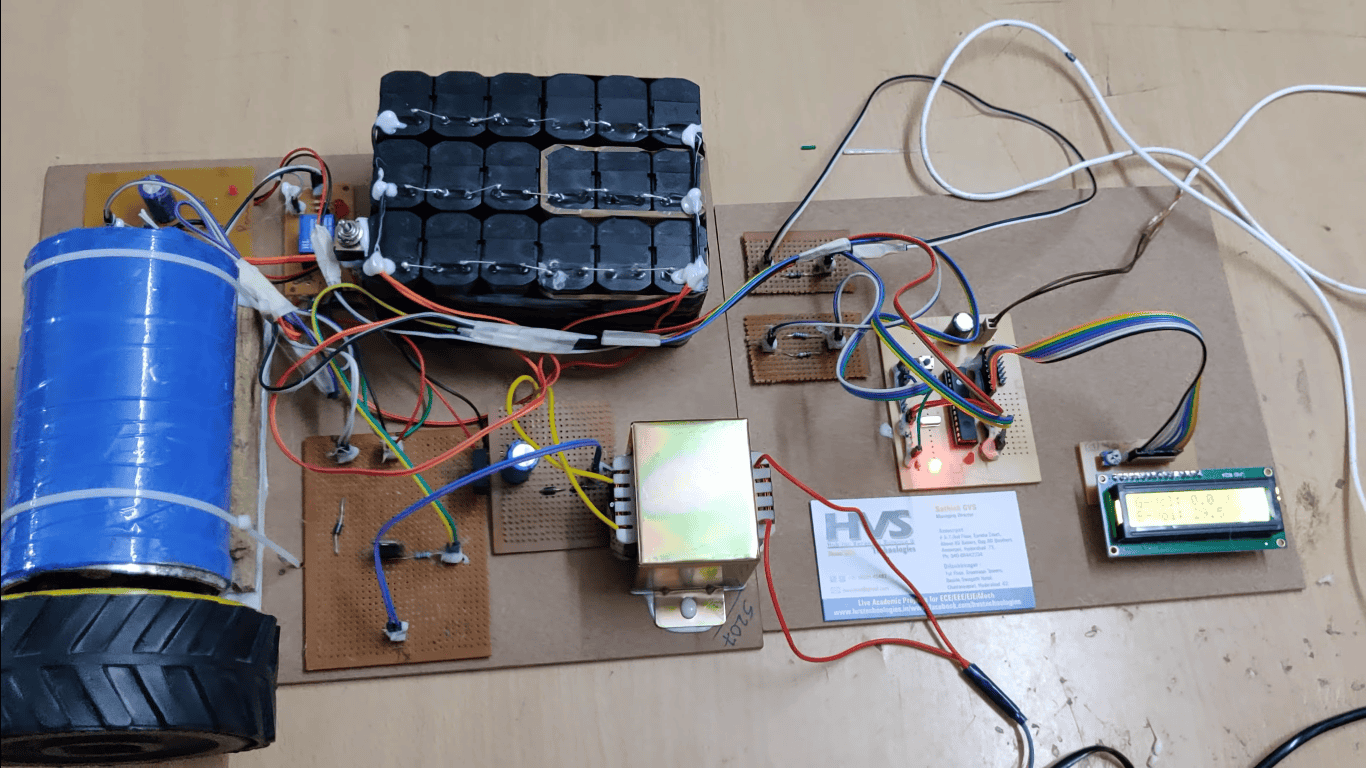
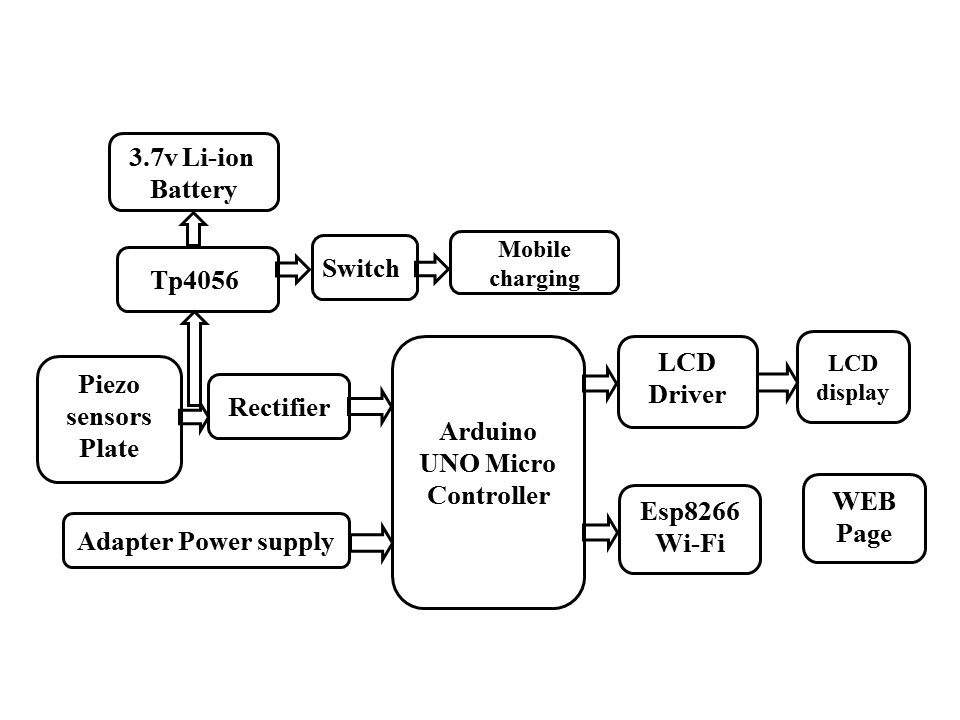
Footstep power generation using piezoelectric sensors is an innovative approach to harvesting renewable energy from human movement. This project focuses on generating electrical energy from footsteps using piezoelectric sensor plates and utilizing the generated power efficiently while monitoring system performance in real time. When mechanical pressure is applied on the piezoelectric sensors due to human footsteps, electrical energy is produced. This alternating output is converted into a usable DC voltage through a rectifier circuit and stored in a 3.7 V lithium-ion battery using a TP4056 charging module.
An Arduino UNO microcontroller is used as the core control unit to monitor the generated voltage and count the number of footsteps. The measured voltage level and footstep count are displayed locally on an LCD display through an LCD driver. Additionally, an ESP8266 Wi-Fi module enables wireless transmission of data to a web page, allowing remote monitoring of the generated voltage and footstep count in real time. The stored energy can also be utilized for mobile charging through a regulated output and switch mechanism.
This system demonstrates an efficient method of energy harvesting from everyday human activities and highlights the potential of piezoelectric technology for powering low-energy electronic devices. The proposed solution is suitable for implementation in public places such as railway stations, shopping malls, and campuses, contributing to sustainable and eco-friendly energy generation.
Major Objectives of this project:- To design and develop a footstep power generation system using piezoelectric sensors.
- To convert mechanical energy produced by human footsteps into electrical energy.
- To rectify and store the generated electrical energy in a rechargeable lithium-ion battery.
- To measure the voltage generated from the piezoelectric sensors using a microcontroller.
- To count the number of footsteps using sensor output analysis.
- To display the footstep count and generated voltage on an LCD display.
- To transmit real-time footstep count and voltage data to a web page using ESP8266 Wi-Fi module.
- To utilize the stored energy for low-power applications such as mobile charging.
- To promote the use of renewable and sustainable energy harvesting techniques.
- To demonstrate an eco-friendly power generation system suitable for public places.
- Adapter power supply.
- 7v Li-ION Battery
- Arduino UNO Micro controller
- Piezo sensors plate.
- Tp4056 module.
- LCD display
- ESP8266 WI-FI module.
- Rectifier.
- Mobile charger.
- Arduino IDE
- Express SCH for Circuit Design
 video: