No products in the cart.


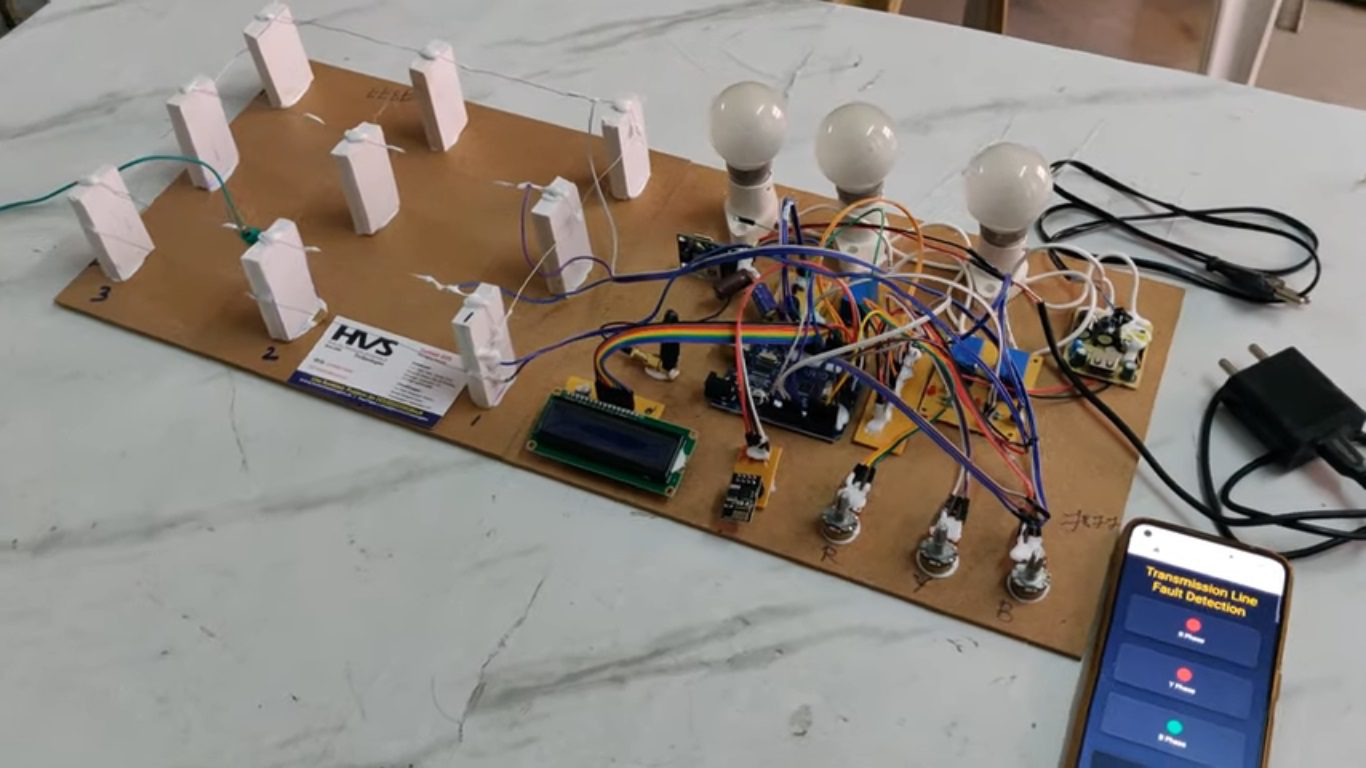
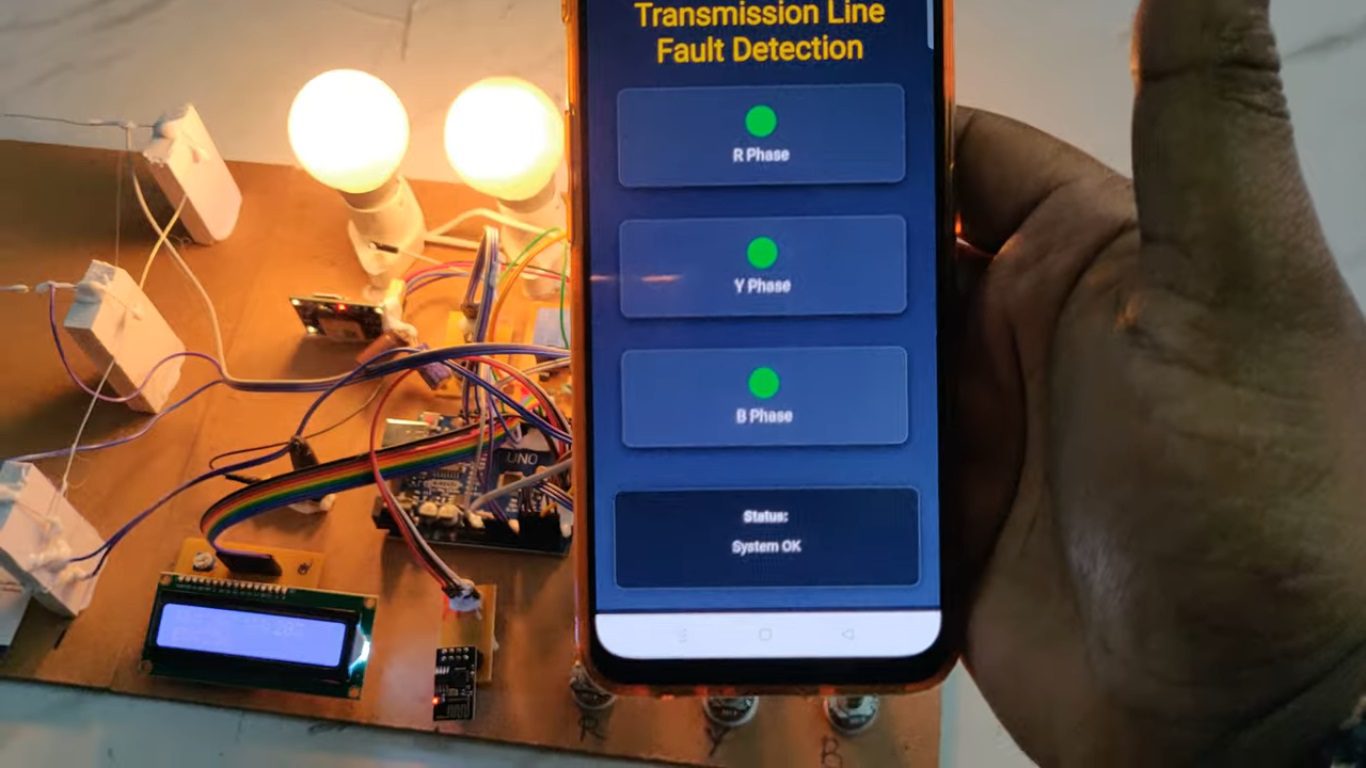
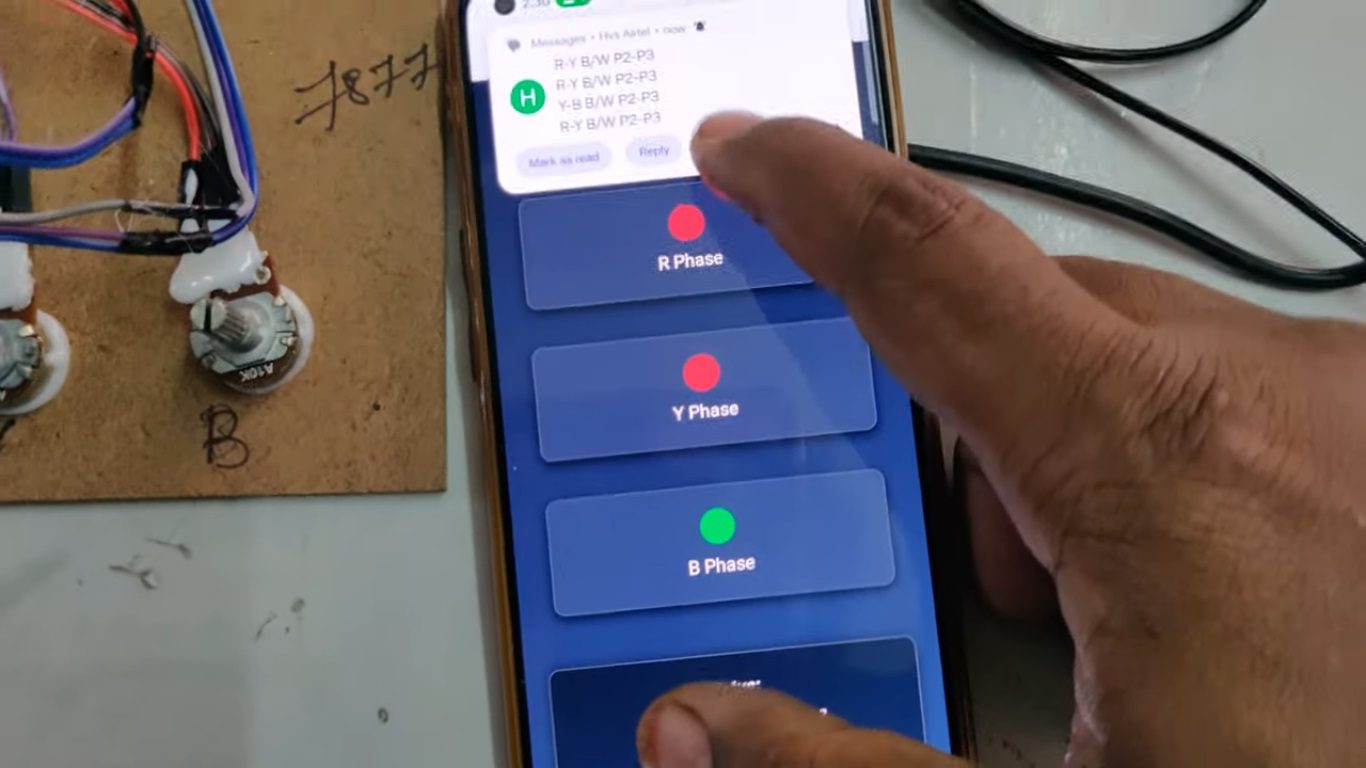
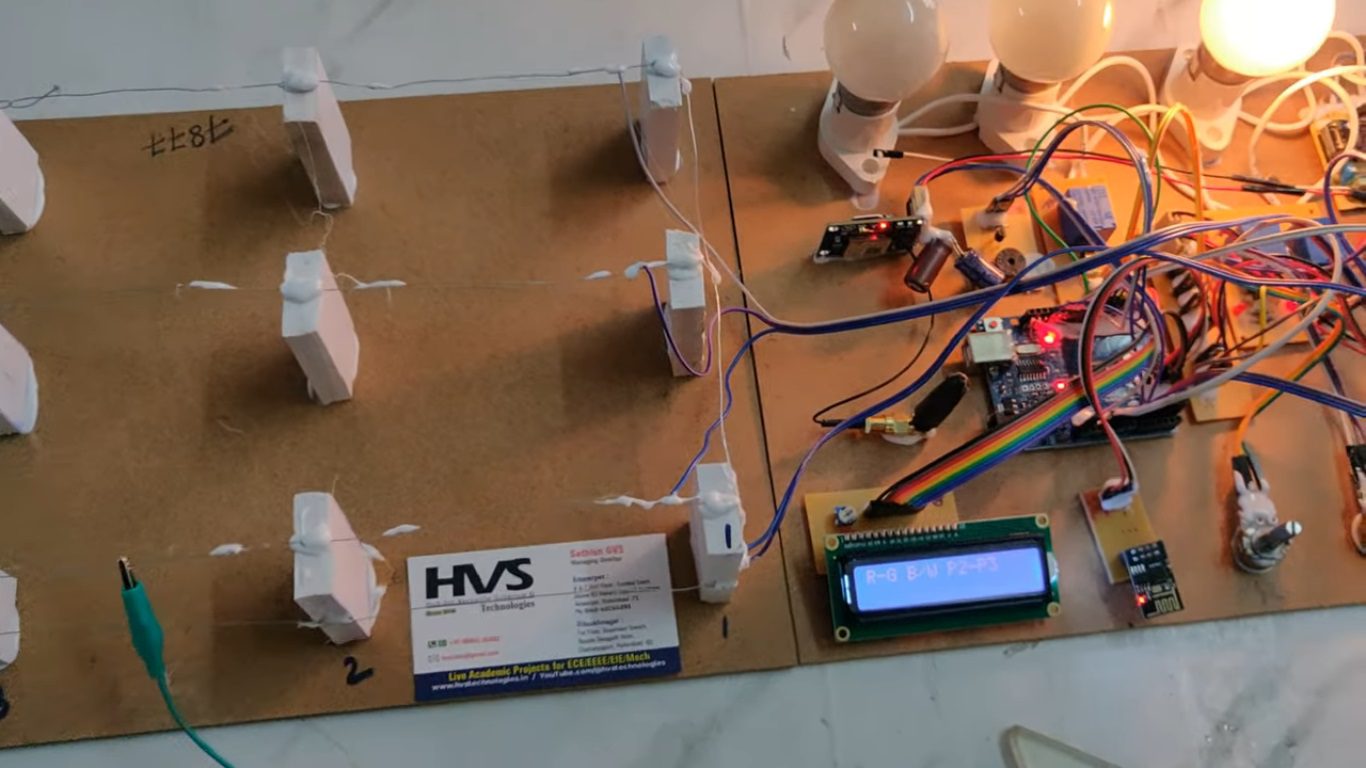
The main aim of this project is to design and develop an IoT and GSM based three-phase transmission line fault detection and alerting system using an Arduino UNO and ESP8266 module. The system is capable of detecting different types of faults such as line-to-line fault, line-to-ground fault, over-voltage fault, under-voltage fault, and open-circuit fault. Whenever a fault occurs, the system identifies the fault type, displays the information on an LCD module, activates a buzzer for alert indication, and sends notifications through SMS and webpage monitoring.
The proposed model uses the principle of Ohm’s Law to detect open-circuit, line-to-line, and line-to-ground faults in a fast, reliable, and cost-effective manner. A potentiometer (POT) is used to vary the voltage level from low to high for testing over-voltage and under-voltage conditions. When abnormal voltage conditions are detected, the system automatically trips the circuit using a relay, and the affected phase is indicated through a bulb.
The system also incorporates an ESP8266 Wi-Fi module for real-time monitoring through a web application. Fault information and system status can be monitored remotely over the internet. In addition, a GSM module is used to send SMS alerts to the user whenever a fault is detected, ensuring immediate communication and improved safety.
Current sensing circuits designed using resistor-switch combinations are interfaced with the Arduino UNO through ADC ports to provide digital data representing the fault location in kilometers. Fault switches are placed at known distances to manually create faults for testing purposes. Once a fault is detected, the corresponding fault type and fault location are displayed on the LCD screen.
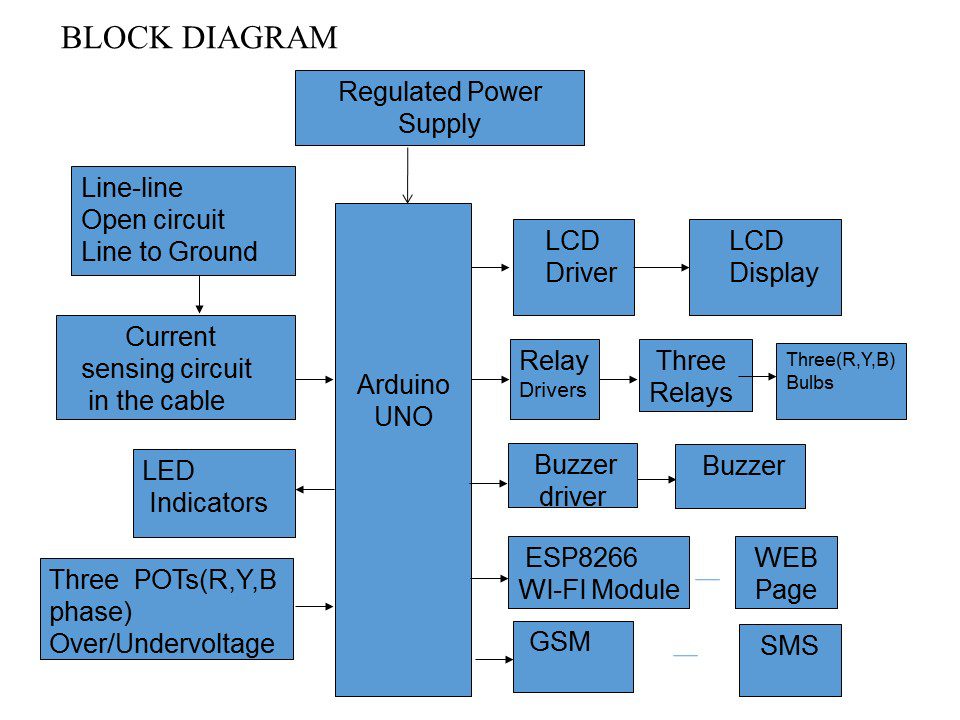
The entire system operates using a regulated rectified power supply, and the Arduino UNO acts as the main controlling unit. The project is implemented using Embedded C programming to continuously monitor transmission line conditions, detect faults accurately, provide instant alerts, and enable remote monitoring through IoT technology.
Objectives
 video:
- To design a three-phase transmission line fault detection system using Arduino UNO.
- To detect different types of faults such as line-to-line, line-to-ground, open-circuit, over-voltage, and under-voltage faults.
- To display the detected fault type on an LCD display.
- To provide alert indications using a buzzer and relay protection system.
- To monitor transmission line status through a web application using IoT technology.
- To send fault alert messages to the user through GSM-based SMS communication.
- To identify the fault location in the transmission line using sensing circuits.
- To develop a reliable, low-cost, and efficient fault monitoring system.
- Adapter power supply.
- Arduino UNO Microcontroller.
- Fault switches.
- Relays.
- Resistors.
- LCD with driver.
- Esp8266 WI-FI module.
- Buzzer
- Three phase supply.
- POT(potentiometer).
- GSM.
- Arduino IDE for compiling and dumping code into Microcontroller
- Express SCH for Circuit design.
 video: