No products in the cart.


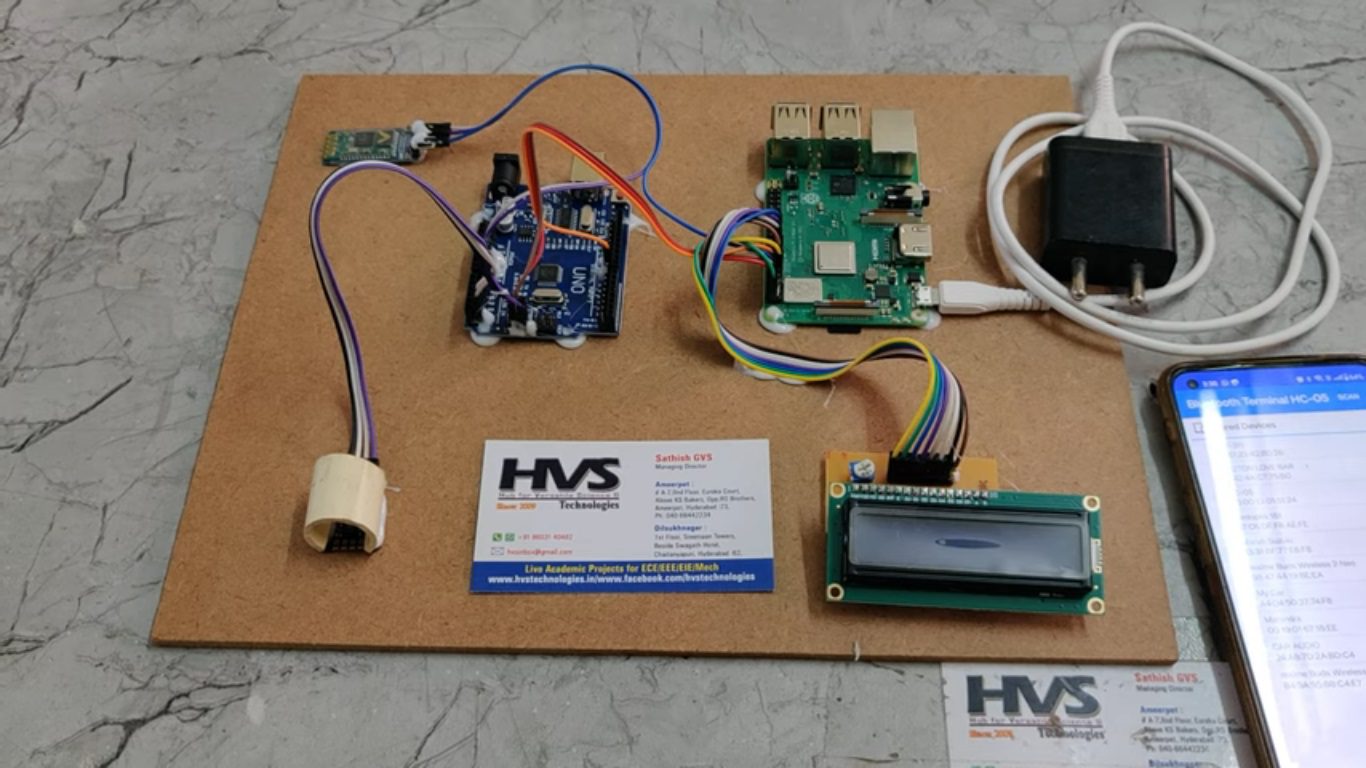
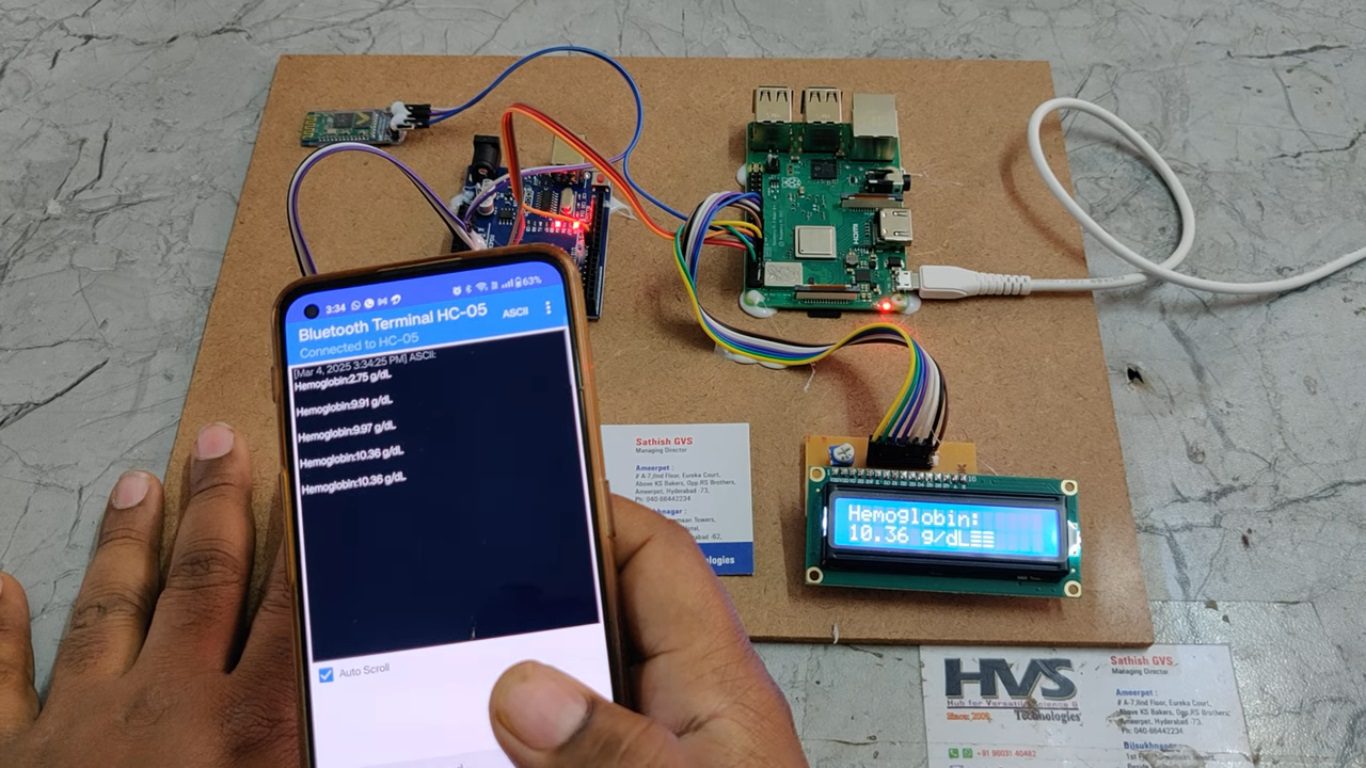
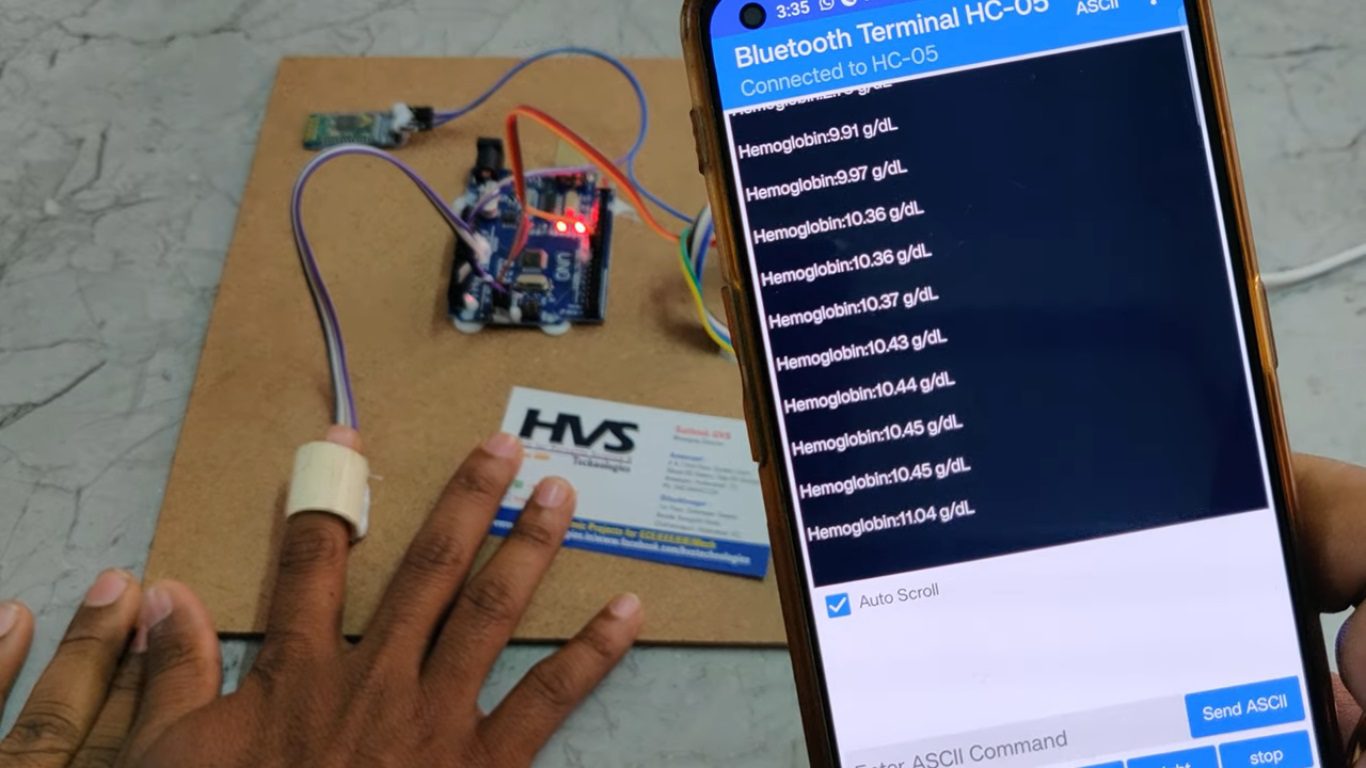
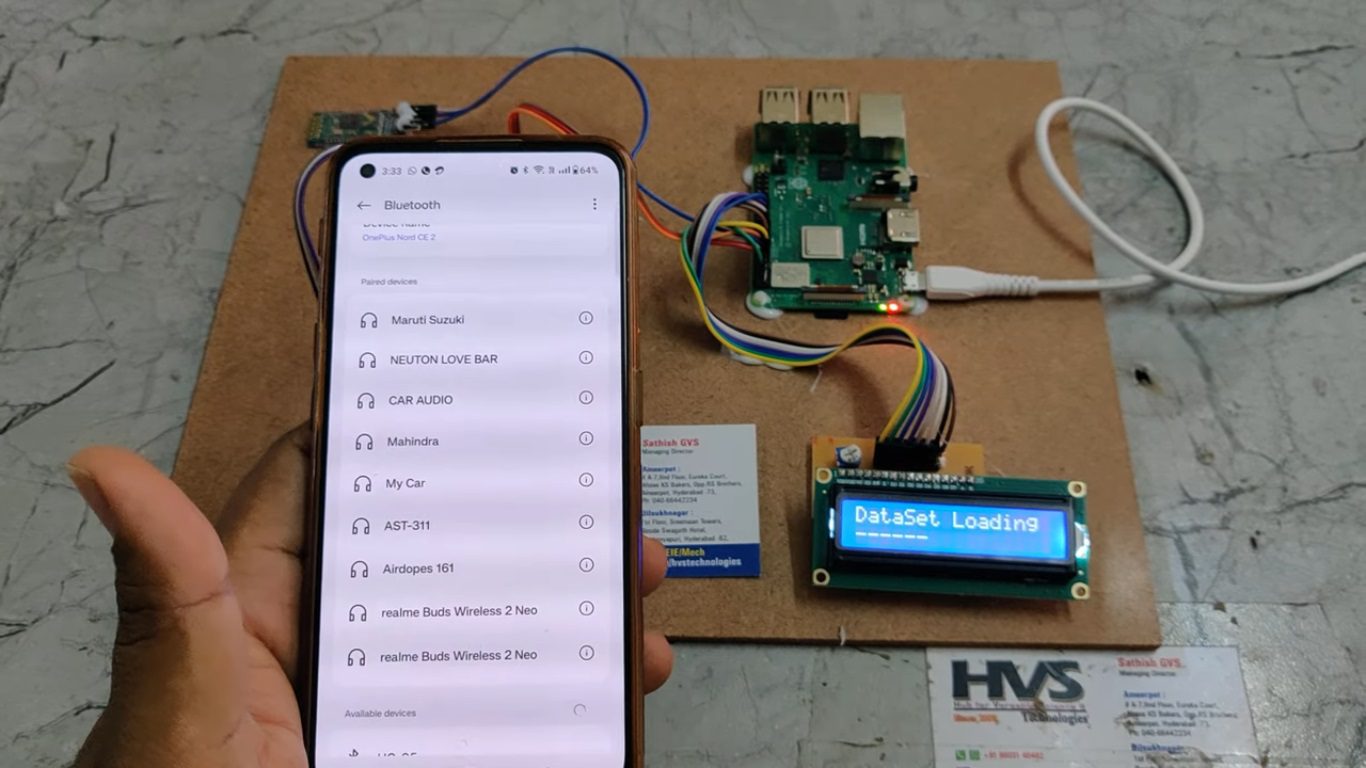
Hemoglobin level monitoring is a crucial aspect of diagnosing and managing various medical conditions such as anemia. Traditional methods of hemoglobin measurement involve invasive blood sampling, which can be uncomfortable and inconvenient. This project proposes a non-invasive hemoglobin sensing system leveraging machine learning (ML) techniques to estimate hemoglobin levels accurately.
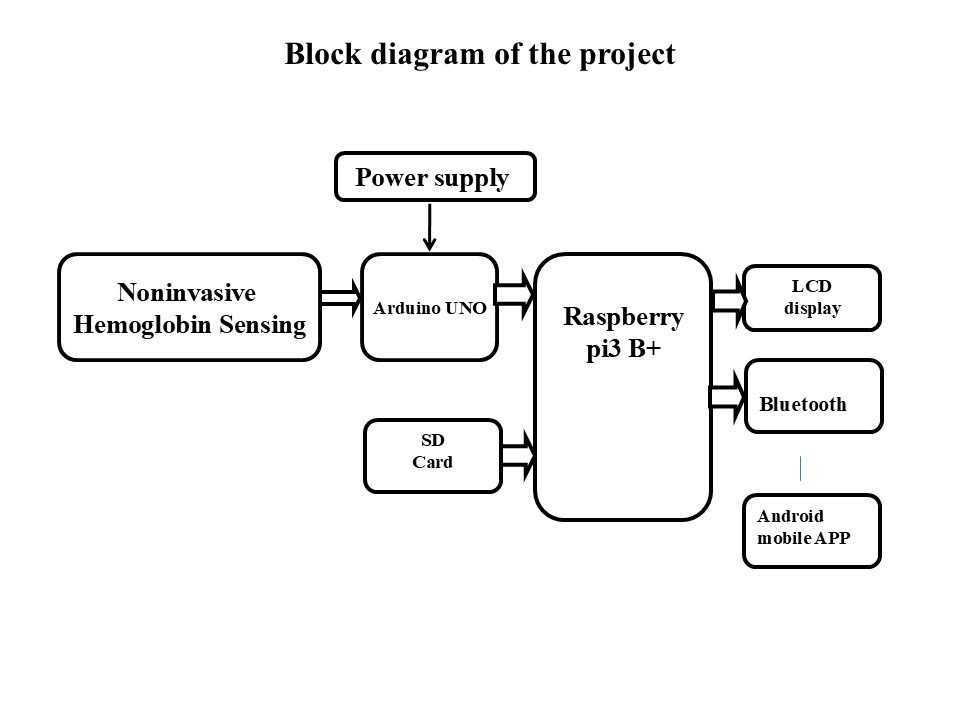
The system consists of a non-invasive sensor that captures relevant physiological signals, which are then processed using an Arduino UNO and a Raspberry Pi 3 B+. The Raspberry Pi serves as the main processing unit, running a trained ML model to predict hemoglobin levels from the collected sensor data. The results are displayed on an LCD screen and transmitted via Bluetooth to an Android mobile app for real-time monitoring.
The machine learning model is trained on a dataset of known hemoglobin levels, using features extracted from optical and physiological data. The proposed system offers a cost-effective, portable, and user-friendly alternative to traditional blood tests, making hemoglobin monitoring more accessible, especially in remote or resource-limited settings.
This approach has the potential to revolutionize point-of-care diagnostics by providing an efficient and non-invasive solution for continuous hemoglobin monitoring, reducing patient discomfort and improving healthcare accessibility.
 video:
Objectives
- To develop a non-invasive hemoglobin monitoring system using machine learning techniques.
- To measure hemoglobin levels without collecting blood samples.
- To process sensor data using Arduino UNO and Raspberry Pi 3 B+.
- To predict hemoglobin levels accurately using a trained ML model.
- To display hemoglobin values on an LCD screen.
- To send monitoring data wirelessly to an Android mobile application through Bluetooth.
- To design a portable, low-cost, and user-friendly healthcare device.
- To provide continuous and real-time hemoglobin monitoring for patients.
- Power supply.
- RASPBERRY pi3 b+.
- Arduino UNO.
- Noninvasive Hemoglobin Sensor.
- LCD display.
- Bluetooth.
- SD card.
- Arduino IDE.
- Embedded C language.
- Raspbian OS.
- Python Language.
- Machine Learning.
 video: