No products in the cart.


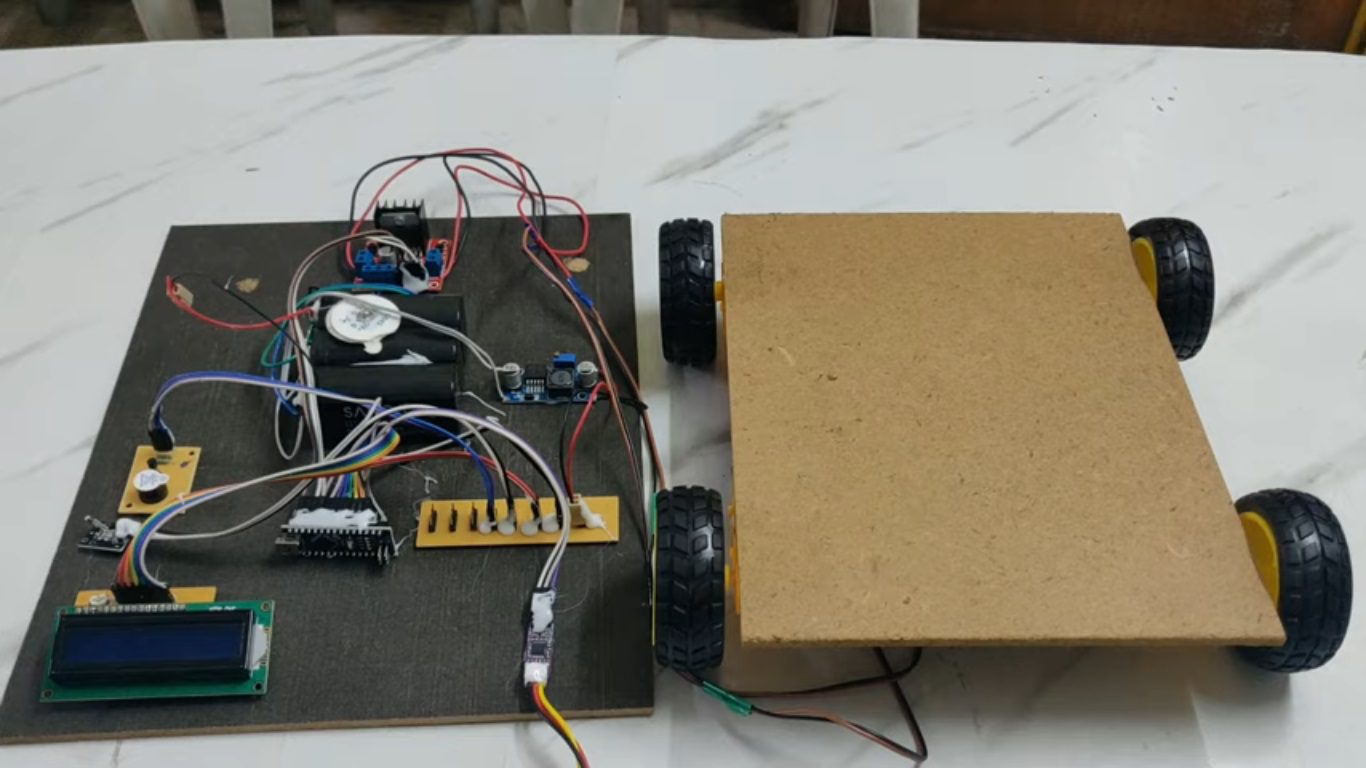
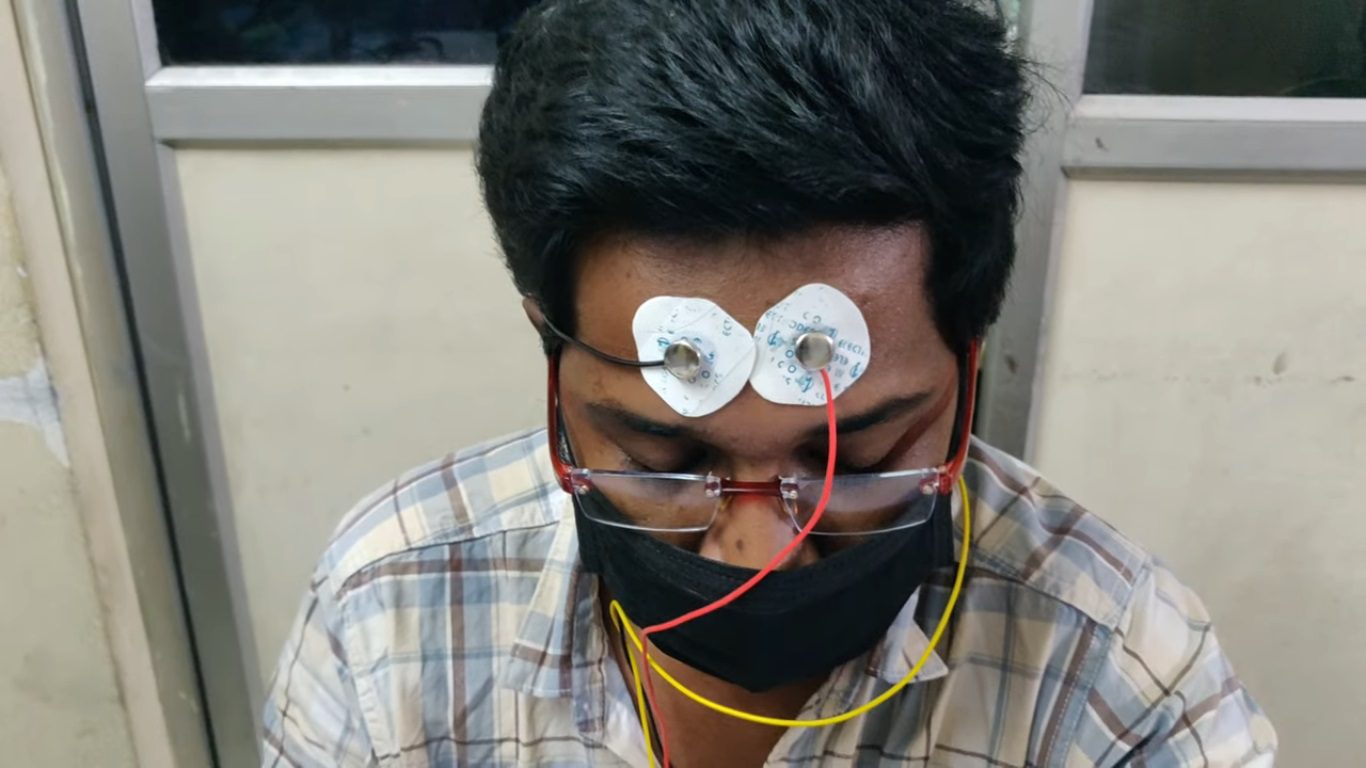
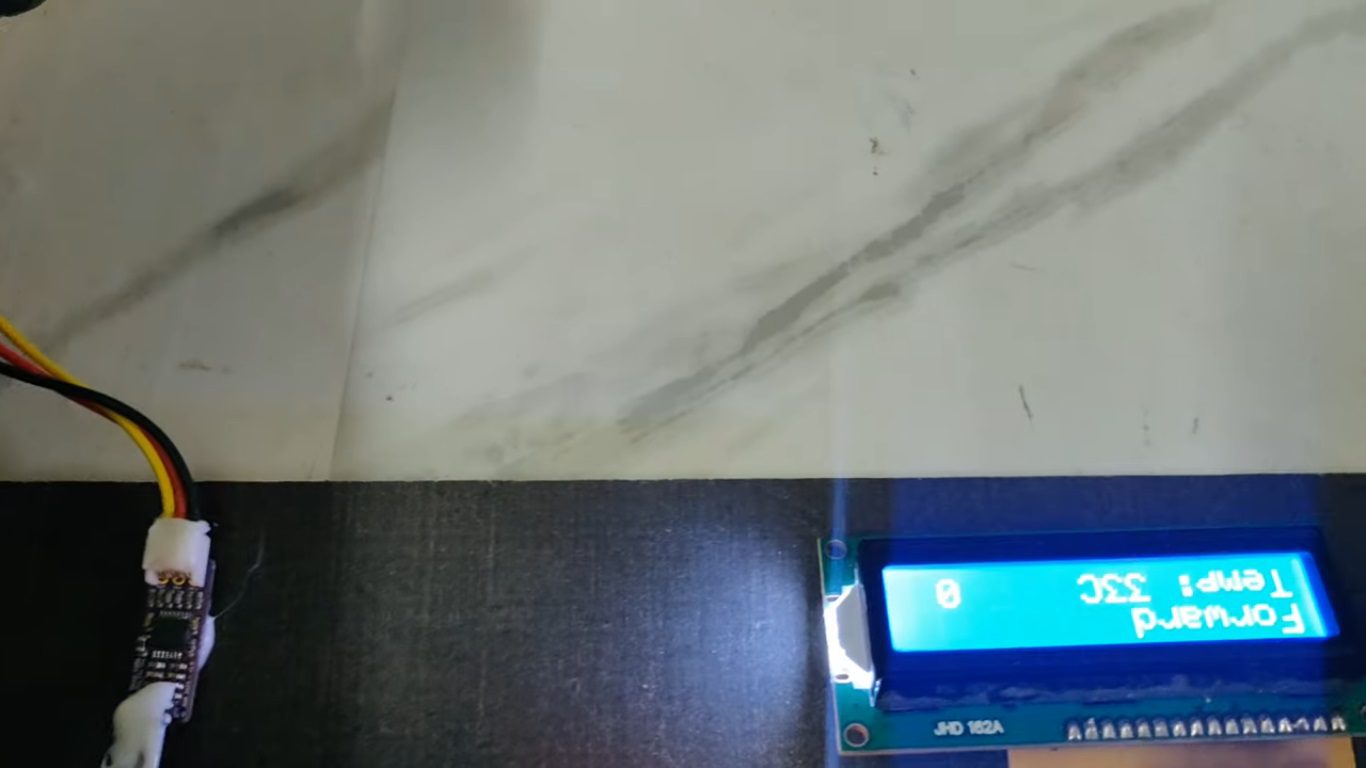
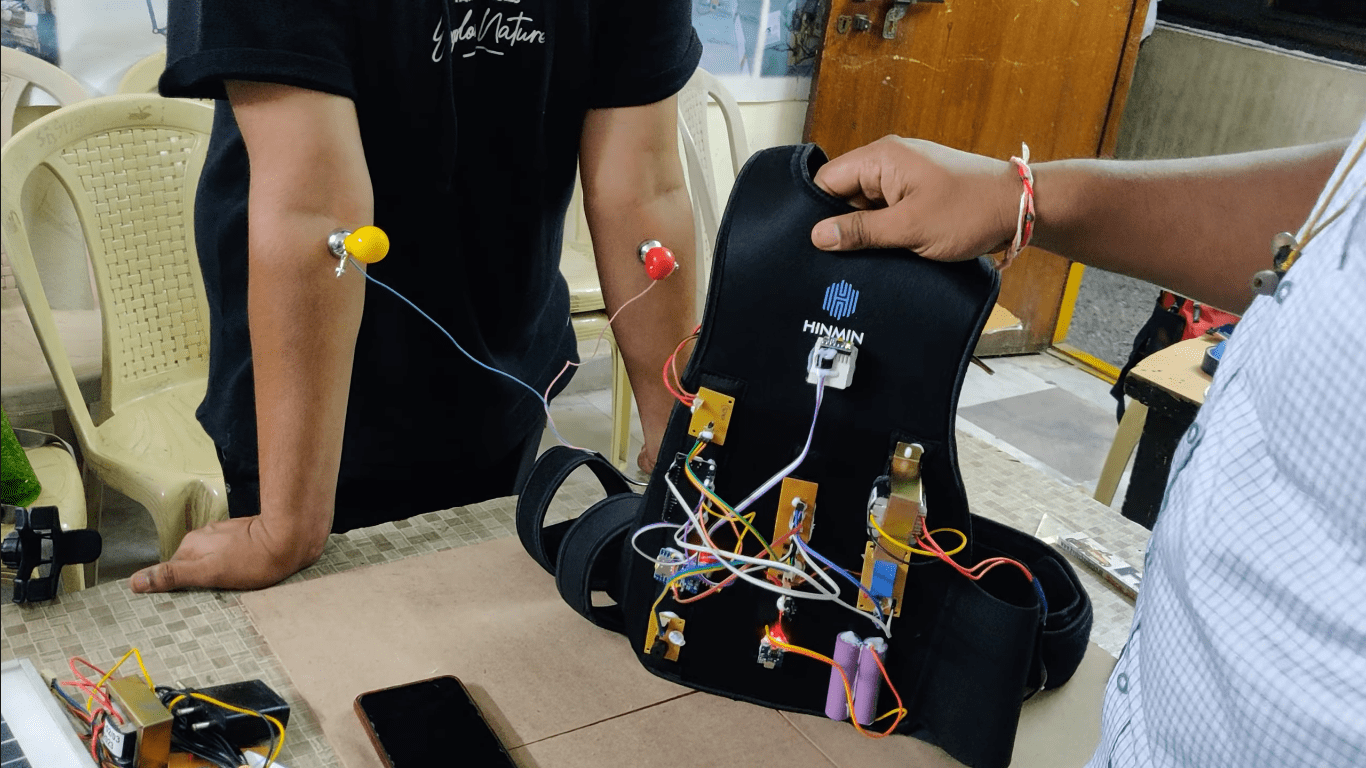
This project presents the design and implementation of a brain wave–controlled robotic wheelchair that enables hands-free mobility for physically challenged individuals. The system uses brainwave signals captured through electrodes placed on the user’s head. These signals are processed by the BioAmp EXG Pill module and transmitted to an Arduino Nano microcontroller for interpretation. Based on the user’s brain activity, the wheelchair can move in four directions—forward, backward, left, and right—by controlling DC motors through an L298N Motor Driver.
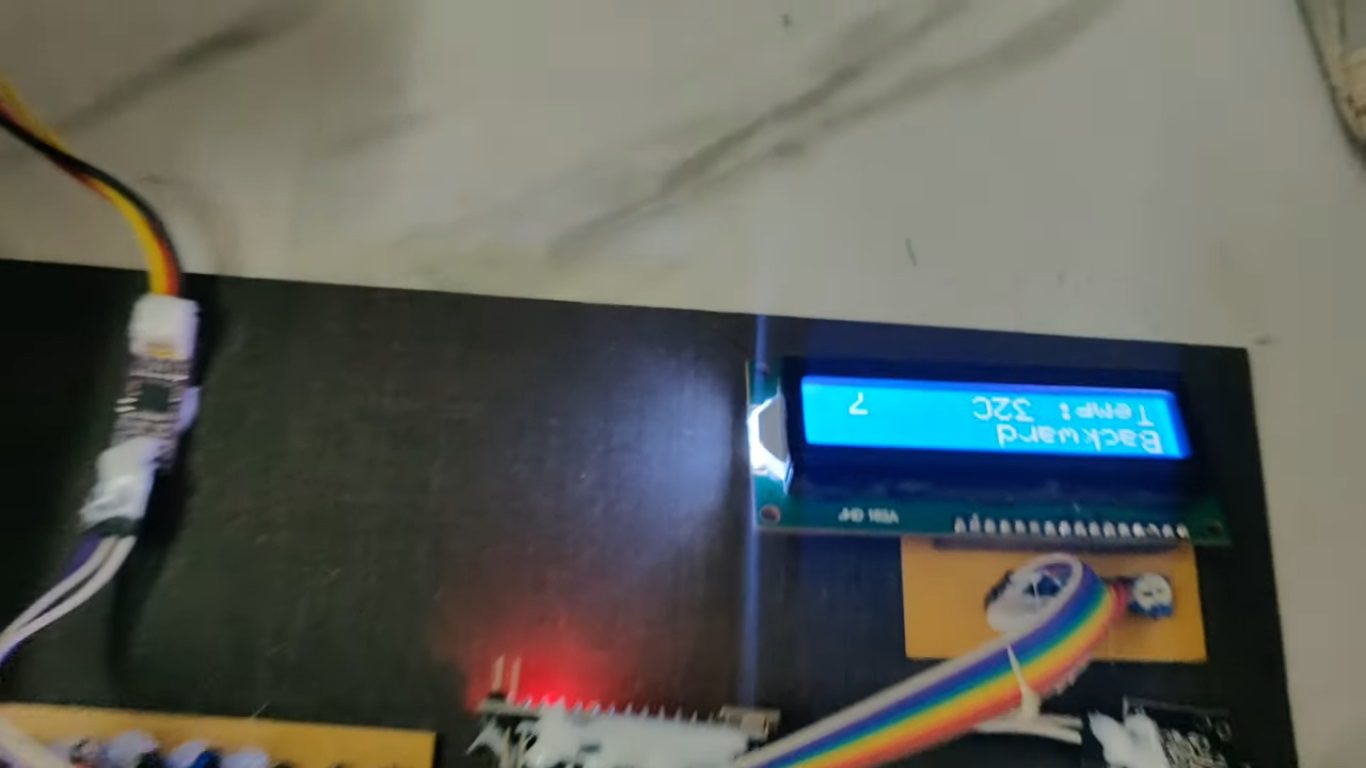
The power supply for the wheelchair is derived from a 12 V battery system, which is charged using a step-down transformer and a rectifier circuit to convert AC to DC. An LM2596 voltage regulator ensures stable power delivery to the components. A temperature sensor is integrated to monitor the user’s body temperature, activating a buzzer alert if abnormal levels are detected.
The movement commands are mapped to specific brainwave patterns or head movements, and the system includes a stop function to ensure safety when no valid signal is detected. This prototype demonstrates a low-cost, non-invasive, and intelligent assistive technology that can enhance mobility and independence for individuals with severe physical impairments.
Objectives:
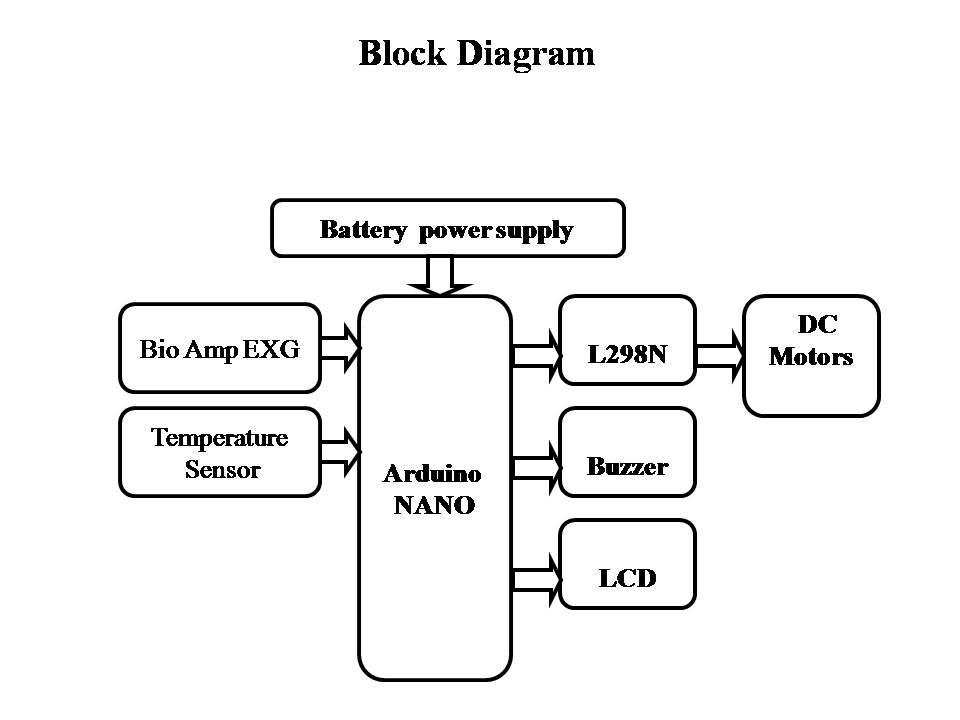
The Major Building Blocks for This Project:
- Arduino nano.
- Bio Amp EXG.
- Motor Driver with DC
- Buzzer.
- LM2596.
- Battery.
- Temperature Sensor.
- LCD Sensor.
 video: