No products in the cart.


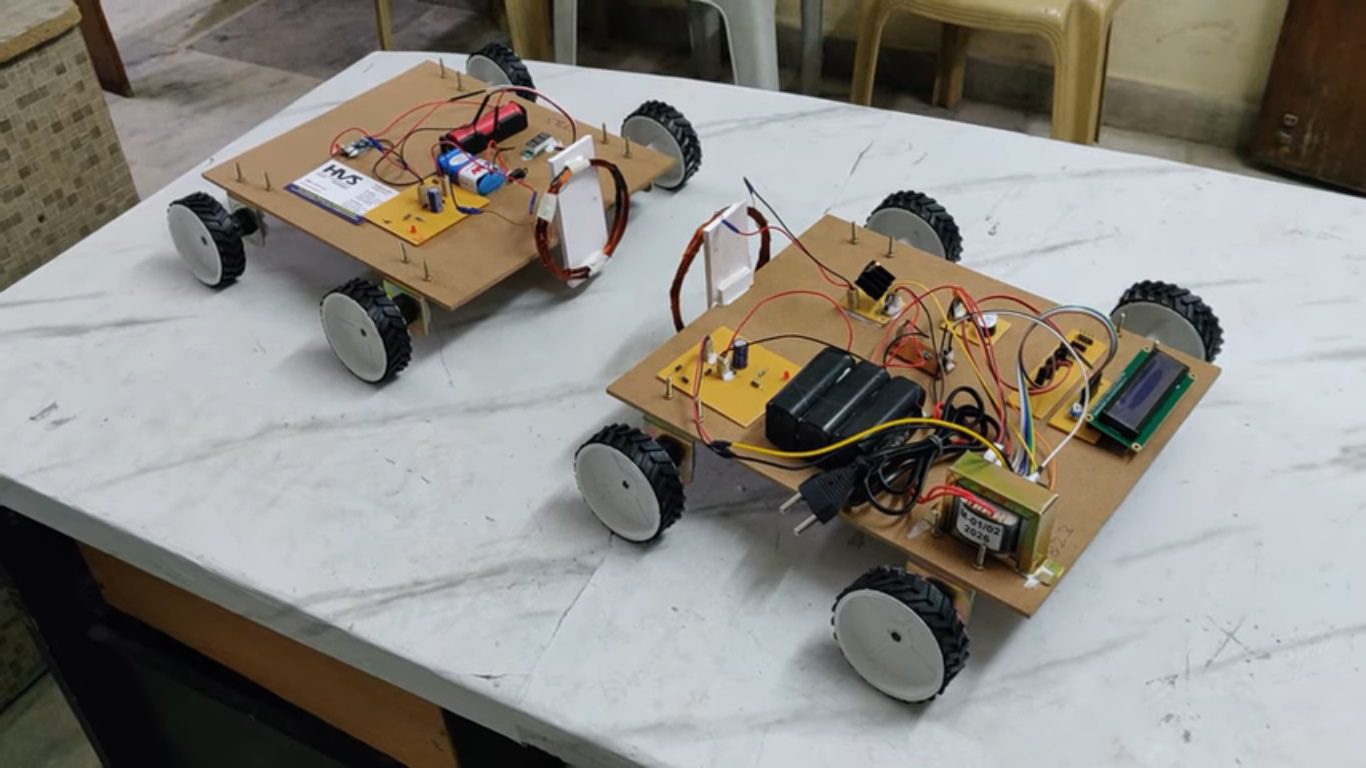
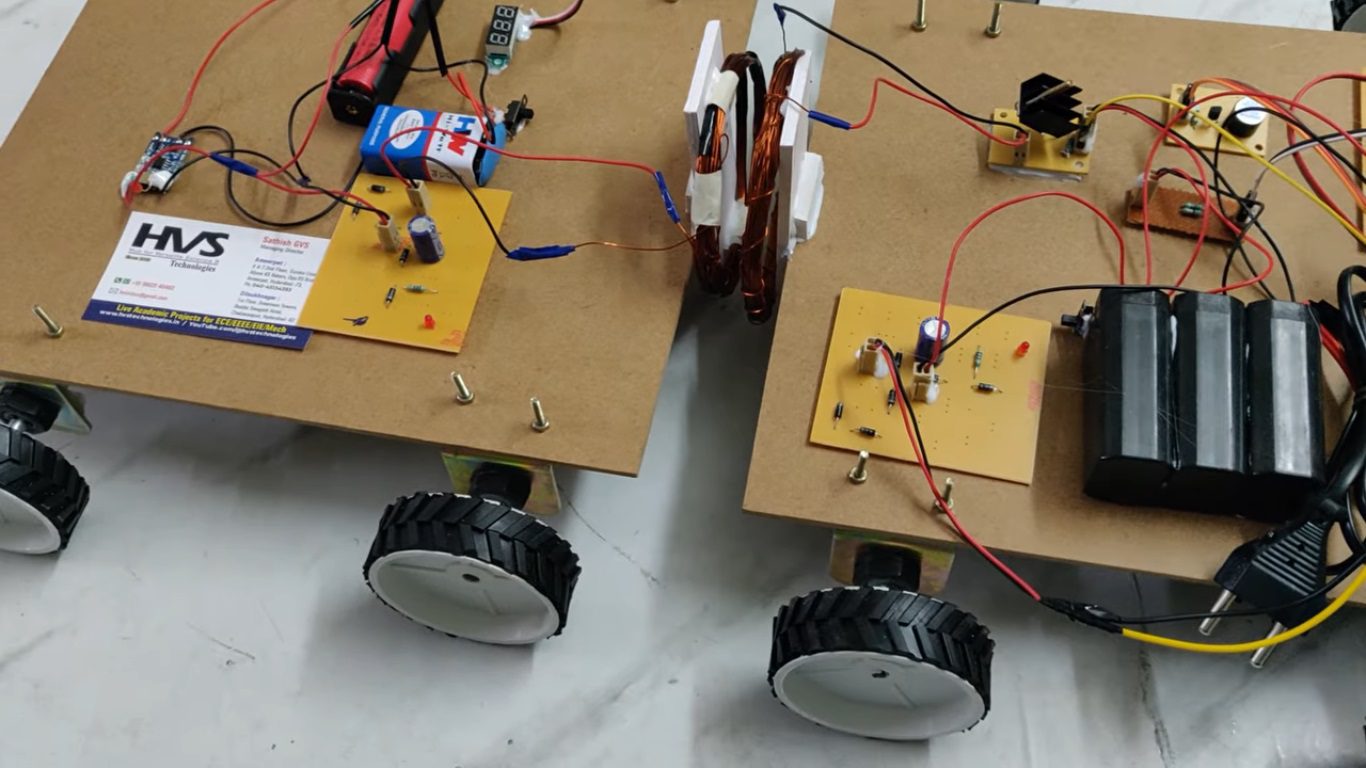
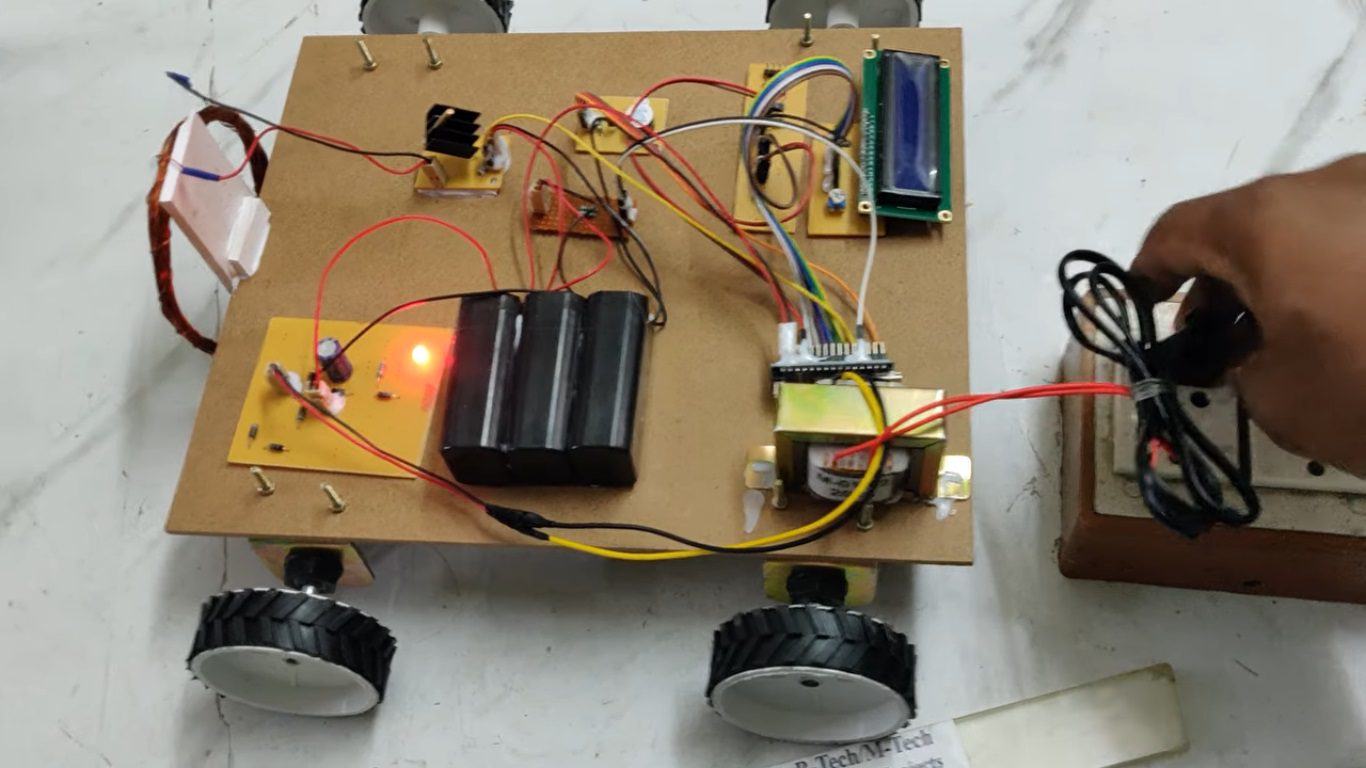
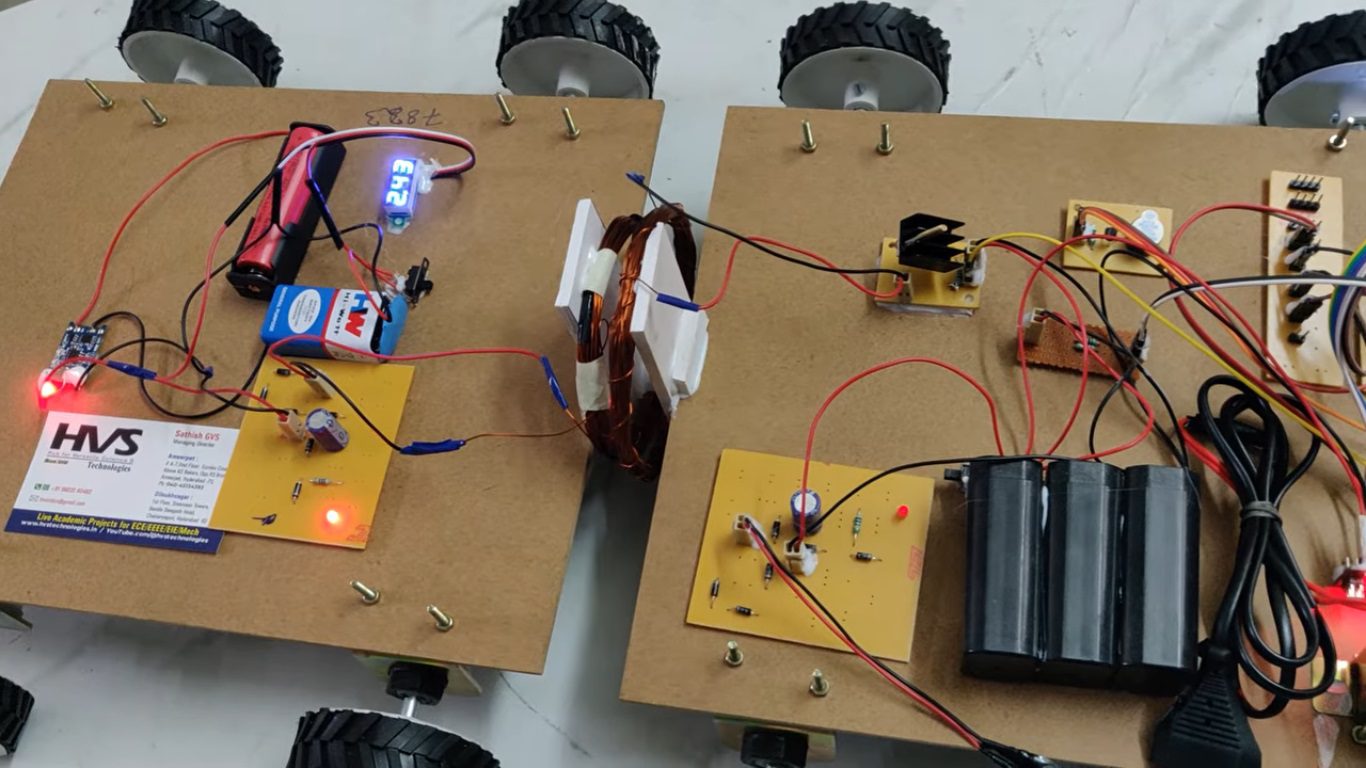
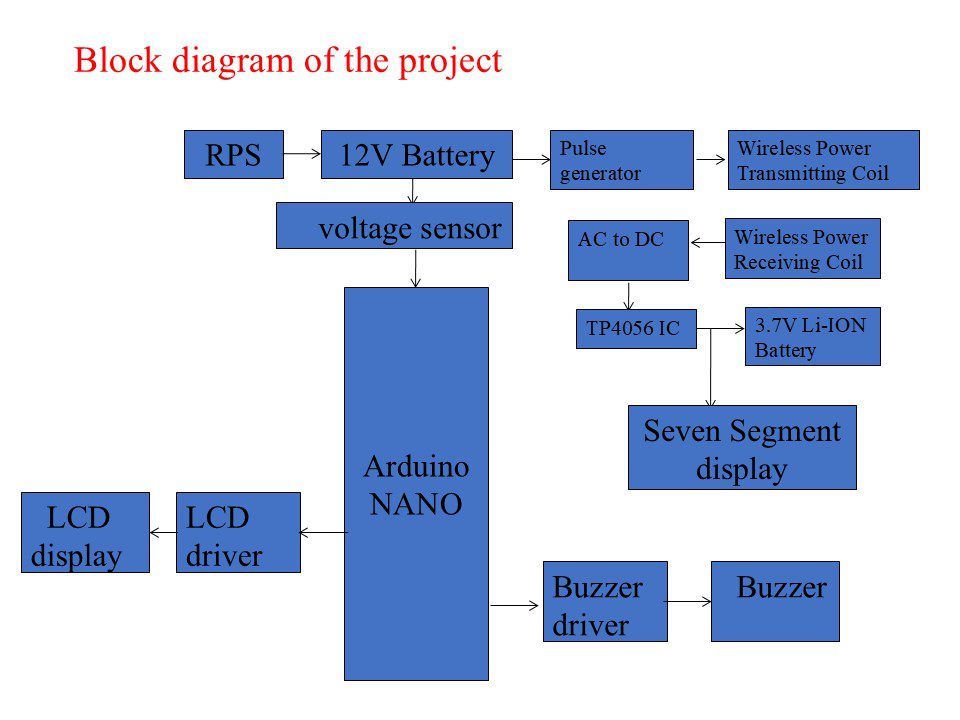
The rapid growth of electric vehicles (EVs) has increased the demand for efficient and flexible charging solutions. This project presents a Vehicle-to-Vehicle (V2V) wireless charging system that enables one vehicle to transfer electrical energy wirelessly to another vehicle without physical connectors. The proposed system uses inductive power transfer technology, where electrical energy from a donor vehicle’s battery is converted into high-frequency pulses and transmitted through a wireless power transmitting coil.
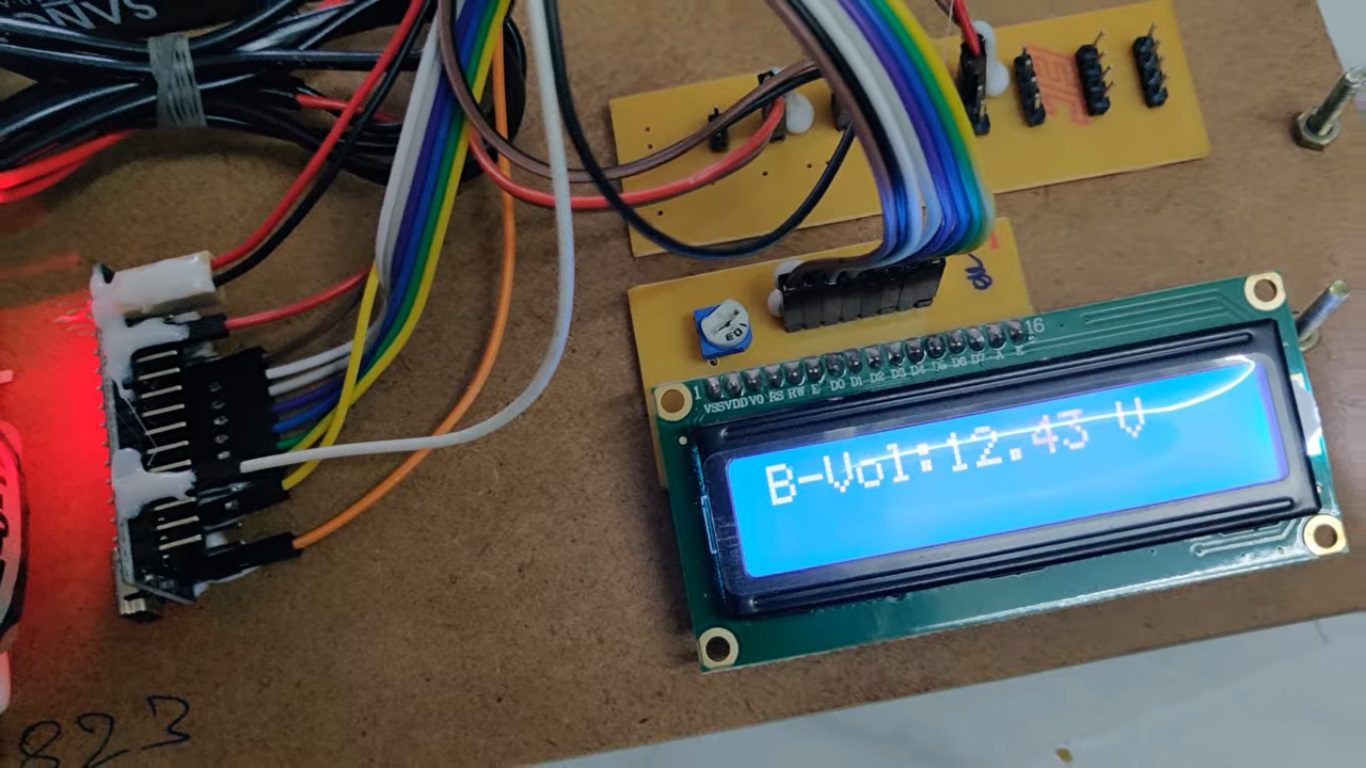
An Arduino Nano serves as the central control unit, monitoring system battery voltage using voltage sensor. The transmitted wireless power is received by a secondary coil in the receiving vehicle, converted from AC to DC, and regulated using a TP4056 charging module to safely charge a 3.7V Li-ion battery. Continuously monitor the battery voltage on LCD display, while a buzzer provides audible alerts for fault or threshold conditions.
This system eliminates the need for conventional charging cables, reduces wear and tear of connectors, and enhances safety and convenience. The proposed V2V wireless charging model demonstrates a practical solution for emergency charging, roadside assistance, and smart EV ecosystems, contributing toward sustainable and intelligent transportation systems.
The main objectives of the project are:
 video:
To design a wireless charging system for electric vehicles.
To enable vehicle-to-vehicle power transfer without using physical cables.
To use inductive coupling for safe and efficient wireless energy transmission.
To monitor battery voltage using sensor.
To control and manage the system using an Arduino Nano.
To display charging status and voltage on an LCD display.
To provide alerts using a buzzer for abnormal conditions.
To demonstrate a safe and portable charging solution for emergency situations.
The major building blocks of the project are:- Regulated power supply.
- 12V Rechargeable Battery.
- Arduino NANO Microcontroller.
- Wireless Power Transmitting and Receiving Coil
- Voltage sensor.
- LCD display.
- Buzzer.
- Pulse generator.
- TP4056IC.
- 7V LI –ION Battery.
- Arduino IDE for compiling and dumping code into controller
- Express SCH for Circuit design.
 video: