No products in the cart.


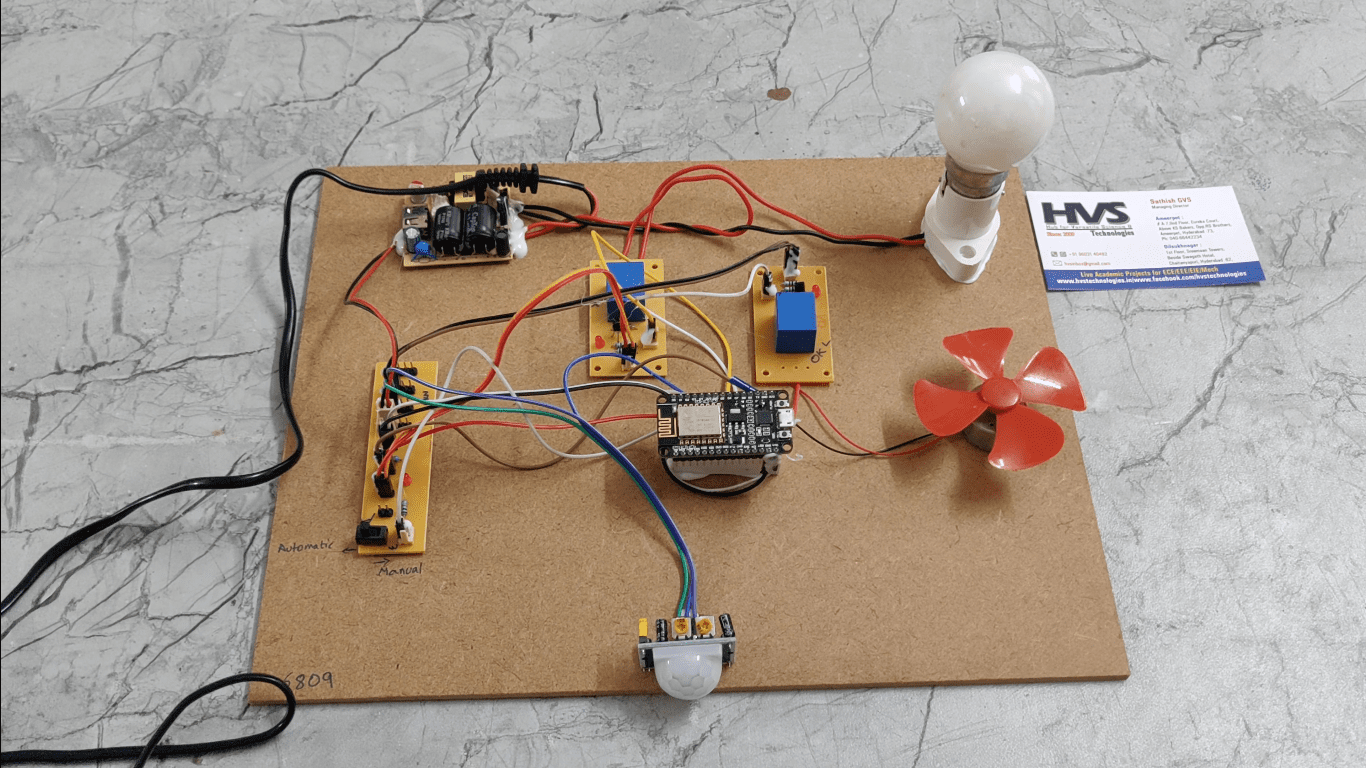
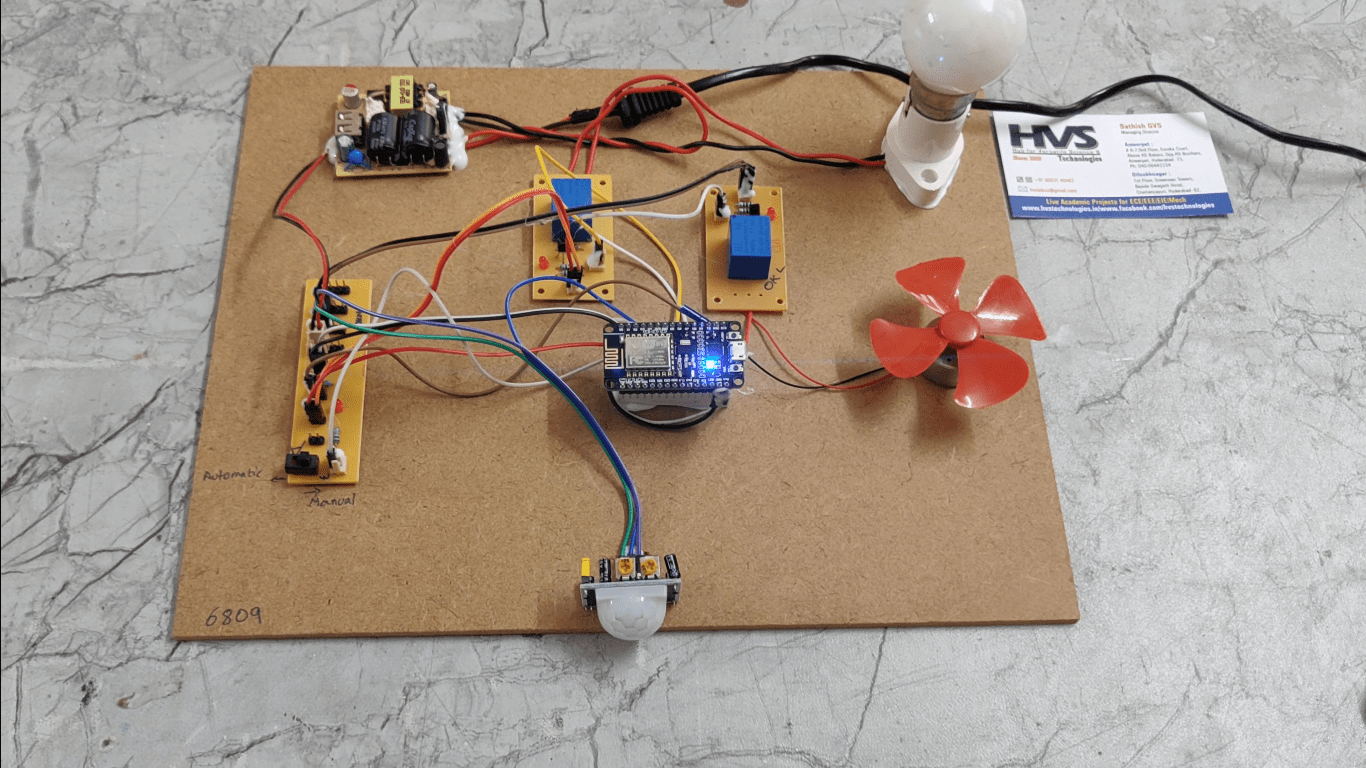
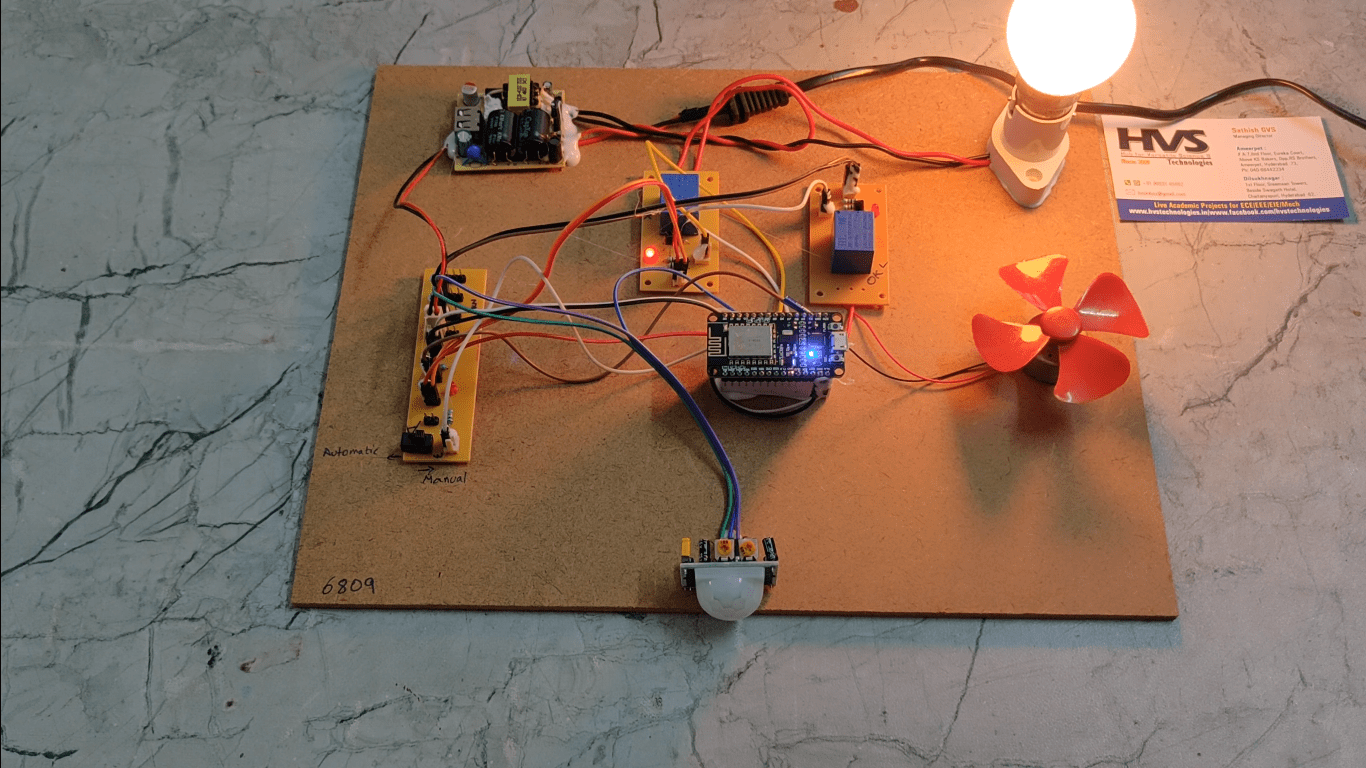

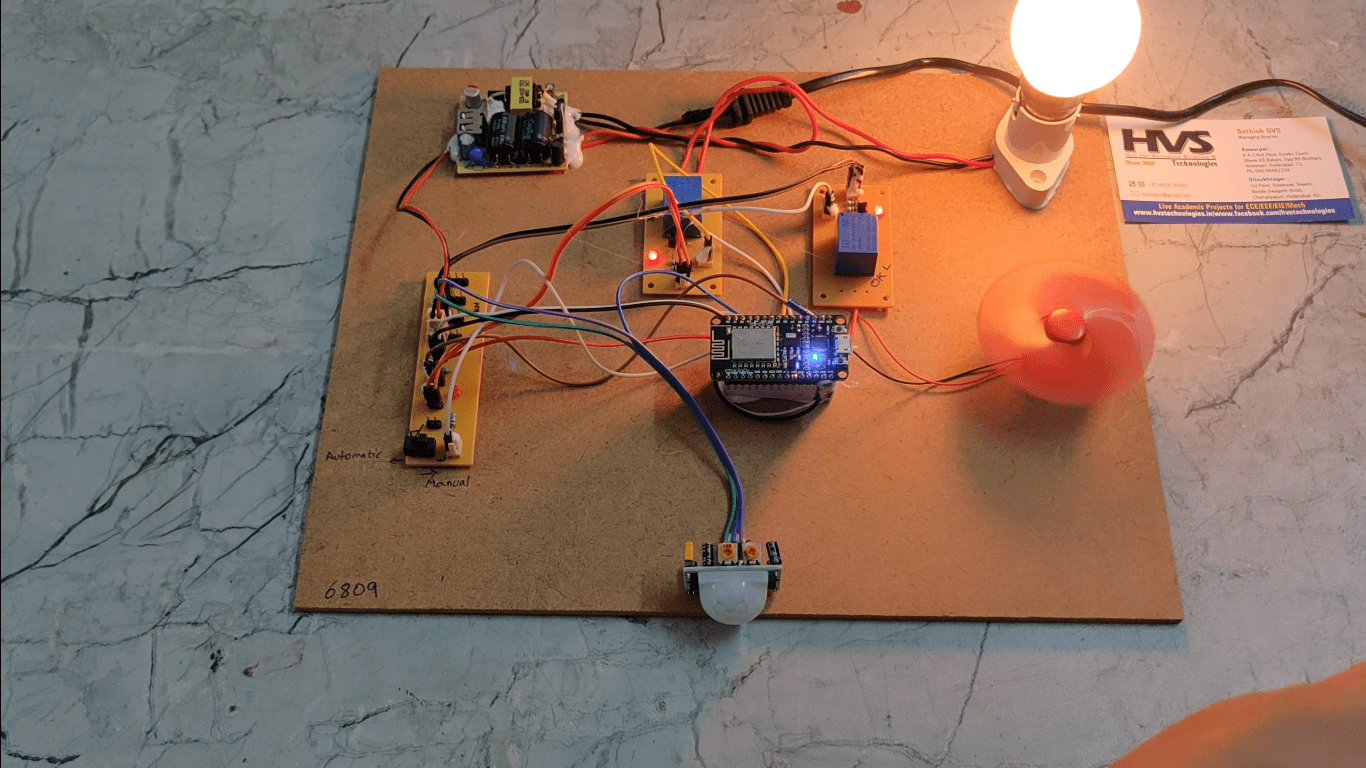
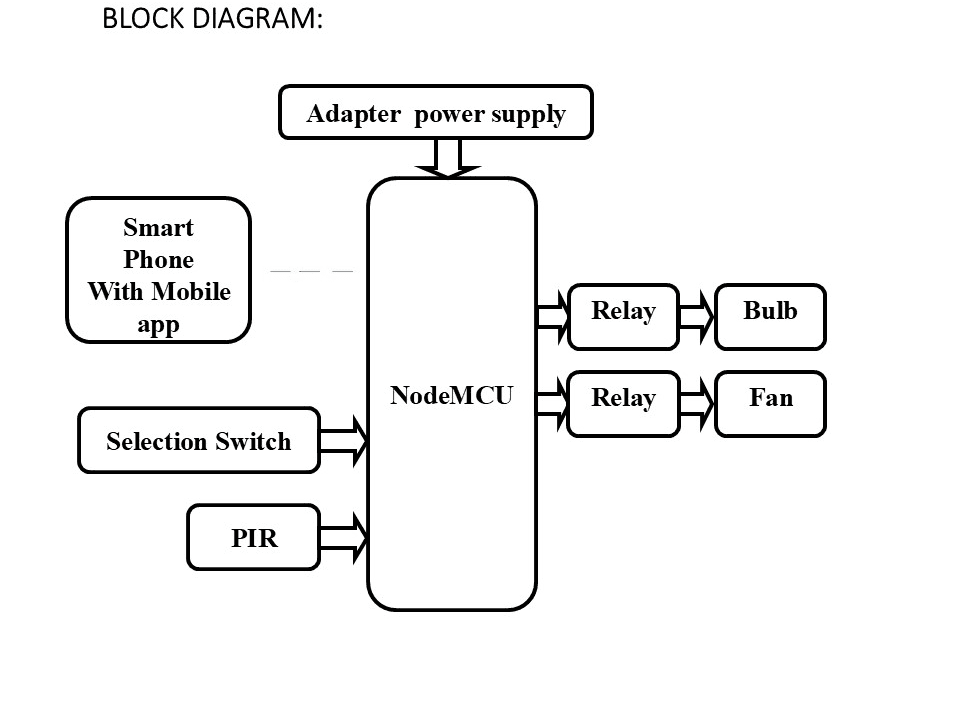
The main aim of this project is to design a google assistant-based home automation which is control by manual and automatic and which select the mode of automation by the user using selection switch. PIR sensor is used to detect the human presence in room which uses for automatic automation.
The controlling device of the whole system is a NodeMCU module. The ESP8266 based NodeMCU development board. It is an open-source platform for developing Wi-Fi based embedded systems and it is based on the popular ESP8266 Wi-Fi Module, running the Lua based NodeMCU firmware. One of the easiest ways to program NodeMCU is via the Arduino IDE.
This project explores the integration of home automation systems utilizing Google Assistant, Amazon Alexa, and manual switches to enhance control and convenience within residential environments. The system is designed to manage electrical appliances, including a bulb and a fan, through a combination of voice commands and manual controls. Key components of the system include two relays that facilitate the operation of the bulb and fan, a Passive Infrared (PIR) sensor for detecting motion, and a selection switch for manual intervention. The PIR sensor enables automated control of lighting and fan based on room occupancy, while the selection switch allows users to toggle between manual and automated modes. The system is designed to provide seamless interaction between voice assistants and manual controls, offering a flexible and user-friendly approach to home automation. The integration of these technologies aims to improve energy efficiency, enhance user convenience, and provide a customizable automation experience. The effectiveness of the system is evaluated based on its responsiveness, ease of use, and reliability in managing household devices.
Top of Form
Bottom of Form
2-Relays along with BULB and fan, PIR, selection switch are interfaced to the NodeMCU. The NodeMCU as inbuilt Wi-Fi module so it receives the data from google assistant. Based on the received command, NodeMCU will turn ON/OFF the loads. In this home appliances are inter facing through relays. Relays work as a switch to ON/OFF the devices. The NodeMCU control the coils of the relays and that causes the relay to alternate between normally open (NO) and normally closed (NC) condition depending on the state of the NodeMCU thus, effectively turning the connected appliance “ON” or “OFF”.
The objectives of the project include:
 video:
- Controlling home appliances through voice using Google assistant.
- To Control the devices using Wi-Fi technology.
- PIR based Automatic automation and Google assistant based manual automation.
- Relays based device switching.
- Using NodeMCU module to achieve this task.
- Regulated power supply.
- NodeMCU.
- 2 RELAY BORD.
- 2 Appliances (Bulb&Fan).
- PIR sensor.
- Selection switch.
- Arduino ide studio compiler to write the program.
- Express SCH for Circuit design.
- Google assistant.
 video: