No products in the cart.


The use of green energy is becoming increasingly important in today’s world. Therefore, electric vehicles are currently the best choice for the environment in terms of public and personal transportation. Because of their high energy density and efficiency, lithium-ion (Li-ion) batteries are widely used in electric vehicles. However, Li-ion batteries can be hazardous if they operate outside their Safe Operating Area (SOA). To ensure safety and optimal performance, a Battery Management System (BMS) is essential for every Li-ion battery, particularly in electric vehicles.
In this work, the purpose, functions, and topologies of BMS are discussed in detail. Additionally, early battery models, along with hardware and system designs for BMS, are reviewed in the literature. An improved battery model is introduced, and simulation results are presented to validate its performance. Finally, a novel BMS hardware system is designed, and experimental results are discussed. Possible improvements for both battery models and BMS hardware are outlined in the conclusions and future work section.
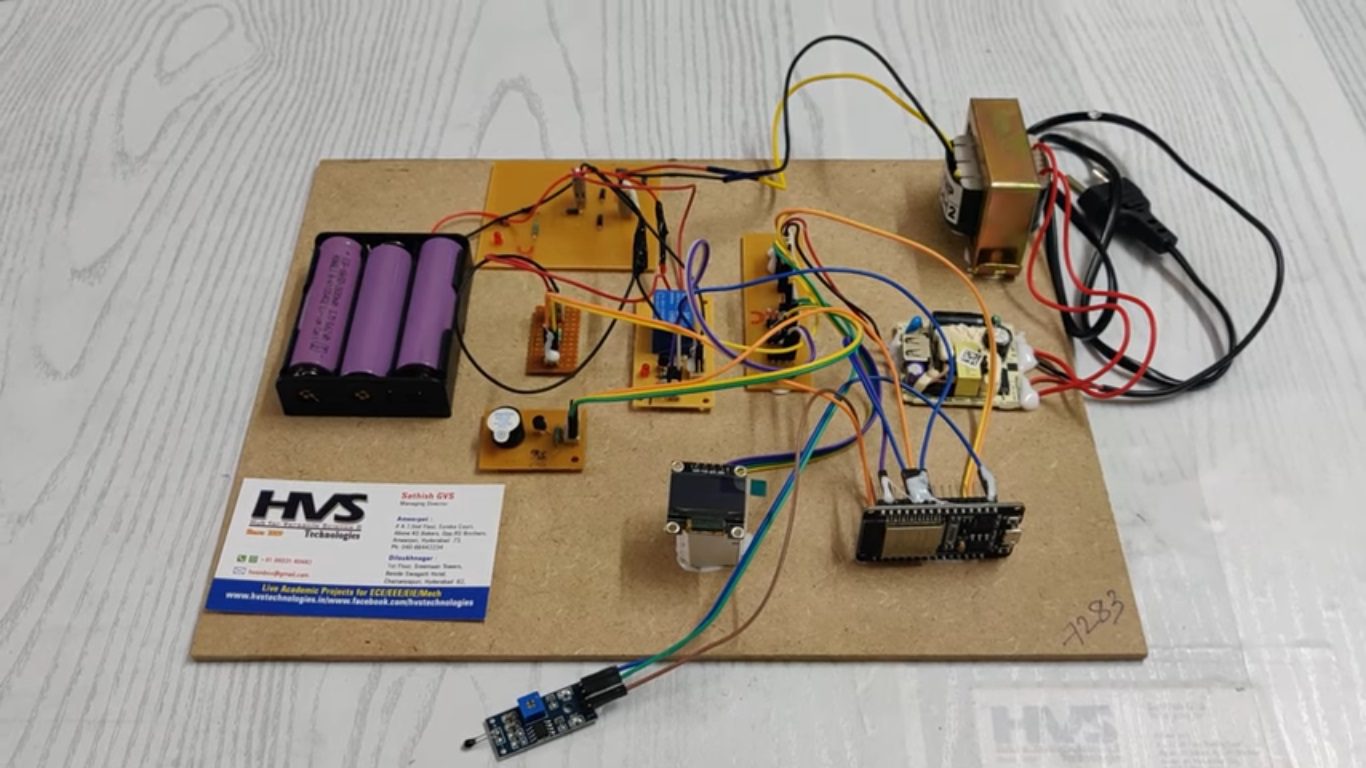
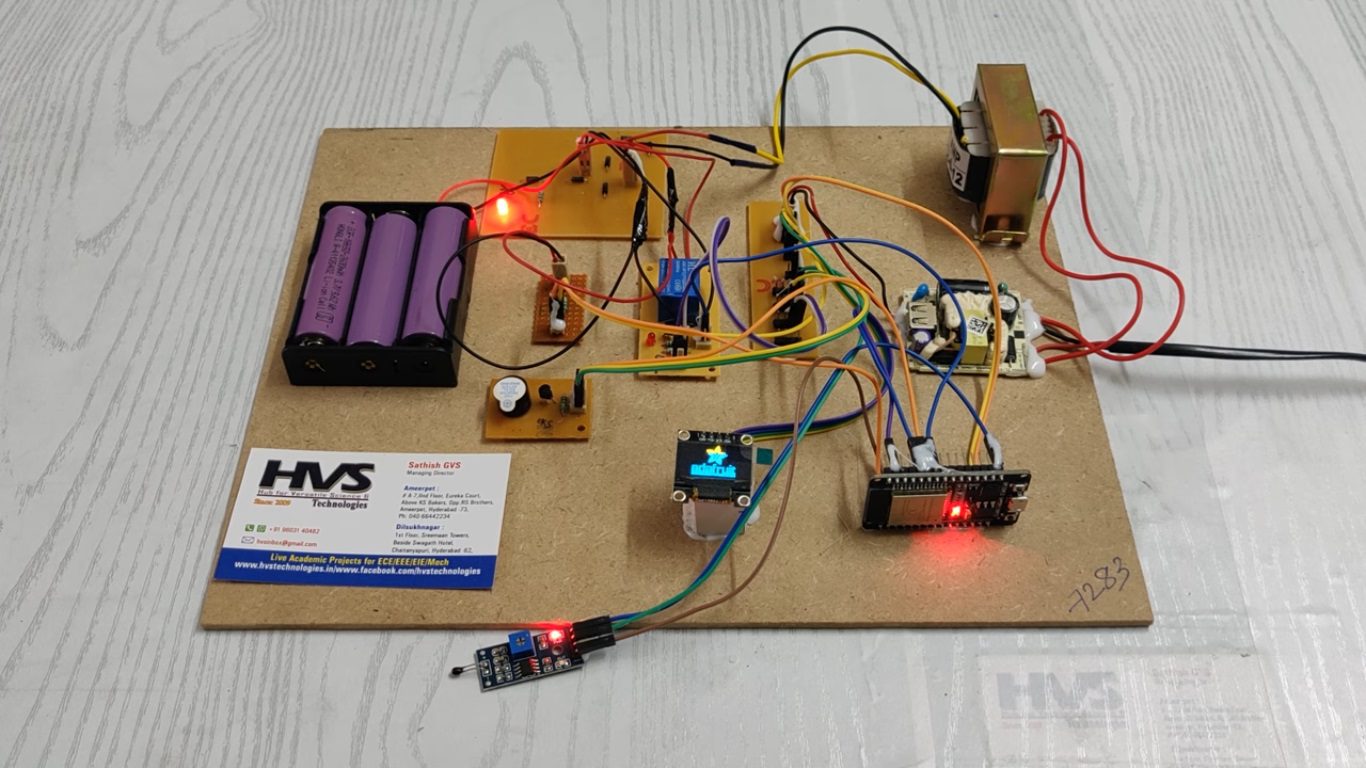
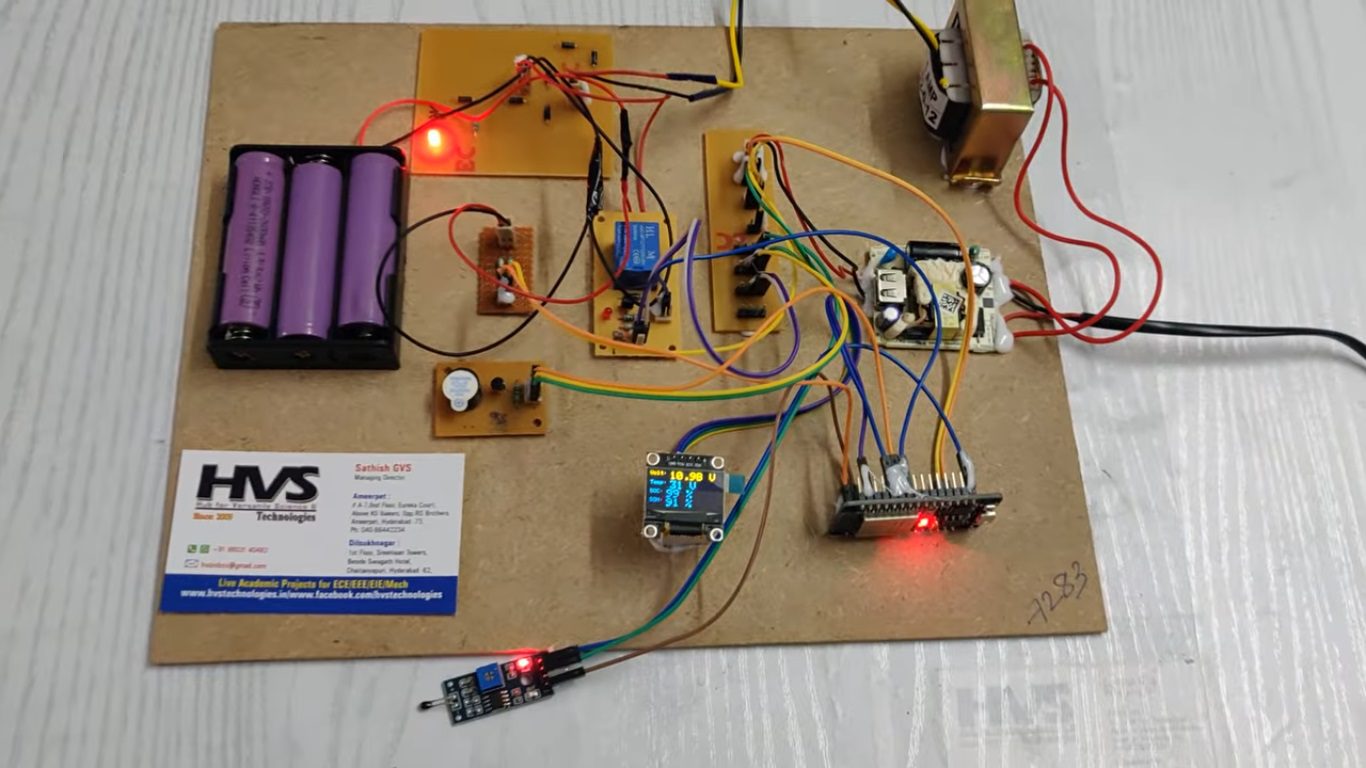
A Battery Management System (BMS) is proposed for electric vehicles, designed to manage Li-ion battery packs by ensuring safe operation and monitoring their status using an ESP32 microcontroller.
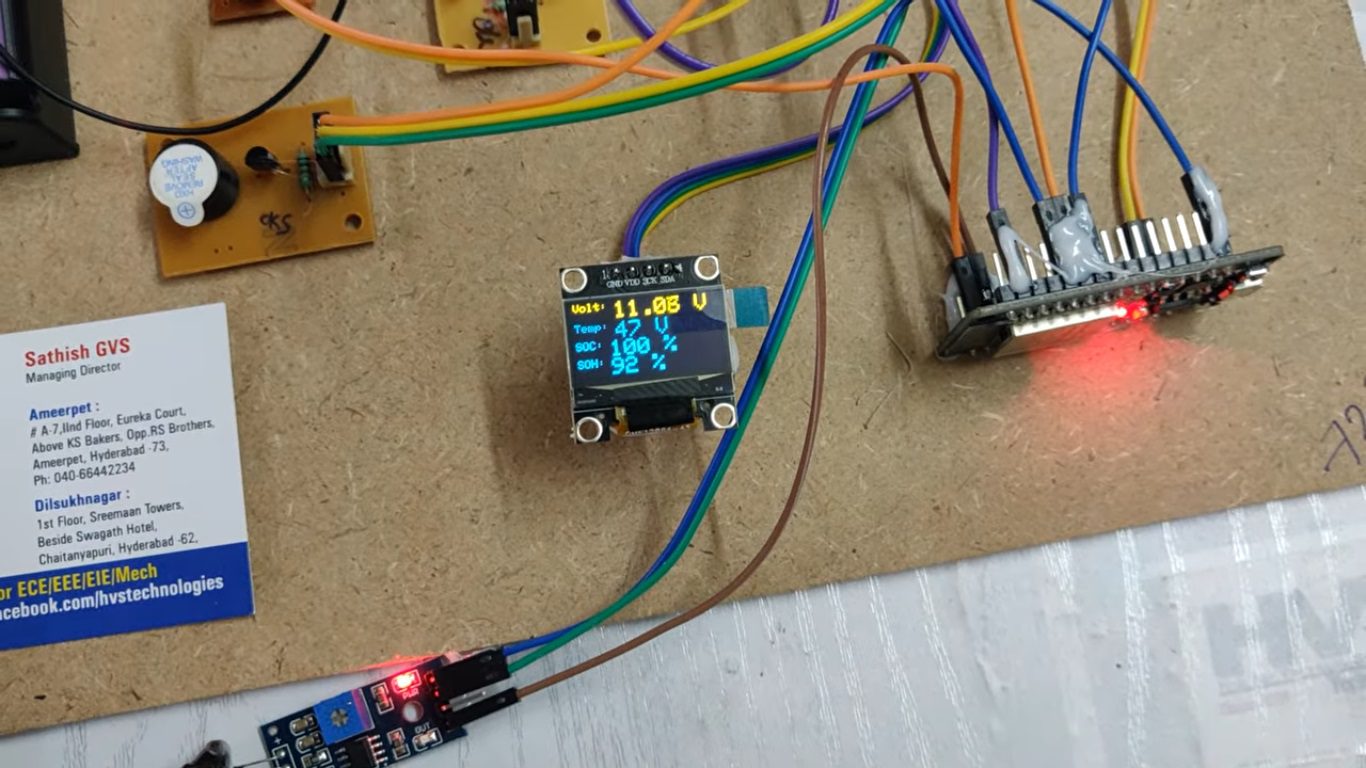
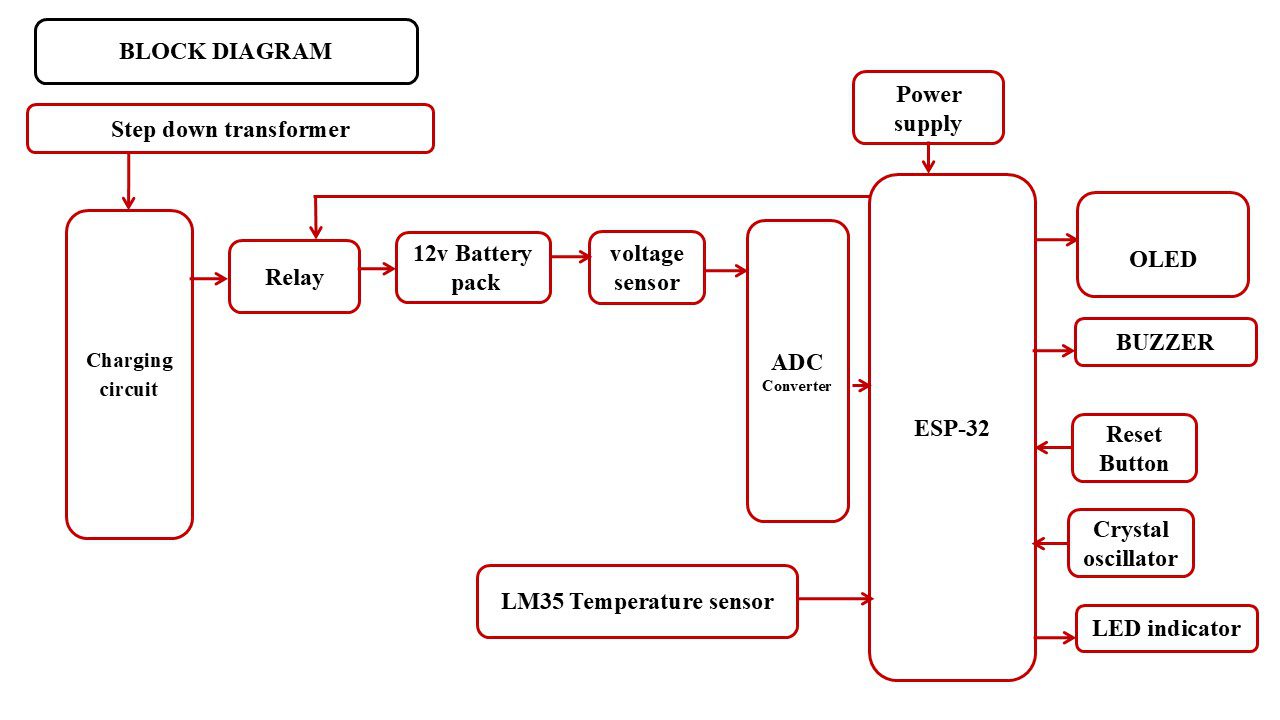
The ESP32 serves as the central controller of the system. Integrated modules include a temperature sensor, Li-ion battery pack with relay, charger, and an OLED display. When any of the Li-ion battery packs are drained, the system automatically activates the charger via the relay, and the voltage levels of each battery pack are displayed on the OLED. The system continuously monitors the temperature, and if it exceeds a predefined threshold, the ESP32 activates a buzzer to issue an alert.
The ESP32 measures voltage from the sensors and, based on the readings, switches the relay to control the charging process. The relay functions as a switch to enable or disable the charging connection as needed, ensuring the safe and efficient operation of the Li-ion battery packs.
The major building blocks of this project are:- Regulated power supply
- ESP-32.
- Temperature sensor.
- Voltage sensor.
- Buzzer.
- Battery pack
- Relay.
- Charging Circuit.
- OLED.
- LED Indicators
- Crystal oscillator
- Reset button.
- Arduino IDE for dumping code into Micro controller.
- Express SCH for Circuit design.
- Embedded C programming.
 video: