No products in the cart.


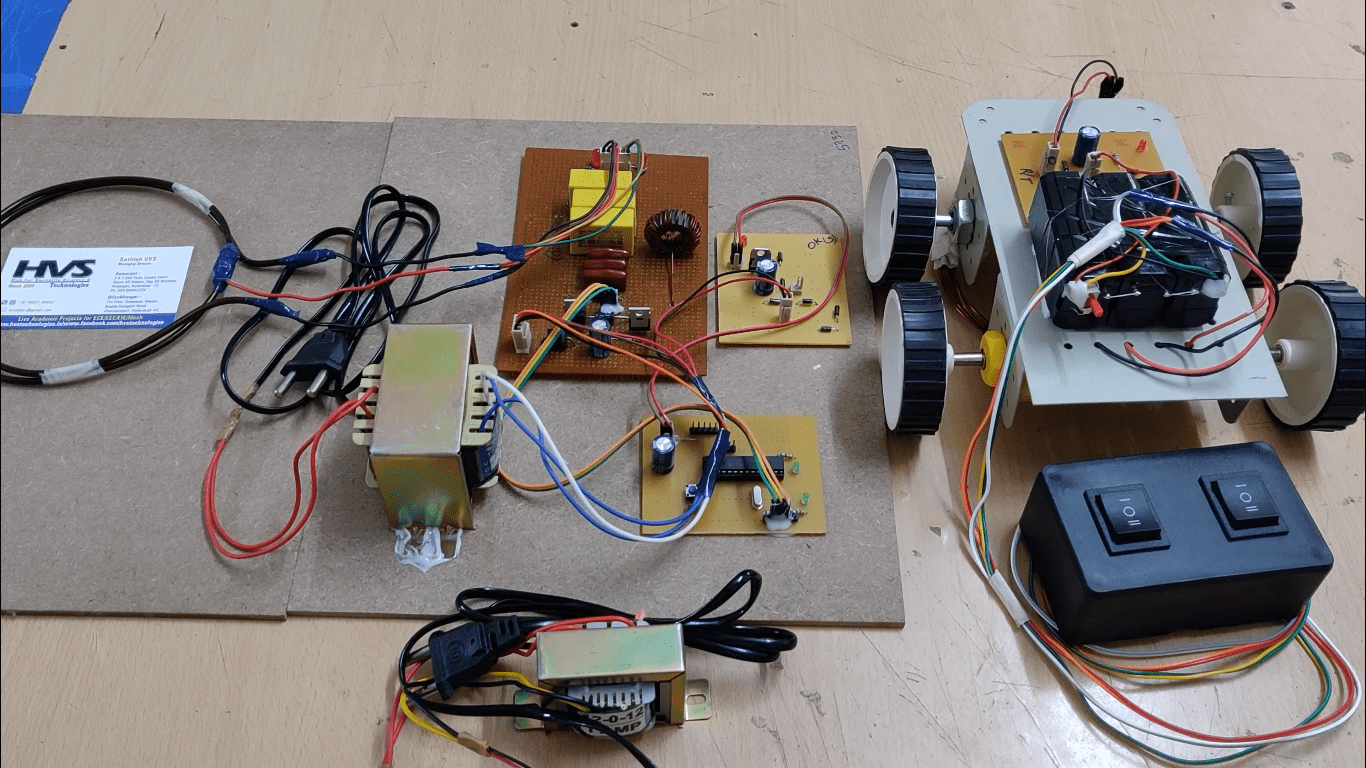
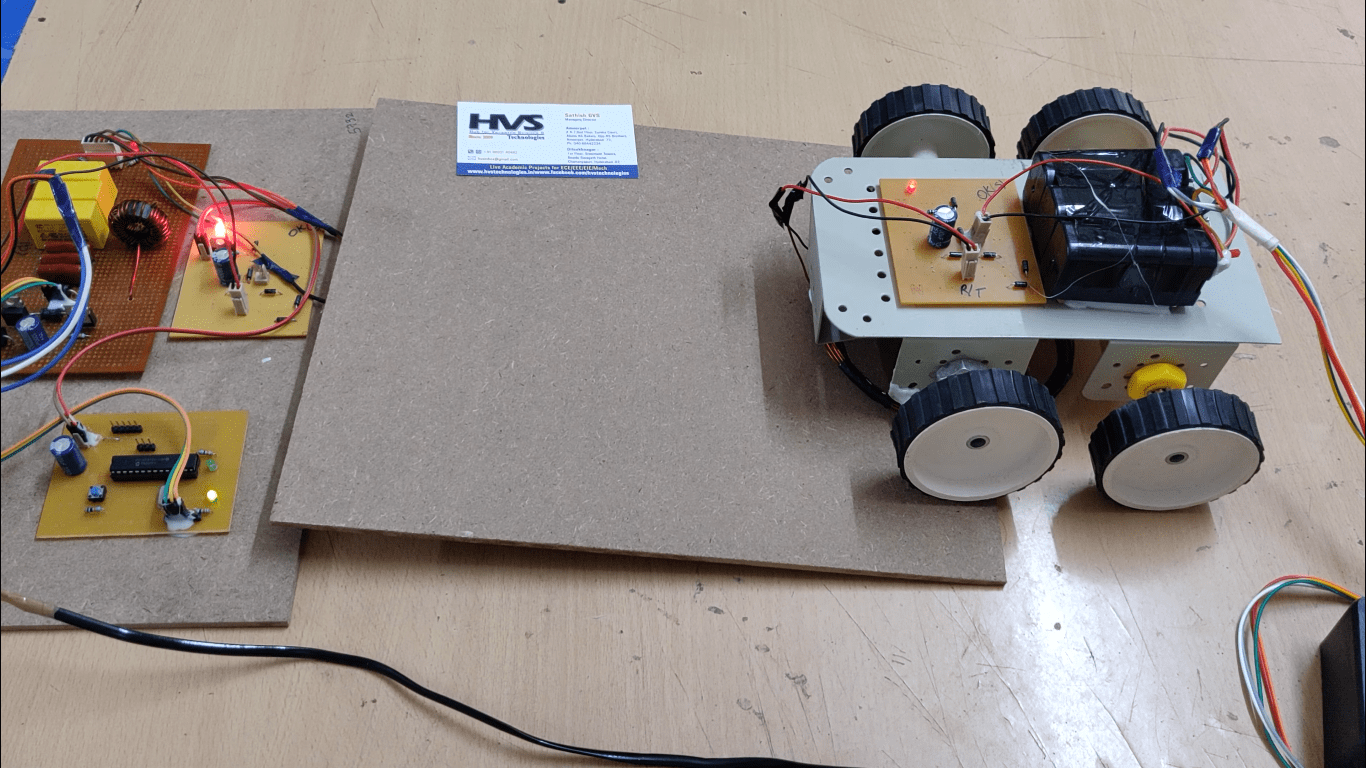
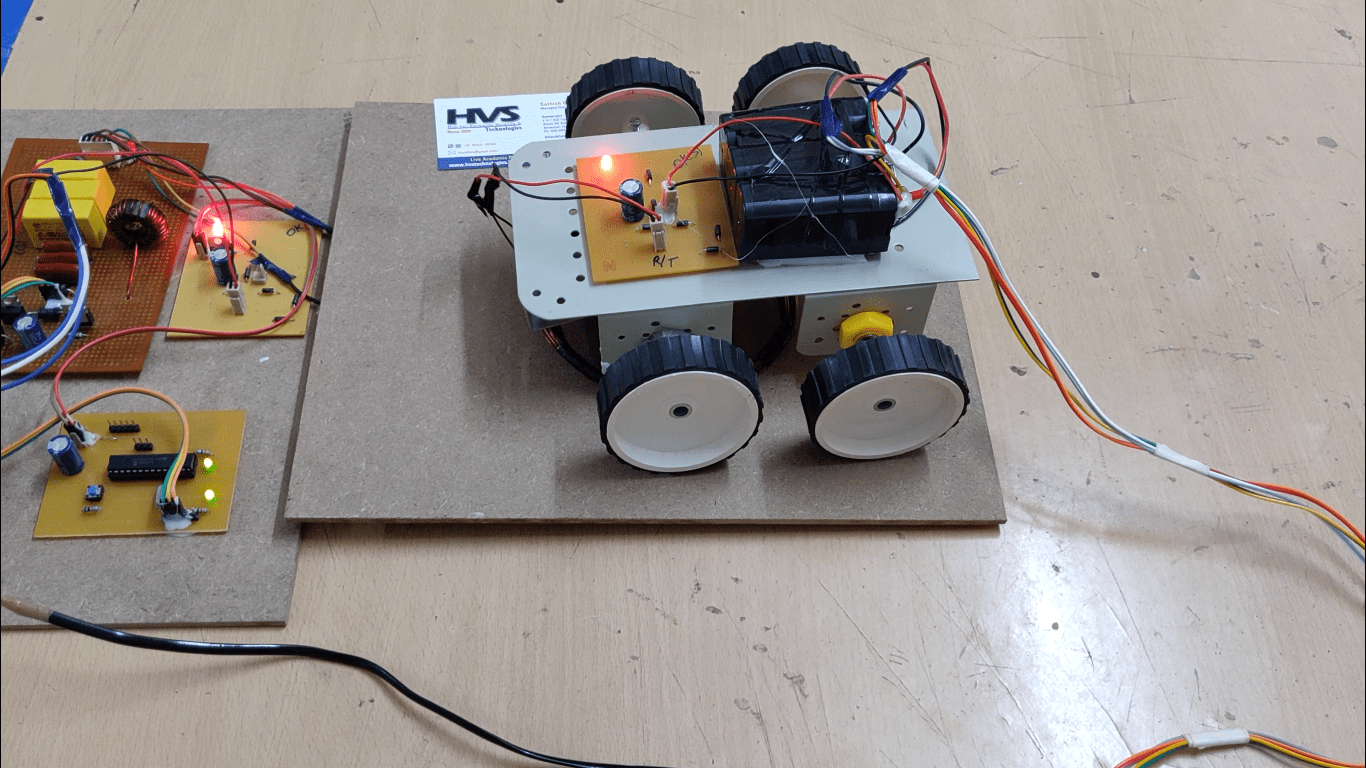
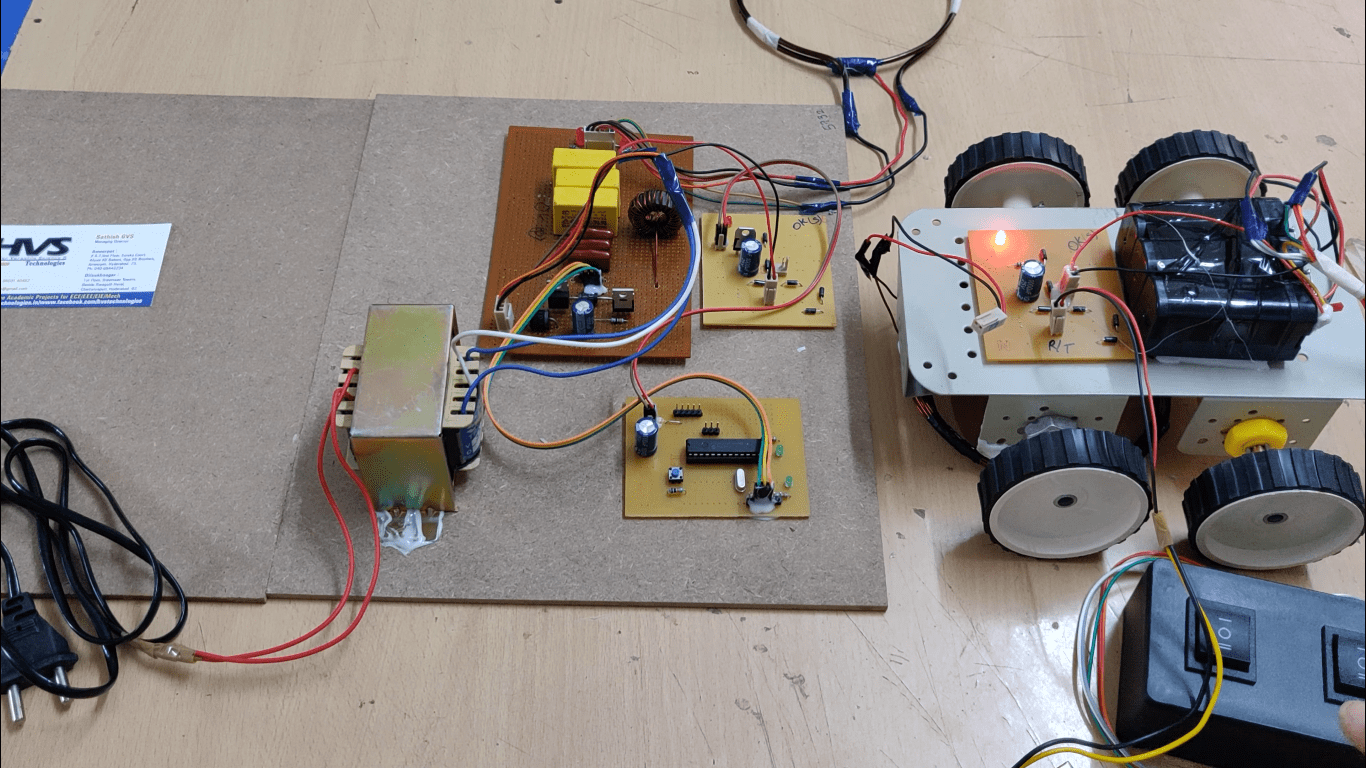
Any one of the requirements stated above demands for the design of an automated device. The project aims at developing an intelligent Electric vehicle driven through buttons. Automation has created a bigger hype in the electronics. The major reason for this type is automation provides greater advantages like accuracy, energy conversation, reliability and more over the automated systems do not require any human attention.
Wireless energy transfer or wireless power is the transmission of electrical energy from a power source to an electrical load without a conductive physical connection. Wireless transmission is useful in cases where interconnecting wires are inconvenient, hazardous, or impossible. The problem of wireless power transmission differs from that of wireless telecommunications, such as radio. In the latter, the proportion of energy received becomes critical only if it is too low for the signal to be distinguished from the background noise. With wireless power, efficiency is the more significant parameter. A large part of the energy sent out by the generating plant must arrive at the receiver or receivers to make the system economical. The most common form of wireless power transmission is carried out using direct induction followed by resonant magnetic induction.
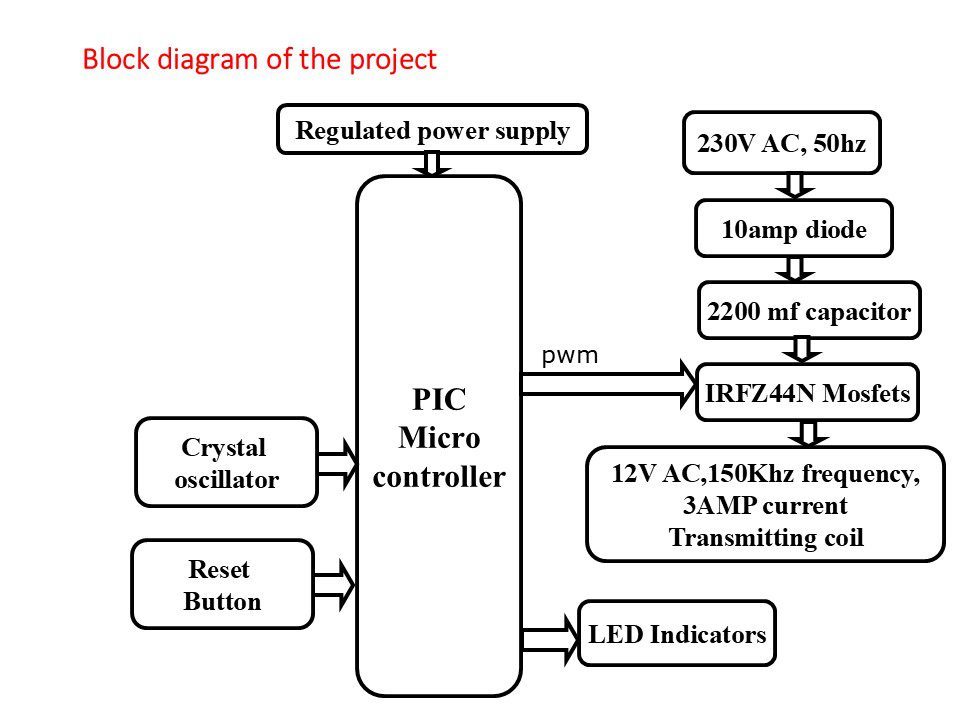
The project consists of two self resonating copper coils of same resonating frequency generator. One copper wire is connected to the power source (transmitter), while the other copper wire is connected to the device (receiver).the electric power from the power source causes the copper coil connected to it to start oscillating at a particular frequency. Subsequently, the space around the copper coil gets filled with nonmagnetic radiations. This generated magnetic field further transfers the power to the other copper coil connected to the receiver. Since this coil is also of the same frequency, it starts oscillating at the same frequency as the first coil. This is known as 'coupled resonance' and is the principle of tesla. This project results in a device where the electricity is transmitted wirelessly through copper coils for a distance. The system uses frequency generator at the transmitter circuit. Therefore, the current flows from the coil on the transmitter side to the receiver side coil wirelessly connected with rectifier and regulator. The output of the regulator is given to the battery charging circuit and from it to the Electric vehicle.
The proposed system makes use of the wireless power to charge the mobile phone and also to drive the vehicle using control buttons. The voltage from copper coil is properly regulated and fed to a rechargeable battery, which is used to power up the microcontroller board as well as the motors.
Features:
 Block diagram:
video:
Block diagram:
video:
- Copper Coil System
- Usage of pulse generator
- Highly Sensitive.
- Control buttons operated vehicle.
- Wireless mobile phone charging.
- Conversion of AC supply to DC supply.
- Resonant frequency.
- Pulse generation techniques.
- Embedded C programming concepts
- Step down transformer 230v to 12volts, 3 amps.
- Function generator ic’s like (8038, 1458, xr2206)
- Mosfet drivers.(irfz44, irf540,irf9140, irfp150)
- Two copper coils.
- Regulated power supply (db107 bridge rectifier, capacitor filters 1000uf, regulators 7812)
- Optical sensors
- Microcontroller
- Control switches
- DC motors with driver circuitry
- Rechargeable battery
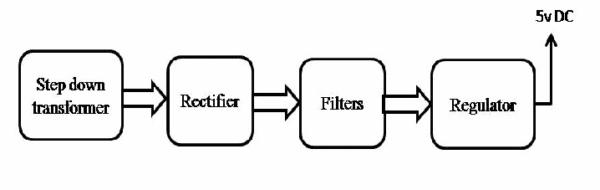 Block diagram:
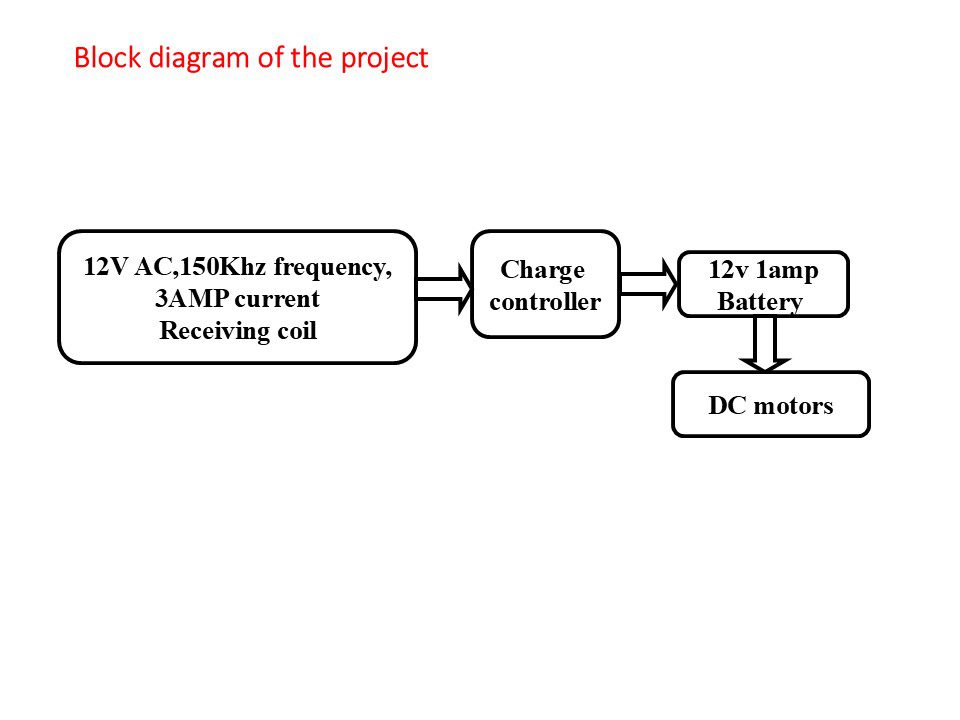 video: