No products in the cart.


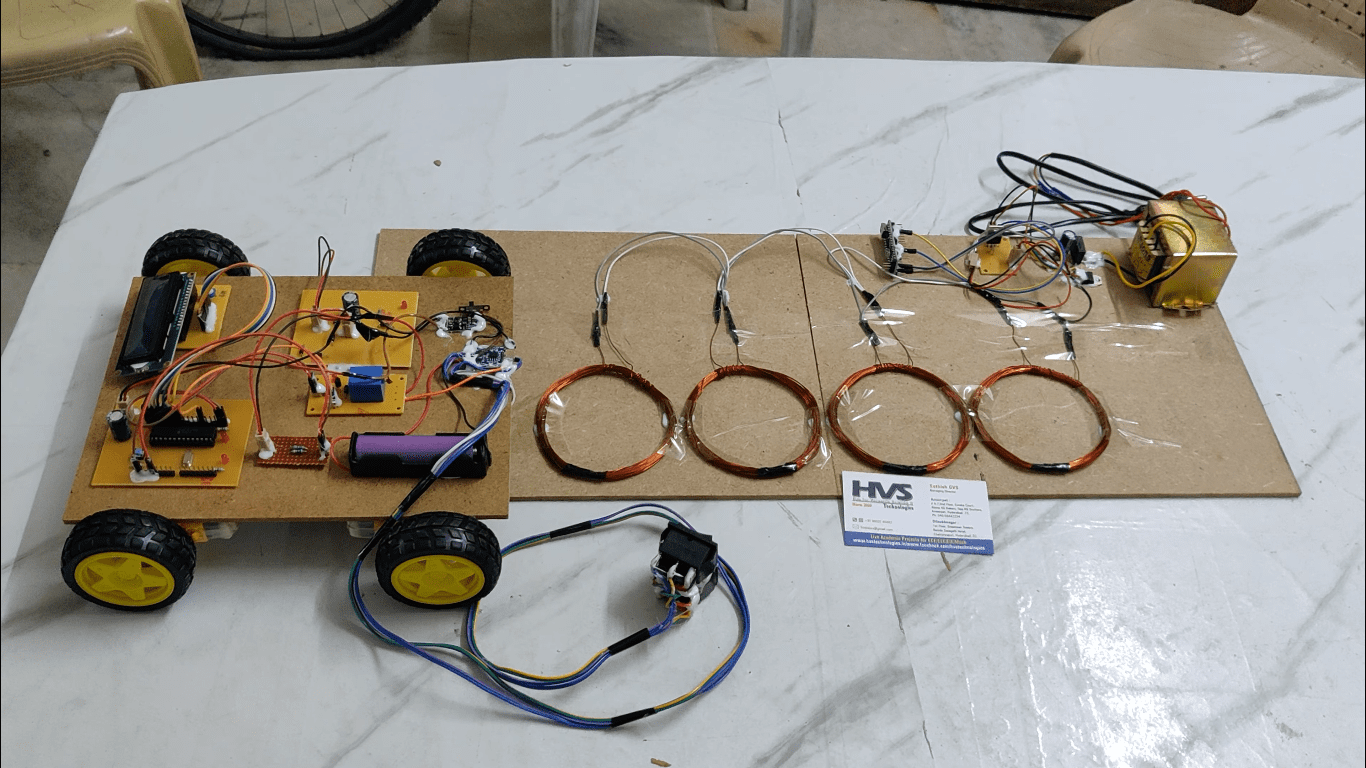
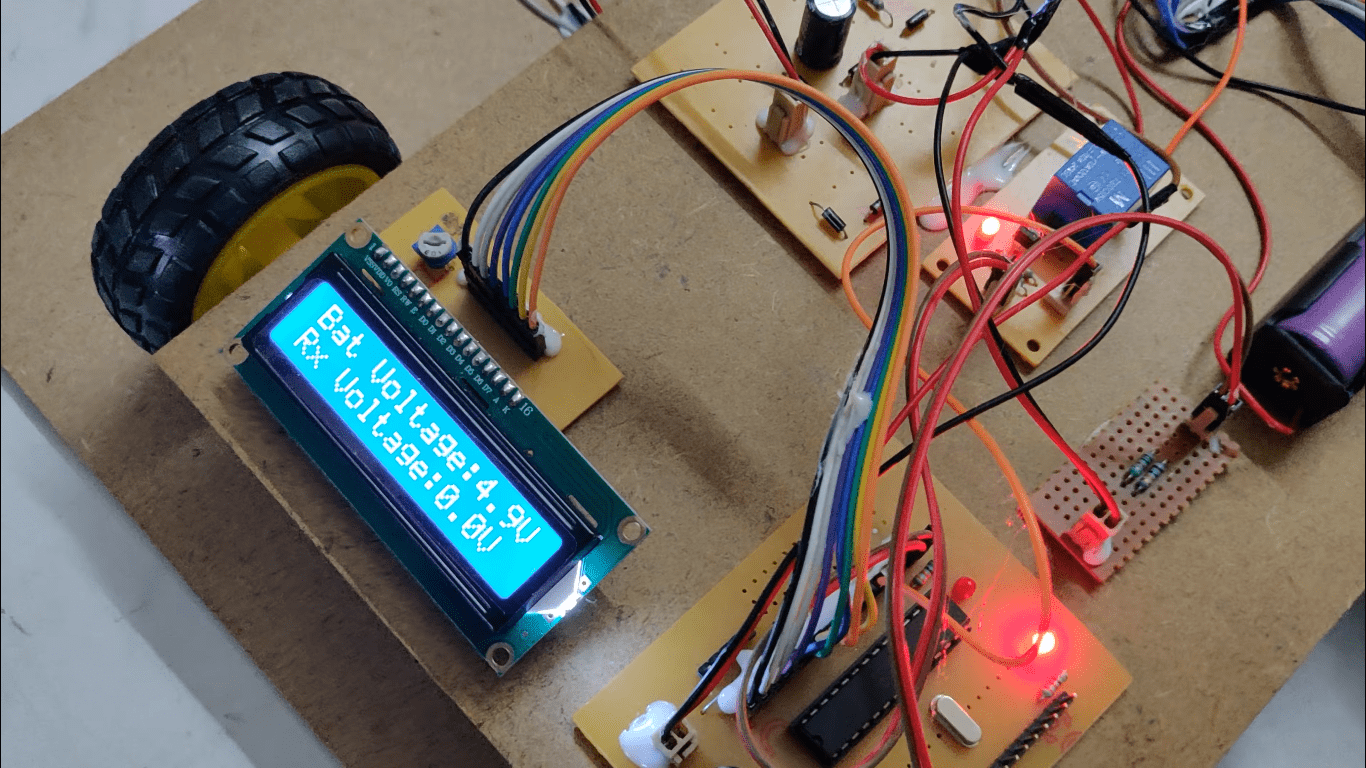
Dynamic Wireless Power Transfer (DWPT) using magnetic resonance provides a safe, efficient, and user-friendly alternative to traditional plug-in charging methods for electric vehicles (EVs). This project presents the design and implementation of a resonant inductive-coupling–based wireless charging system capable of transferring power between a stationary transmitter unit and a moving vehicle receiver unit.
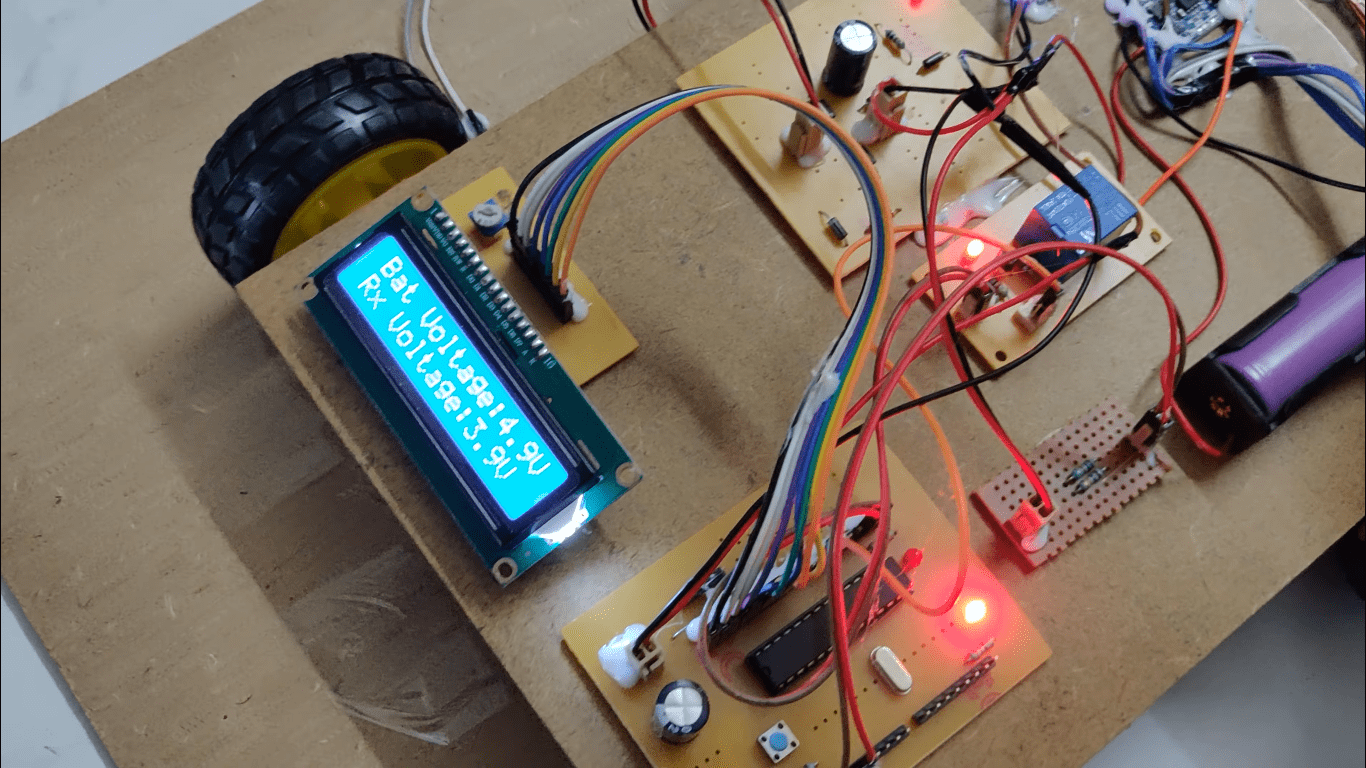
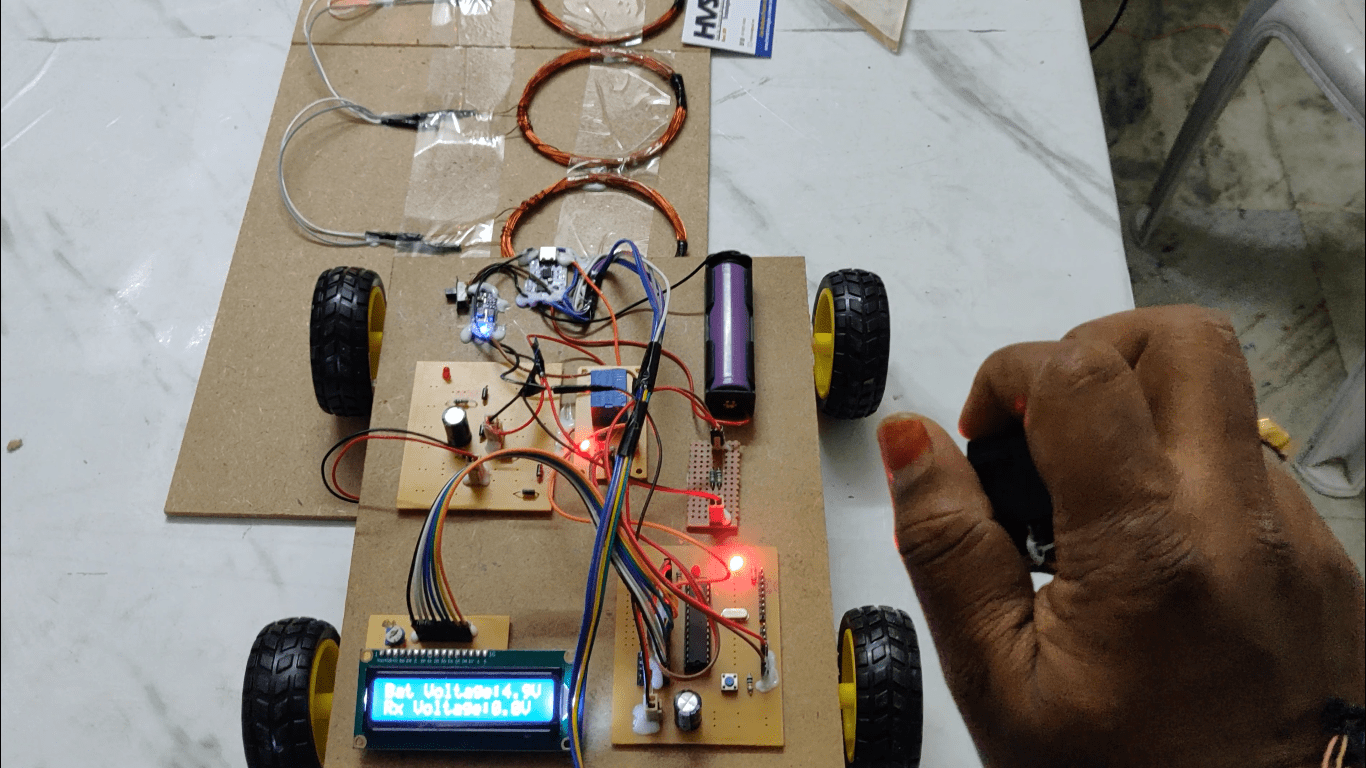
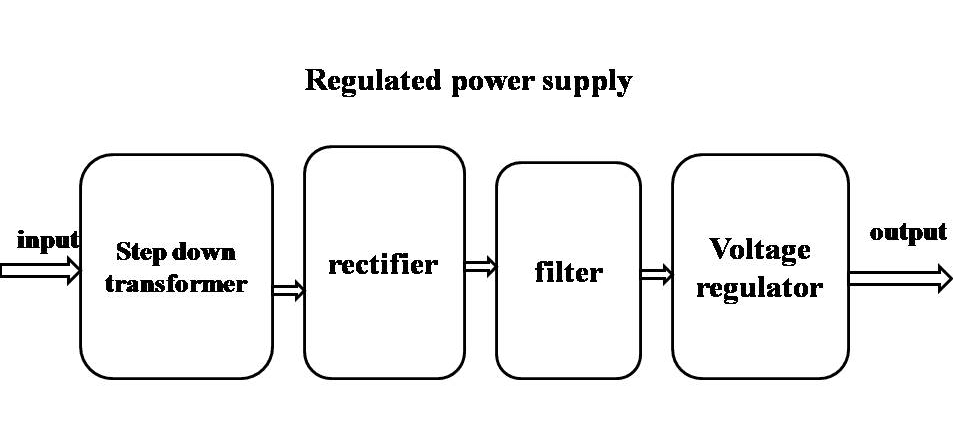
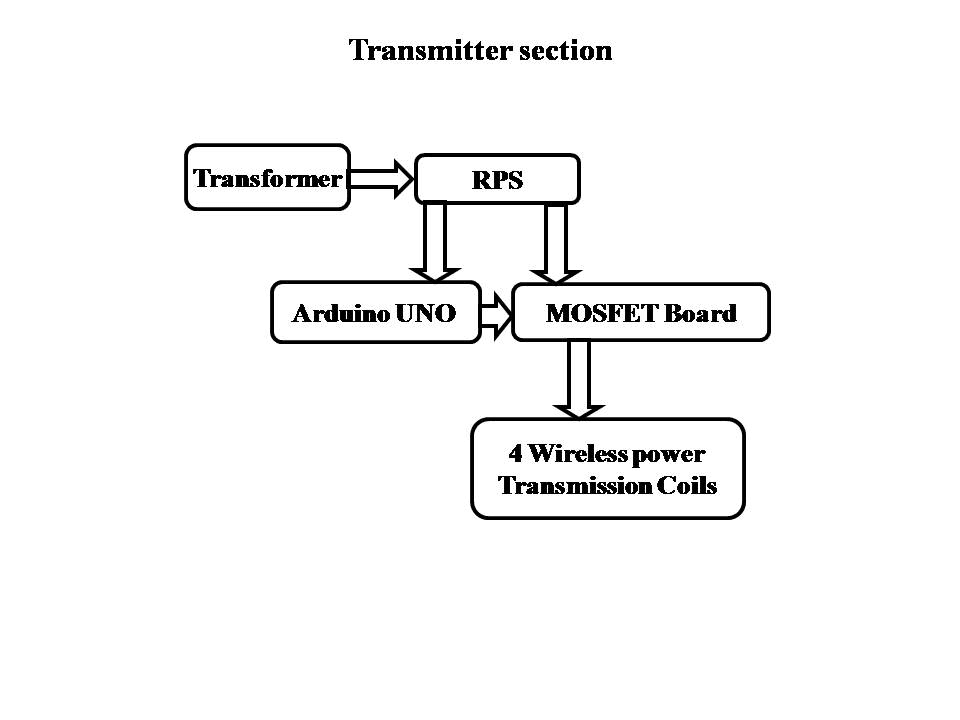
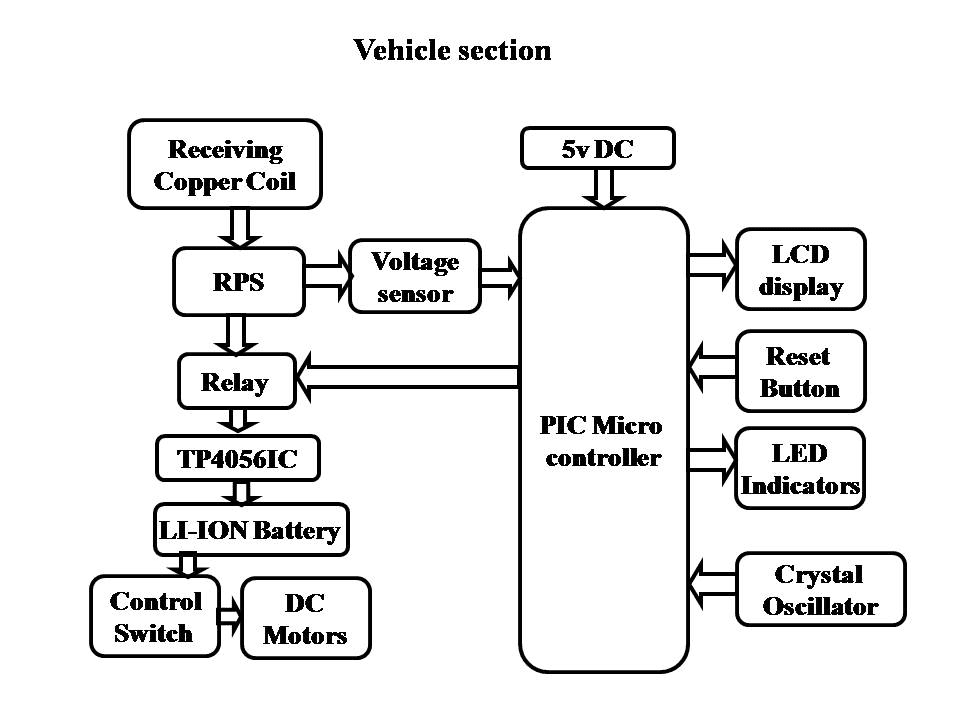
In the transmitter section, an Arduino UNO drives a MOSFET-based high-frequency inverter powered through a regulated supply and transformer. Four magnetic resonance transmission coils generate a strong oscillating electromagnetic field along the road surface. On the vehicle side, a receiving copper coil mounted at the bottom of the vehicle continuously captures energy from the roadway coils, enabling in-motion charging. The harvested power is regulated through an RPS, monitored via a voltage sensor, and managed by a PIC microcontroller that oversees power distribution, system status display on an LCD, indicator control, motor operation, and safety functions.
The received power is routed through a relay to a TP4056 charging module for safe Li-ion battery charging while the vehicle is in motion. This prototype demonstrates reliable contactless dynamic charging with reduced mechanical wear, improved safety, and uninterrupted vehicle operation. The results validate that magnetic resonance–based DWPT can efficiently supply energy to onboard batteries while allowing continuous monitoring and automated control, offering a promising pathway for next-generation EV charging infrastructures.
Objectives:
To design and implement a resonant inductive coupling–based Dynamic Wireless Power Transfer (DWPT) system capable of transferring power from stationary transmitter coils to a moving electric vehicle.
To develop a high-frequency transmitter driver circuit using Arduino UNO and MOSFET-based switching for generating stable oscillating electromagnetic fields.
To construct and optimize multiple magnetic resonance transmission coils to ensure efficient power delivery across the roadway surface.
To integrate a receiving coil at the bottom of the vehicle to enable continuous in-motion charging while maintaining alignment tolerance.
To regulate and stabilize the received power using an RPS and TP4056 charging module for safe charging of the onboard Li-ion battery.
To implement a PIC microcontroller-based monitoring and control system for battery status, voltage measurement, motor control, safety indicators, and LCD display.
To evaluate charging efficiency, coil alignment sensitivity, and power transfer capability under static and dynamic vehicle movement conditions.
To demonstrate the feasibility of contactless, safe, and reliable dynamic charging as an alternative to conventional plug-in EV charging systems.
Components used:
 Block Diagram:
video:
Block Diagram:
video:
- Regulated Power Supply.
- Four Transmission Copper coils.
- One Receiving Copper coil.
- PIC Microcontroller.
- Arduino UNO microcontroller.
- Control Switch.
- DC motors.
- Li-ION Rechargeable Bttery.
- Relay.
- LCD display.
- TP4056 IC.
- Mosfet driver.
- Voltage sensor.
- Crystal oscillator.
- Reset Button.
- LED indicator.
- PIC-C compiler for Embedded C programming.
- PIC kit 2 programmer for dumping code into PIC Micro controller.
- Express SCH for Circuit design.
 Block Diagram:
 video: